-

How to prevent and control excessive browning of shiitake mushroom logs that results in no fruiting
1. Causes of the problem. Log browning is a physiological process in the development of shiitake mushroom mycelium and is also a sign of physiological maturity of the mycelium. Suitable conditions for log browning: temperature of 18°C to 24°C, air humidity of 80% to 85%, some scattered light, and good ventilation. If the indoor temperature exceeds 25°C during browning and this high temperature lasts for a long time, it can cause the logs to secrete large amounts of yellow water and pigments, thereby forming a thick brown mycelial skin. The thick mycelial skin formed can block air, causing the mycelium to receive no oxygen and be unable to
-
Key Technical Points for Mushroom Production from Standing Logs in Shiitake Log Cultivation
After a summer and an autumn of careful management, the mycelium of the mushroom logs enters the mature stage, and around the Beginning of Winter (Lidong), the logs can be set up standing for fruiting management. The signs that the mycelium in the logs has matured are: the surface of the log shows no great difference from when it was felled, with no contaminating microorganisms and the bark tightly attached; when tapped with the back of a knife or with a finger, it gives a semi-dull or dull sound; the bark is soft and loose, and the wood beneath the bark is yellow or yellowish-brown and has the fragrance of shiitake; when pressed with a finger, the bark feels elastic and rough and uneven. There are also nodular protrusions, which are the prelude to fruiting, and sometimes there will be
-
Key Points for Summer Management and Harvesting of Shiitake Mushroom Logs in Segment Wood Cultivation
1. Summer management of mushroom logs. In Jiangnan, the plum rain season ends in late June, and the temperature stabilizes above 22°C, marking the start of midsummer. During this stage, mountain mushroom yards have relatively high temperatures and frequent thunderstorms. Mushroom log management should focus on ventilation and humidity reduction, and it is also necessary to prevent the logs from being exposed to the sun and losing their bark. At the same time, work such as clearing weeds and preventing the growth of contaminating fungi should be done well, so that the logs can pass through summer smoothly and accumulate a large amount of nutrients for the next mushroom season. In addition, when moving mushroom logs, care must be taken to protect the bark to prevent it from falling off. 2. Harvesting. Because the climate differs between the spring and autumn fruiting stages,
-
Causes and Control Techniques of Rotting in Substitute-Material Shiitake Mushroom Logs
In recent years, varying degrees of log rotting (i.e., rotting and disintegration of logs during the spawn-running period) have occurred in some substitute-material shiitake mushroom production areas, causing waste of resources and economic losses for mushroom growers, and in some areas it has seriously threatened the development of the shiitake mushroom industry. For example, in Qingyuan County, the log rotting rates in 1999 and 2003 reached 17% and 31% respectively, with some individual growers exceeding 50%, resulting in severe losses. In response, we have conducted dedicated investigations and research since 1997, and have preliminarily identified the causes of log rotting and its control techniques. 1. Causes of log rotting
-
Practical experience and key technical points for shiitake mushroom cultivation on cut logs
Among shiitake mushrooms, those grown on cut logs are especially popular with consumers. The author has been engaged in cut-log shiitake cultivation for decades, and now shares the practical experience as follows. 1. Selection of tree species: apart from oily and aromatic tree species such as pine, Chinese fir and cypress, more than 200 tree species are suitable, including white oak, Mongolian oak, ring-cupped oak, maple, fragrant tree, true chestnut, chestnut and wild walnut. 2. Felling: trees can be felled from the Winter Solstice to Awakening of Insects, with felling during the "nine-day" cold period being best, and no later than Pure Brightness at the latest. This is because during this period the trees are dormant, the bark and xylem are tightly joined, nutrients are rich, contaminating microorganisms
-
What are the control methods for mold and rot in shiitake mushroom logs?
During the color-turning and fruiting period of bag-cultivated shiitake mushrooms, the rotting of the mushroom logs often affects the high quality and high yield of shiitake mushrooms. There are two types of manifestations of rotten mushroom logs. One type is the loosening and disintegration of the mushroom log. The mushroom log is loose and lacks elasticity, easily falling apart when touched by hand, and the culture material has no off odor. This mostly occurs when the mushroom log is opened from the bag for color turning or after 1-2 batches of mushrooms have already been produced. The main reasons are: during the mycelium growth process of the mushroom log, poor ventilation in the culture room causes severe oxygen deficiency, or certain mycelial heat is generated in the later stage of mycelial growth, and combined with high air temperature and failure to turn and stack the logs in time to dissipate heat, the temperature exceeds 35°C or above, causing part of the
-
Control methods for small fungal infections on shiitake mushroom logs
During the cultivation of edible mushrooms, small fungi such as Trichoderma spp., Penicillium spp., Aspergillus spp., and slime molds infect substitute substrate cultivation. Under conditions suitable for their growth and reproduction, they can likewise infect segment logs. The morphological characteristics and occurrence patterns of these small fungi have been described for oyster mushrooms and button mushrooms. Because cultivation forms differ, the control methods also differ slightly: if small fungal infection is found on any part of the mushroom log, a kerosene blowtorch can be aimed at the pathogen to burn it to death, and then the infected area should be coated with a layer of 5%-10% limewater or
-
Detailed Explanation of High-Yield Cultivation Techniques for Ganoderma lucidum Using Short Logs with Sterilized Substrate
Short-log sterilized-substrate cultivation is a relatively fast-developing new technique for cultivating Ganoderma lucidum (reishi) in recent years. On average, more than 20 kg of dried mushrooms can be harvested per cubic meter of wood, with high yields reaching more than 30 kg, a 20% increase over conventional cultivation methods. The reishi produced is firm and thick in texture, glossy, and higher in acid content than bag-cultivated reishi, with more than 90% of the product meeting export requirements. 1. Cultivation season: Ganoderma lucidum belongs to the medium-to-high temperature type of fungi, and its yield is related to the tree species of the logs, cultivation time, and cultivation techniques. Inoculation time can be arranged from late October to December
-
What are the methods to stimulate mushroom logs to fruit early?
There are many methods to stimulate the growth and development of microorganisms, such as mechanical stimulation, ecological stimulation, physical stimulation, chemical stimulation, etc., but in the process of oyster mushroom cultivation, the following methods are generally used: (1) Shocking the mycelium: when the oyster mushroom mycelium has fully colonized and a layer of mycelial film has formed on the bed, a flat wooden board can be used to pat the bed firmly, board by board, leaving numerous board marks on the bed. In this way, the mycelium is subjected to vibration, which increases the opportunities for biochemical reactions and promotes the mass and rapid differentiation of fruiting bodies. (2) Scratch-and-break stimulation: after the mycelium
-
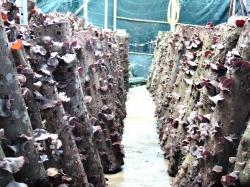
Detailed Explanation of High-Yield Cultivation Techniques for Black Fungus (Wood Ear Mushroom) on Logs
A sandy ground or flat grassland with a warm microclimate, small temperature difference between day and night, humid air, ample sunshine, close to a water source but not prone to waterlogging; for larger-scale cultivation sites, transportation conditions should also be considered. Low-lying plots with poor drainage are not suitable for use as mushroom yards. 1.2 Establishment of the mushroom yard: After selecting the site, it is necessary to...
条件筛选