-
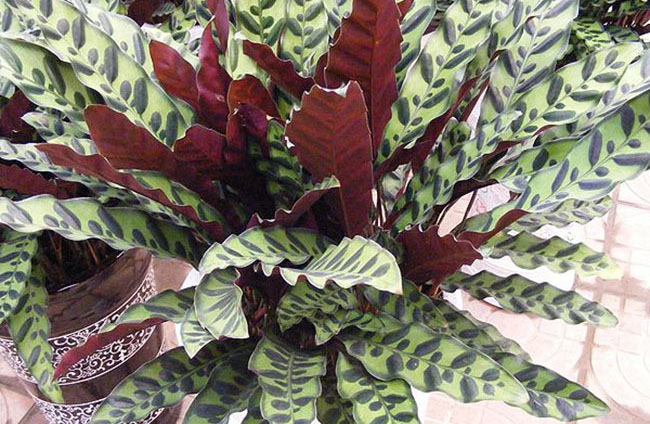
How to Grow Calathea leopardina and Tips for Pest and Disease Control
Calathea leopardina thrives in a warm, humid environment with bright light. It is not cold-tolerant or drought-tolerant, and it fears scorching sun. During the growing season it should be watered thoroughly to keep the soil moist, but the soil should not become waterlogged. A loose, fertile, well-draining and airy, slightly acidic soil rich in humus is ideal.
-

What are the control methods for the cherry leopard moth borer?
The leopard moth borer, also known as the six-spotted wood leopard moth, belongs to the order Lepidoptera, family Zeuzeridae. Distribution and damage: it is found in Henan, Hebei, Shaanxi, Shandong and other provinces in China. The larvae bore into and feed on the twigs and shoots of many kinds of fruit trees and ornamental trees and shrubs. Damage symptoms: between the xylem and phloem at the base of the affected branch there is a ring-shaped feeding hole, along with a tunnel running from bottom to top. There are several frass-expelling holes on the branch, with large amounts of long oval frass pushed out. The upper part of the affected branch turns yellow and withers, and breaks easily in the wind. Morphological characteristics - adult: female moth body length 20-38 mm, male moth 17-30 mm.
-
How to control the jujube leopard moth? These methods you need to master
(1) Manual pruning of infested branches: during early spring pruning, cut off the damaged branches to eliminate the overwintering stages of the pest, and destroy them in a centralized manner. (2) Use black light traps to kill the adults during their emergence period from June to July. (3) Protect and make good use of natural enemy resources, such as braconid wasps, ants and birds. (4) Chemical control: inject 80% dichlorvos 200-fold solution into the entry holes, and seal the openings with mud.
-
What are the disease and pest control methods for Calathea leopardina?
1. Southern blight. Southern blight has a relatively high incidence rate. When a plant suffers from southern blight, the stems and leaves near the soil will rot and discolor, and a radiating white fungal mycelial infection will appear; then the infection expands and turns dark brown, spreading through the entire pot and eventually causing the plant to die. It should be noted that
-
What are the precautions for growing Calathea leopardina
1. Repotting: repot once every other year, and it is best to use a fertile, loose, well-aerated and well-drained, slightly acidic soil rich in humus. 2. Pest control: common pests mainly include scale insects, red spider mites, etc. For scale insects, depending on the severity of the infestation
-

China's first environmental-ecology theater production transforms into a leopard cat, accusing roadkill of harming wildlife
The killer is your dad's car! China's first environmental-ecology theater production transforms into a leopard cat to accuse roadkill of harming wildlife
-
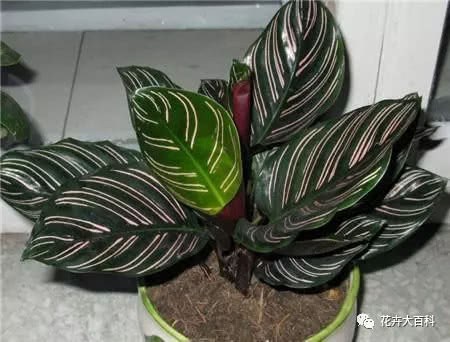
The Calathea leopardina is not just green in its leaves; when well cared for, it will bloom as well
Although the Calathea leopardina is a tropical foliage plant with glossy green leaves, it will also bloom, and its flowers are elegantly shaped and richly fragrant. Next, let us look at how to care for it so that the Calathea leopardina will bloom. Calathea leopardina The Calathea leopardina will...
-

What food is best for leopard tortoises? A detailed guide to feeding methods for leopard tortoises
What food is best for leopard tortoises
-

How to Raise a Leopard Tortoise Properly? Detailed Guide to Care Methods and Precautions
How to Raise a Leopard Tortoise Properly
-

Black Bear and Leopard Cat Fruit Sparkling Wort Pop-Up Launch, Great Value-Added Potential for Off-Grade Produce
Great value-added potential for off-grade fruit! Black Bear and Leopard Cat Fruit Sparkling Wort - pop-up launch
条件筛选