-
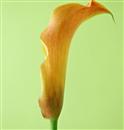
What are the control methods for leaf spot disease in calla lilies?
I. Symptoms: Infected leaves develop lesions ranging from light brown to yellowish-brown, mostly round, oval, or irregular in shape. A few lesions have indistinct concentric rings. In the later stages of the disease, many small black dot-like moldy growths appear in the center of the lesions, namely the conidiophores and conidia of the pathogen. II. Pathogen and disease occurrence...
-
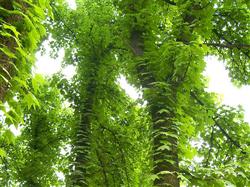
Detailed Guide to High-Yield Cultivation Techniques for Leaf-Use Ginkgo
1. Site selection The site conditions for a leaf-use ginkgo plantation require flat terrain, good drainage and irrigation, and fertile loam or sandy loam; a leaf-use ginkgo plantation should not be established on saline-alkali land or thin mountain land. 2. Planting techniques A leaf-use ginkgo plantation can be established by direct sowing, or by planting seedling trees or cutting-propagated plants. Planting can be done in spring or autumn...
-
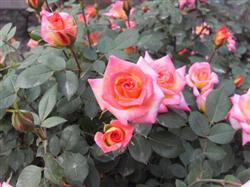
Symptoms and Control Methods of Rose Little Leaf Disease
Symptoms Rose little leaf disease is a common physiological disease of roses in northern China. Little leaf disease occurs on young shoots and young leaves, and is more obvious when roses sprout in spring. Diseased branches sprout later, and after the leaves emerge, the leaves are narrow, small and slender, with leaf margins turning upward, hard and brittle texture, and a relatively pale yellow-green leaf color, with uneven color intensity...
-
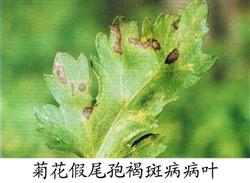
How to control Cercospora leaf spot on chrysanthemums
1. Disease symptoms The spots occur on both sides of the leaves, are nearly circular, with indistinct edges at first, later sometimes forming a thin dark brown ring, and often develop along the leaf margins. On the upper leaf surface the spots are light yellow at first, later brown to dark brown; on the underside they are grayish brown. 2. Disease characteristics The disease is caused by a fungus, the pathogen...
-

How to grow short-leaf clivia? Detailed guide to cultivation methods and precautions
Cultivation methods and precautions for short-leaf clivia
-

Reasons and Solutions for Yellowing Leaf Tips on Variegated Spider Plants
What to Do When the Leaf Tips of a Variegated Spider Plant Turn Yellow?
-

Why do spider plant leaf tips wither and turn black
Why do the leaf tips of potted spider plants (Chlorophytum comosum) turn black, dry up and shrivel? How can this be prevented? Looking at the blackening and withering of potted spider plant leaves from a cultivation perspective, there may be several reasons. First, dry air, overly intense sunlight and excessively high temperatures. This situation mainly occurs in summer and autumn, because spider plants like to grow in humid, semi-shaded environments; once the air is too dry and the sunlight is completely unobstructed, and if the temperature rises above 30°C, it is very easy to cause the leaf
-
What to Do When Spider Plant Leaf Tips Turn Brown and Dry? A Complete Guide to Prevention and Treatment
Spider plant (Chlorophytum comosum) has fresh green leaves shaped like orchid leaves, fresh and elegant, and is a common and beloved household foliage plant. It also has the unique effect of purifying indoor air, bringing people even greater benefits, which is one of the important reasons people like to grow it indoors. Spider plant is called the "air plant," and it truly lives up to the name: those stolons extending from the leaf axils, both firm and soft, hang down and outward from the rim of the pot, reaching several feet in length, with each stolon tip bearing new plantlets of various sizes, fresh green as if washed, gently swaying in the wind. If
-
Detailed Guide to the Prevention and Control of Leaf Spot Disease in Dendrobium Orchids
Symptoms: The disease occurs on the leaves. Small brown spots first appear, then enlarge, with the center becoming necrotic and grayish-brown, measuring 5-10 mm in diameter. Small black dots appear on the surface of old lesions. Affected leaves turn yellow and drop, though there are differences among varieties; the nobile dendrobium group tends to shed leaves more heavily, and its growth and development are significantly stunted. Pathogen: Selenophoma dendrobii Abiko. It belongs to the fungi imperfecti (Deuteromycetes). Conidia are colorless, single-celled, crescent-shaped, measuring 5-8 * 1-2 micrometers.
-
What are the symptoms of gray leaf spot on Japanese euonymus?
Symptoms of gray leaf spot on Japanese euonymus: it occurs on the leaves of Japanese euonymus. In the early stage, small chlorotic yellow spots appear on infected leaves, then gradually expand into irregular large spots that are gray, grayish white or light loess yellow. The boundary between diseased and healthy tissue is often brown or dark brown, and the edge is often raised. In the later stage, several spots often merge into one, occupying one-half to one-third of the total leaf area. When the damage is severe, diseased leaves may drop in the same year or even cause twig dieback.
条件筛选