-

Detailed Explanation of Key Techniques for Multi-Layer Indoor Mushroom Bed Cultivation
Mushroom house: The mushroom house can be a simple thatched shed, a plastic greenhouse, an old dwelling, etc. Windows are opened on all four sides of the mushroom house, and ventilation tubes are installed on the roof. Inside the mushroom house, 4-6 layer bed frames are built using moso bamboo or other building materials, with walkways left around each bed frame. Compost: There are many formulas for mushroom compost. The most commonly used formula is, per 100 sq m, 3000 kg of rice and wheat straw, 300 kg of rapeseed cake, 25 kg of urea, 6000 kg of human and animal manure, 60 kg of superphosphate, 50 kg of red ash, 50 kg of gypsum
-
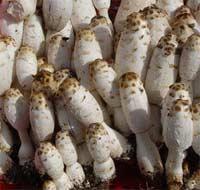
Hanging Bag Cultivation of Black Fungus (Wood Ear) and Stropharia rugosoannulata in a Multi-Layered Three-Dimensional Setup Doubles Returns
Distiller's grains are an excellent substrate for cultivating edible fungi. Their nutrient composition suits the growth of Stropharia rugosoannulata mycelium, and using them can both lower the production cost of Stropharia rugosoannulata and prevent environmental pollution. Distiller's grains contain a small amount of ethanol and active yeast that are harmful to mycelial growth, and they are highly acidic, with a pH of 3-5. Therefore, fresh distiller's grains should be selected...
-
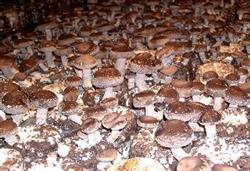
Temperature-difference bud-induction technique for shiitake mushrooms grown on layered shelves without removing the bags
The fruiting stage of summer mushrooms falls in the hotter season, which is unfavorable for the growth and development of the fruiting bodies. Poor management easily leads to shriveled buds and rotten mushrooms. How can cultivation protection facilities be used and corresponding measures taken to curb the effects of the adverse environment? This is the most important part of fruiting management in summer cultivation. According to the experience of the main producing areas, the main measures are as follows...
条件筛选