-

What are the farming models for largemouth bass? A detailed explanation of common models
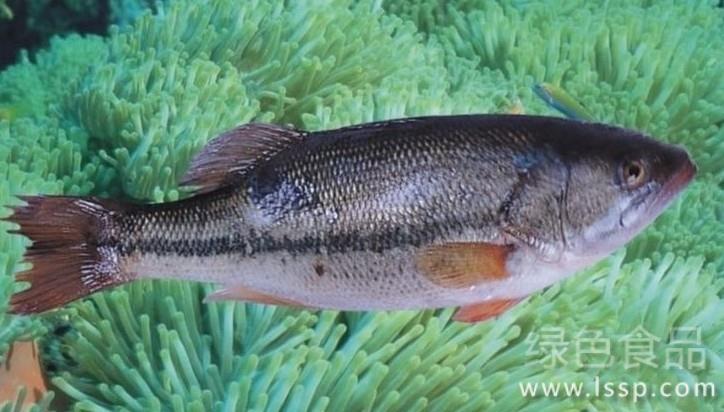
"Bass" is actually a general term for a type of fish. Today, the editor will introduce the largemouth bass (Micropterus salmoides) to everyone. As an economic fish, the largemouth bass is very popular among farmers, so below I will introduce the farming models for largemouth bass. 1. Pond farming model
-
How to Effectively Treat Nocardia Disease in Largemouth Bass
In recent years, the occurrence of Nocardia disease has shown an increasingly worsening trend; the size of affected fish is getting smaller and smaller, the condition is becoming more and more serious, and the mortality rate is also getting higher and higher. It is understood that Nocardia is mainly saprophytic, especially abundant in decaying chilled fresh fish, so Nocardia disease is mostly seen in
-
Prevention and Control Techniques for Several Common Diseases in Largemouth Bass Farming
Largemouth bass has extremely strong resistance to disease, so the proportion that falls ill is quite low. The diseases known so far are the following: 1. Anchor worm disease (Lernaea disease): this disease occurs only in a few individuals, and the parasitic sites are mostly at the base of the dorsal fin or anal fin, and the tail end; the affected area often has
-
Sharing Experience in Pond Farming of Largemouth Bass
California bass, also known as largemouth bass, has the characteristics of relatively fast growth, strong adaptability, few diseases, easy to catch, tender meat, delicious taste, and no intramuscular bones. Its farming techniques are as follows. 1. Pond conditions. California bass is good at inhabiting a quiet
-
Key Technical Points for Summer Stocking of Largemouth Bass in Ponds
1. Pond drying and disinfection. Aquaculture ponds must be drained and dried for 10-15 days, the pond embankments repaired, and quicklime or bleaching powder used for disinfection. 2. Fingerling rearing. First, use early-breeding fry from Guangdong raised in dedicated ponds from late April to early May, and divide them into separate ponds when they reach about 5 cm; second, use locally self-bred largemouth bass, and select fingerlings that are robust, uniform in size, healthy and disease-free. Stocking density is 800-1200 fish per mu.
-
How to conduct cage culture of largemouth bass
Using cages for intensive culture of largemouth bass can also achieve excellent economic benefits. The cages can be set up in reservoirs, lakes, rivers, or ponds. 1. Cage preparation and placement location. The cage is a Lishi-type double-layer covered cage, with specifications of 4 m x 4 m x 2 m, and mesh size
-
Intensive Cage Culture Techniques for Largemouth Bass
Using cages for intensive culture of largemouth bass can also achieve excellent economic benefits. Cages can be set up in reservoirs, lakes, rivers, or ponds. 1. Cage preparation and placement. The cage is a Lishi-type double-layer covered cage, with specifications of 4 m x 4 m x 2 m, and mesh size of 2.5 cm.
-
How Long Is the Largemouth Bass Farming Cycle? A Detailed Guide to Farming Techniques and Growth Rate
Bass is one of the more commonly eaten types of fish in our daily lives, and many people know that its nutritional value is very high and its flavor is delicious; eating it in moderation is very beneficial to human health. But what people do not know is that bass actually has many popular species, and the largemouth bass
-
-
Control methods for largemouth bass skin decay caused by putrefactive skin disease
How to prevent and control largemouth bass putrefactive skin disease that causes skin decay
条件筛选