-
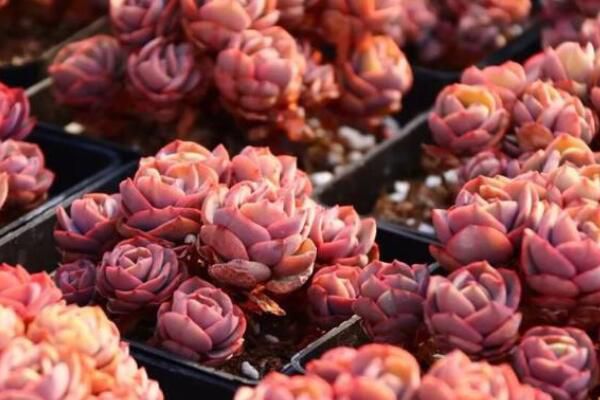
What to do when the large-leaf Xiuyan succulents become leggy? Handle it this way for a quick recovery
What to do when the large-leaf Xiuyan succulents become leggy
-

What are the control methods for anthracnose in large-leaf boxwood (Euonymus japonicus)?
Methods for controlling anthracnose in large-leaf boxwood: 1. In autumn and winter, collect diseased branches and fallen leaves and burn them in a centralized manner to reduce the source of the disease. 2. At the early stage of the disease, promptly apply 75% chlorothalonil wettable powder at 500 times dilution, or 50% thiram wettable powder at 500 times dilution, or a 1:1:160 Bordeaux mixture, or 50% Tuzet wettable powder at 800 times dilution.
-
What kind of tree species is the tetraploid large-leaf black locust?
The tetraploid large-leaf black locust is a superior variety selected through years of dedicated research and experimental comparison from among several excellent polyploid black locust clones introduced from abroad. The tetraploid large-leaf black locust is an artificially induced tetraploid plant, characterized by fast growth, large leaves and high biomass. Its leaf width is more than 2 times that of the common black locust, and its compound leaf dry weight, single leaf dry weight and total leaf dry weight are 1.5 times or more those of the common black locust respectively. Compared with the common black locust, the tetraploid large-leaf black locust has a denser crown, thicker branches and a stronger photosynthetic capacity. Tetraploid
-
High-grafting method for large-leaf privet and golden-leaf privet
Large-leaf privet (Ligustrum lucidum) and golden-leaf privet (Ligustrum × vicaryi) both belong to the Oleaceae family and the Ligustrum genus. The former is a fine sub-tree for landscaping, but because it is so common, it is often overlooked. The latter is a colored-leaf tree species that has been widely used in recent years. Because golden-leaf privet is a shrub, this limits its practicality. In order to expand the landscaping functions of both, the author used the method of high grafting to draw on each other's strengths to achieve this goal. The steps are as follows: in spring, use branch grafting or bud grafting (after the sap has begun to flow, and preferably before bud break). Use large-leaf privet with a diameter at breast height of 3 cm to 4 cm as the rootstock,
-
Detailed Explanation of Key Technical Points for Pest and Disease Control in Large-Leaf Privet
Large-leaf privet (Ligustrum lucidum) has strong adaptability and is basically free of pests and diseases; only when its growth is too weak will scale insect damage occur. Control methods: 1. Use a grass bundle or brush to wipe and brush off the overwintering female insects on the trunk and branches and the male pupae inside the cocoons. 2. In May and June, spray for control with 50% malathion 600 times dilution, or 25% imidan 1000-1500 times dilution, or 40% dimethoate emulsifiable concentrate 1000 times dilution, or 10% fenbutatin oxide 400 times dilution.
-
Detailed Explanation of the Characteristics and Cultivation Techniques of the Large-leaf Privet
Scientific name Ligustrun lucidum Ait., also known as wax tree, Oleaceae, Ligustrum genus. It is an evergreen large shrub or tree, with grayish-brown bark, smooth and not fissured. The leaves are 8-12 cm long, leathery and glossy, remaining green through winter, making it a rare evergreen broadleaf tree in temperate regions. The trunk is upright or two or three trunks emerge together, branches spread obliquely, forming a broad ovate, rounded crown. It can be planted as a street tree, tolerates pruning, and is commonly used as a hedge. The wood is fine and dense, used for joinery. The fruit contains starch and can be used for brewing wine, and is also used medicinally as a tonic.
-
Detailed Explanation of the Seedling Raising Methods and Techniques for Large-Leaf Privet (Ligustrum lucidum)
The seedling raising method for large-leaf privet (Ligustrum lucidum) is as follows: before sowing in early spring, first stratify the seeds in moist sand for about 60 days. Sow in drills with a row spacing of 15 to 20 cm, at a seeding rate of 7.5 to 10 kg per 667 sq m, cover with soil 1 to 1.5 cm thick, and mulch with straw. Germination and emergence generally begin in mid-April; once some of the seedlings have emerged completely, remove the straw and thin the seedlings in time. One-year-old seedlings reach 40 to 60 cm in height and can be lifted for use as hedges; for street trees or courtyard landscaping, they need to be transplanted and grown on as large seedlings for 2 to 3 years, and when the seedlings reach 1.5 to 2 m in height they can be transplanted; large seedlings must be lifted with a soil ball, and part of the branches and leaves should be pruned off.
-
Are triploid large-leaf black locust and large-leaf fast-growing locust the same variety?
1. The tetraploid large-leaf black locust is an excellent variety selected through years of dedicated research and experimental comparison from among several superior polyploid black locust clones introduced from abroad. The tetraploid large-leaf black locust is an artificially induced tetraploid plant, with the characteristics of fast growth, large leaves and high biomass. Its leaf width is more than 2 times that of the common black locust, and its compound leaf dry weight, single leaf dry weight and total leaf dry weight are each 1.5 times or more than those of the common black locust. Compared with the common black locust, the tetraploid large-leaf black locust has a denser crown, thicker branches and a stronger photosynthetic capacity.
-
What tree is the large-leaf red-flowered black locust? An introduction to its cultivar characteristics
The large-leaf red-flowered black locust is a multi-purpose black locust cultivar bred in Germany. In 1999, Professor Yang Minsheng of Hebei Agricultural University introduced it to China from the Institute of Forest Genetics and Forest Tree Breeding in Germany. After nearly 5 years of introduction trials and demonstration planting, it was proven that the large-leaf red-flowered black locust has strong adaptability, can grow normally in the suitable areas for black locust in North China, and has shown very high economic value. The large-leaf red-flowered black locust has a fast growth rate, with a diameter at breast height reaching 9.5 cm at 3 years old; a large leaf yield, with pinnate leaves 45-60 cm long, longer than tetraploid black locust
-
How to grow a large-leaf boxwood bonsai? Detailed explanation of shaping and care key points
Large-leaf boxwood is an evergreen shrub or small tree of the genus Euonymus in the family Celastraceae, also known as Zhengmu and evergreen euonymus. Because its leaves stay green all year round, it is also called "evergreen" or "large-leaf evergreen". Large-leaf boxwood can be processed into different bonsai forms such as straight-trunk style, slanting-trunk style, curved-trunk style, and double-trunk style according to the shape of the stump. The branches of young seedlings are soft and can be shaped from a young age. First wire the main trunk, then the main branches and side branches, and pay attention to promptly pruning excess branches. Because its leaves are relatively large, the crowns of small and medium-sized bonsai mostly use an elegant natural
条件筛选