-

Land preparation and sowing methods for spring sesame and summer sesame
Spring sesame should adopt the "plowed furrow slice" method. The so-called "plowed furrow slice" means that after the previous crop is harvested, fertilizer is applied, the soil is plowed and harrowed, and then sesame is sown. The advantages of "plowed furrow slice" are: it can turn the soil and loosen it, increasing soil temperature; bury the base fertilizer, improving fertilizer efficiency; reduce weeds, making intertillage convenient; and the soil has good aeration, which can improve the soil's water storage and fertilizer retention capacity. Therefore, planting "plowed furrow slice" sesame is a key measure for increasing yield. For summer sesame, "iron stubble" sowing should be advocated, with rough sowing and careful management. "Iron stubble" sowing means that after the previous wheat crop is harvested, there is no further plowing, plowing or harrowing; as long as it is raked
-
How to Choose and Prepare Land for Lilies? A Detailed Guide to Planting Methods
Lilies are semi-shade plants that prefer a warm, humid climate and can also grow in slightly cooler regions. They tolerate drought and cold, are afraid of waterlogging, and should not be grown in continuous cropping. For the cultivation site, choose sandy loam or humus soil that is high and dry, sunny, with deep soil layers, loose texture, and good drainage. In mountainous areas, you can choose to plant under sparse forest with half shade and half sun or on wasteland. Before sowing, apply 2000 kg of decomposed barnyard manure and 20 kg of superphosphate per mu, deep plow 25-30 cm, rake level and fine, make beds 1.2 m wide, and open drainage ditches around them.
-
How to Choose Land for Codonopsis Planting? These Methods Must Be Mastered
Codonopsis is a deep-rooted plant, and mature plants prefer light, so it is best to choose deep, fertile, sunny sandy loam for cultivation. Low-lying, waterlogged, and heavy clay soil is not suitable for cultivation; water accumulation in the soil easily causes root rot, poor aboveground plant growth, and low yield with poor quality. Slightly acidic to neutral soil with a pH of 6.5-7 is preferable. Legume and grass family crops are best as the previous crop; vegetable crops as the previous crop are prone to disease and should not be chosen. Continuous cropping is prohibited, and generally 3-4 years should pass before replanting.
-
Cultivation Methods and Management Techniques for Thai Mesona
Organic Cultivation and Management of Thai Mesona Plant Characteristics Mesona (Mesona procumbens Hemsl.) is a member of the Lamiaceae (Labiatae) family and is either an annual or biennial often cross-pollinated crop. Its plant types include three forms: erect, semi-erect, and prostrate. Its leaves are ovate, elliptical, and long
-
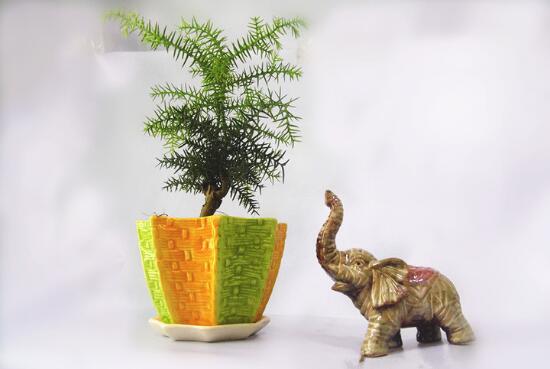
How to grow Norfolk Island pine? Growing methods and precautions, it likes diffused light
Norfolk Island pine, one of the world's three great ornamental trees, is often kept indoors as a potted young tree, usually under 2 m tall. It has a graceful shape, is highly ornamental, and is also a master at purifying the air, so it is deeply loved by gardening enthusiasts. In daily life, many gardening enthusiasts want to know how to grow Norfolk Island pine
-
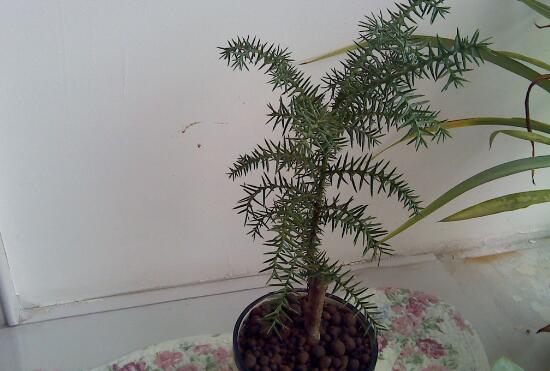
Norfolk Island Pine fertilizing time and method: once every 2 weeks in spring and autumn
"A crop's bloom depends entirely on fertilizer." Although the Norfolk Island Pine has low fertilizer requirements, its growth needs sufficient nutrients, so fertilizing becomes very important. However, when it comes to fertilizing the Norfolk Island Pine, many plant lovers don't know what to do, so how do you fertilize a Norfolk Island Pine? When should you fertilize a Norfolk Island Pine?
-
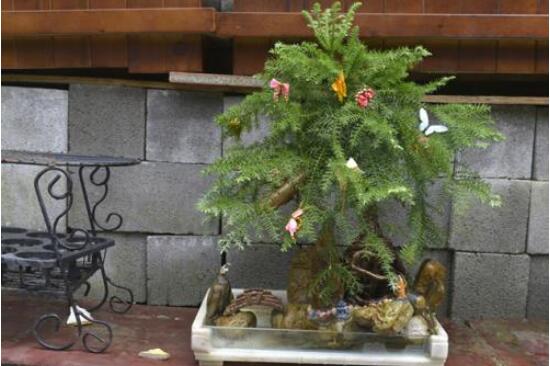
How to propagate the Norfolk Island pine? Introducing two methods: cuttings and sowing
The Norfolk Island pine, I believe all plant lovers know it, is an evergreen tree often kept as a bonsai for people to admire, and is one of the world's three great ornamental trees. Nowadays, more and more people are starting to grow the Norfolk Island pine, but compared to buying one to grow, doing the propagation yourself is certainly more fun. So, how do you propagate the Norfolk Island pine?
-
-
How to grow Tillandsia? A detailed guide to Tillandsia cultivation methods
1. Propagation: For home growing, you can propagate by separating basal offsets; when a basal offset grows to 8 cm long, detach it and plant it. 2. Placement: Tillandsia likes a bright, semi-shaded, warm, and fairly humid environment. You can place it in an environment with bright diffused light.
-
How to grow a Norfolk Island pine bonsai? Detailed guide to cultivation methods
1. Soil: The potting soil for a Norfolk Island pine bonsai is generally made mainly by mixing leaf mold, garden soil and river sand, and it is usually best to mix them in equal parts of 1/3 each plus a little base fertilizer. 2. Watering: The Norfolk Island pine bonsai likes a humid environment, so during dry seasons and in summer, you should regularly spray clean water on the leaves.
条件筛选