-

Feeding and Management Techniques for Sows During Farrowing and Lactation
(1) Advantages of Farrowing on Crates Farrowing on crates is a new technology that has emerged in intensive pig farms. It has the advantages of being convenient to work with, dry, hygienic, and preventing trampling and crushing. Compared with ground-level farrowing pens, farrowing on crates means installing the sow farrowing room as crates with creep rails, reducing
-
How much is Tetrapanax papyriferus per jin? Detailed explanation of its effects, functions and lactation-promoting consumption methods
Tetrapanax papyriferus is also known by the aliases Koutuo, Linan, Huodui, Yishang, Huacao, etc., and is the stem pith of the Araliaceae plant Tetrapanax papyriferus. Produced in Guangxi, Sichuan, Guizhou, Yunnan and other places, it is a medicinal herb with a moderate price. So what are the effects and functions of Tetrapanax papyriferus? How much does it cost per jin?
-
Key Technical Points for Feeding and Management of Nutria During Lactation
The focus of feeding and management during lactation is to ensure normal milk secretion in the female nutria and normal growth and development of the young, and to improve the survival rate of the young. (1) To promote milk production in the female nutria, manual plucking of the mammary hair and the use of Chinese herbal galactagogues can be adopted to promote mammary gland milk secretion. Manual
-
How can a ewe give birth twice a year? Shorten the lactation period and strengthen nutrition
Abstract To make a ewe give birth twice a year, it is necessary to combine shortening the lactation period with strengthening nutrition. Within one week of birth, the lamb can be kept together with the ewe, but after one week of birth, it must be separated from the ewe during the day and only receive breastfeeding three times a day,
-
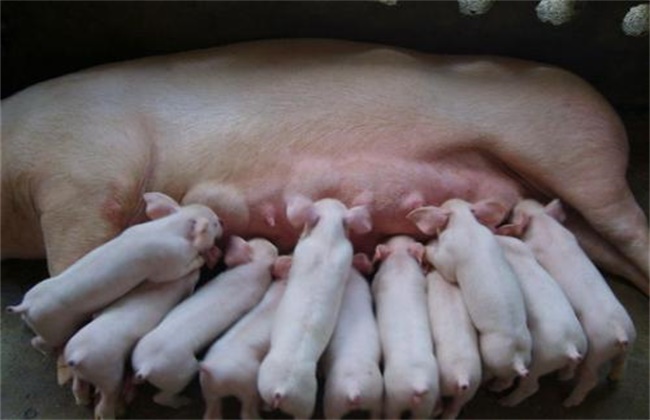
Can sows be dewormed during lactation? Detailed explanation of precautions
Can sows be dewormed during lactation?
-
What are the scientific methods for promoting lactation in lactating sows?
The quality of milk from a lactating sow, that is, the amount of milk secreted, directly affects the growth rate and health of the piglets. Therefore, once a lactating sow has insufficient milk or no milk, scientific lactation promotion must be carried out. The types of sow milk deficiency are analyzed as follows: 1. Lactation promotion method for first-litter sows: Insufficient milk in first-litter sows is mostly caused by insufficient mammary gland development or a low dietary nutrient level. Therefore, manual massage of the udder 1-2 times daily during the week before and after farrowing should be performed to promote mammary gland development and recovery of lactation function. For sows with insufficient milk after farrowing, 1-2 afterbirths from healthy sows can be used
-
Prevention and Treatment of Common Diseases in Foxes and Raccoon Dogs During the Whelping and Lactation Period
I. Miscarriage. There are many causes of miscarriage, such as infectious diseases, chronic diseases, parasites, trauma, poisoning and other factors, but the most important are still mistakes in feeding and management, such as long-term malnutrition, feeding moldy feed, lack of vitamins or trace elements, an unsettled animal farm, sudden fright, etc., all of which can cause miscarriage. Prevention and treatment methods: (1) Intramuscular injection of 2 ml of compound vitamin B, intramuscular injection of 1% progesterone, 0.3-0.5 ml each time, injected 2 times consecutively; (2) Intramuscular injection of penicillin, 400,000-800,000 units each time; or injection of
-
How to formulate feed for pigs during lactation? Sharing practical formulation tips
Sows during lactation need large amounts of nutrients to support milk production. At peak lactation, the sow's milking capacity exceeds the nutrients she takes in through feed and the nutrients excreted in milk are greater, so the sow's body condition declines rapidly. Formulating high-quality, high-nutrient-density feed for lactating sows is the best way to resolve this contradiction. Feed Formula 1: Lactation Feed Formula 1 in Table 4-3 avoids as much as possible the use of bulky feeds such as alfalfa and rice hull bran. In the design of lactation feed formulas, unknown nutritional factors appear less important
-
How to formulate feed for pigs during lactation in a scientific way
Sows need large amounts of nutrients during lactation to support milk production. At peak lactation, a sow's milk production capacity exceeds the nutrients she takes in through feed and the nutrients lost through milk, so her body condition declines rapidly. Preparing high-quality, high-nutrient-density feed for lactating sows is the best way to resolve this contradiction. Feed Formula 1: Lactation Feed Formula 1 in Table 4-3 avoids as much as possible the use of bulky feeds such as alfalfa and rice hull bran. In the design of lactation feed formulas, unknown nutritional factors appear less important, and this formula uses high-energy feed corn and high-protein feeds such as fish meal and soybean meal as much as possible, so that the volume of the compound feed is reduced as much as possible and the nutrient concentration is increased as much as possible. The formula also uses synthetic amino acids to further fortify the first limiting amino acid and improve the utilization efficiency of feed protein. To ensure milk quality, the amounts of micro-ingredients in the formula remain unchanged from those in gestation feed. Compound feed produced with this formula, when used to feed high-yielding sows nursing about 10-15 piglets, can achieve very ideal lactation and nursing results.
-
What to Do About Insufficient Lactation and Agalactia in Dogs?
Postpartum abnormal mammary gland function during lactation can cause insufficient milk production, or even agalactia. It can occur in all dogs, but is more common in first-time mothers. Causes include mammary gland hypoplasia, endocrine dysfunction, being underweight, obesity or suffering from serious illness, as well as nutritional deficiency in late pregnancy. In addition, psychological stress in dogs is also one of the causes of this condition. [Diagnosis]Clinically, the mammary glands appear soft and shrunken, milk production gradually decreases, or there is no milk, or milk flow suddenly stops. Puppies nurse more frequently and often press their heads against the mammary glands, and often
条件筛选