-

Key Points and Precautions of Eucommia Ring-Barking Technology Explained
Eucommia Ring-Barking Technology and Precautions
-
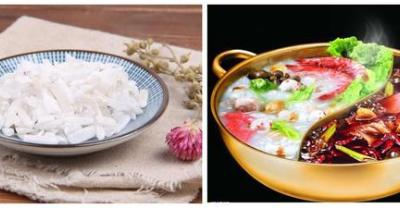
What are the commonly used Chinese medicinal herbs for making soup?
Soup-making herbs are Chinese medicinal herbs used as soup ingredients. By pairing herbs with food, the medicinal properties of the herbs are used to enhance the soup's nutritional value and edible benefits. Different...
-

Why Schisandra chinensis seedlings should be soaked in water before planting and the suitable soaking time
Schisandra chinensis seedlings naturally have indistinct main and lateral roots and many fine fibrous roots. After the seedlings leave the nursery, they go through several stages such as transport, storage and transplanting, and water loss occurs in both the root and crown areas. Using such seedlings results in a low survival rate, so before planting they should be soaked in water for 24 hours.
-
Sowing Method for Gastrodia elata Seeds After Soaking in Fungal Liquid
(1) Preparing the fungal bed: Start preparing the fungal bed in April. Because temperatures in Northeast China are low, outdoor cultivation of Gastrodia elata in winter is prone to frost damage, so wooden boxes are used to grow Gastrodia elata, with the wooden boxes serving as fungal beds. Place a layer of base culture material at the bottom of the wooden box, then place 5 high-quality fungal sticks, fill the gaps with humus soil or sawdust mixed with sand (3:1), then cover with an 18 cm thick layer of semi-decomposed fallen branches and leaves, water to maintain moisture, and wait until the seeds are collected, then sow immediately. (2) Sowing method: Take liquid Armillaria mellea spawn grown on good culture material and dilute it slightly with sterile water. Pour the freshly
-
How to make watermelon rind taste good? The method for making licorice watermelon rind strips
Watermelon rind is rich in carbohydrates, minerals and vitamins, and has effects such as clearing heat and detoxifying, and promoting urination. The following introduces the technique for making licorice watermelon rind strips: Cut into strips. Thoroughly wash fresh watermelon rind with clean water, drain off the water, remove the green outer skin and the red flesh, then use a stainless steel knife to cut the watermelon rind into strips 0.2 cm wide and 6 cm long. Salting. First mix sodium benzoate and table salt, in amounts of 0.1% and 10% of the weight of the watermelon rind strips respectively. Then, in a container, salt in the order of one layer of watermelon rind and one layer of mixed salt, with a somewhat larger amount of mixed salt on the topmost layer. The salting time is generally 24 to 48 hours. Rinsing. Put the salted watermelon rind strips into a container holding clean water, changing the water once every 1 hour, until the salt content in the watermelon rind strips drops to 1% (the salt content is tested with a handheld salinity refractometer). Sugar processing. Put the rinsed watermelon rind strips into a bamboo basket and drain off the water. Then, in a container, process with sugar in the order of one layer of watermelon rind strips and one layer of sucrose. The amount of sucrose used is 20% of the fresh watermelon rind strips, and the sugar processing time is 24 to 48 hours. Baking. Take out the sugar-processed watermelon rind, drain off the sugar liquid thoroughly, arrange it evenly on a baking tray, send it into the drying room, and bake at 65 to 70 degrees C until the moisture content of the watermelon rind is 25%. Auxiliary ingredient formula. Calculated per 100 kg of fresh watermelon rind strips, prepare the auxiliary ingredients: sodium saccharin 0.05 kg, monosodium glutamate 0.2 kg, citric acid 0.05 kg, table salt 0.5 kg, potassium sorbate 0.01 kg. Soaking the auxiliary ingredients. Place the dried watermelon rind strips in a container. Dissolve the auxiliary ingredients according to the formula in licorice water, pour into the container, and mix the watermelon rind strips thoroughly from top to bottom. On the second day, mix from top to bottom another 1 to 2 times, leave for 2 days, take out the watermelon rind strips and bake them. The licorice aqueous solution is made by boiling 4 kg of licorice and 25 kg of water per 100 kg of fresh watermelon rind strips, and filtering it. Baking. Evenly arrange the watermelon rind strips that have been soaked with auxiliary ingredients on a baking tray, and send them into the drying room for baking. It is suitable to control the drying room temperature at 60 to 65 degrees C. During baking, turn them several times, and when the moisture content of the product drops to about 25%, the baking is finished. Mixing in licorice powder. Cool the watermelon rind strips at room temperature. Mix licorice powder (used in an amount of 0.1% of the fresh watermelon rind strips) into the watermelon strips, and mix evenly to obtain the finished product.
-
Detailed Explanation of the Making Methods and Steps of Lingzhi (Reishi) Bonsai
1. Selection of materials: Different types of pots should be chosen according to the species, color, form, and size of the lingzhi (reishi). Generally, dark-colored ceramic pots are better. If it is red lingzhi or Matsutake lingzhi (Ganoderma tsugae), brown or purple pots are ideal, as they make the color tone harmonious, simple and elegant. If it is black zizhi (Ganoderma sinense) or black lingzhi, white porcelain pots should be chosen, using strong contrast to highlight the features of the lingzhi's form. Pots with the same or similar color tone as the lingzhi should not be chosen, to avoid a monotonous color tone. For lingzhi materials, wild-collected or artificially cultivated ones can be used. Artificially
-
Detailed Introduction to the Lazy Man's Honeysuckle King Variety
Characteristics: large flower quantity and high quality. Traditional honeysuckle, namely Damaohua and Jizhuahua, generally grows 2 flower buds at each leaf node, is vine-type, easily creeps along the ground or climbs and interweaves into a tangled mass, and the flower buds become deformed. The tree-type "Honeysuckle King," however, can grow 20 to 80 flower buds at a single leaf node, with some reaching more than 100; the bud length is about 1.5 times that of traditional flower needles, and the yield is 6 to 10 times that of traditional flowers. After four years, the dry flower yield per plant reaches 4 to 5 kg. The flower buds cluster into balls and strings, crystal clear and translucent, shaped like frost crystals: a delicate fragrance overflows, refreshing the heart.
-
Honeysuckle can prevent and treat poultry and livestock diseases, making it a valuable medicine for farming
Honeysuckle, also known as silver flower or Japanese honeysuckle flower, is the flower bud of Japanese honeysuckle (Lonicera japonica), a perennial semi-evergreen climbing vine of the Caprifoliaceae family. Honeysuckle is distributed throughout China, especially common in the south, and is now also cultivated artificially, with significant economic benefits, making it a path to wealth. It is mainly produced in Guangxi, Guangdong and Henan provinces and autonomous regions. From March to July each year, flower buds that are about to open are picked in the early morning and dried in the sun for later use. Every part of the honeysuckle is a treasure; it is a rare traditional Chinese medicine. At the same time, it is also a good medicine for preventing and treating poultry and livestock diseases. 1. Chicken diseases
-
A Detailed Guide to Processing and Making Licorice Watermelon Seeds
Ingredients: 500 g watermelon seeds, 10 g peanut oil, 25 g refined salt, 3 g licorice, 50 g quicklime. Method: 1. Pour the quicklime into a large bowl, add 500 ml of clean water, stir well to make lime water, then add the watermelon seeds and soak for 4-5 hours, then remove them, rinse thoroughly with clean water, and remove the mucous membrane on the shells. 2. Put the refined salt and licorice into a pot, pour in 150 ml of clean water, place over high heat and boil for 10-15 minutes, filter out the licorice to make licorice salt brine
-
How to treat licorice seeds? A detailed guide to the warm water soaking method
Soak the seeds in warm water at 60°C, stirring constantly. Once the water temperature drops, remove the seeds and soak them in clean water until they swell, then remove and drain them before sowing. Warm water soaking can increase the germination rate of the seeds by 15%-20%. Alternatively, soak the seeds in warm water at 60°C for 4-6 hours, remove them and place them in a warm spot, cover with a damp cloth, and rinse with clean water twice a day, then sow once the seeds crack open.
条件筛选