-

Detailed Explanation of Cultivation and Management Experience and Methods for Kernel Apricots
I. Technology Introduction 1. Variety selection: Main cultivars: Longwangmao, Yiwofeng, Baiyubian, Chaoren, Fenghong, Youren, Yuanren, etc. Baiyubian is an excellent pollinator variety for kernel apricots, with relatively strong cold resistance; Yiwofeng is extremely high-yielding, and the other three varieties are resistant to frost and tolerant of
-
Detailed Explanation of Key Techniques for High-Efficiency Cultivation of Kernel Apricot
Kernel apricot is one of the main dried fruits in northern China, with quite good economic returns. In recent years, due to the development of almonds, the comparative benefit of kernel apricot has somewhat decreased. To enhance the production efficiency of kernel apricot, comprehensive measures should be adopted. 1) Develop in suitable locations. Kernel apricot is drought-resistant and tolerant
-
How to Plant Apricot Kernels So They Sprout and Survive Easily
Planting apricot kernels should be done in spring and autumn. Choose fresh apricot kernels and place them in a plastic bag, sprinkling water once every three days until the shells crack. After they crack, soak them in warm water at 50 degrees for 1-2 hours, remove and dry them, then sow them in breathable, loose, fertile soil, and cover
-
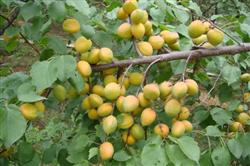
A Detailed Explanation of the Growth and Fruiting Habits of Kernel Apricot and the Key Points of Pruning Techniques
I. Growth and fruiting habits of kernel apricot: 1. Weak branching ability: After planting, kernel apricot produces a few long branches, and once these long branches enter the fruiting stage, they rarely branch, often showing insufficient branch quantity under natural growth. 2. High germination rate: Whether the long branches of kernel apricot are left unpruned or cut back, the vast majority of buds can germinate, ...
-
Gansu Tianshui kernel-apricot cultivation technology passes appraisal
Recently, the project "Development of Wasteland Resources in Tianshui City -- Demonstration of High-Yield Cultivation Technology for 100,000 mu of Kernel Apricot," jointly undertaken and implemented by the Tianshui Municipal Fruit Tree Research Institute and the horticulture departments of various counties and districts, passed the achievement appraisal of the Provincial Science and Technology Department. Experts believe that the project uses "four types of wasteland" for kernel-apricot base construction, which not only saves cultivated land but also plays an important role in reducing soil erosion and windbreak and sand fixation, and its results have reached the advanced level of similar projects in China. Up to now, the city has built 20 mu of improved-variety kernel-apricot scion orchards, established 647 mu of improved-variety seedling bases, propagated 8.31 million improved-variety seedlings, and reached 116,700 mu of production bases, with an annual output of 682,300 kg and an output value of 27.292 million yuan.
-
Detailed Explanation of High-Light-Efficiency Tree Shape Renovation Techniques for Kernel Apricot
In regions where kernel apricots are cultivated, we found that due to the influence of traditional habits, most fruit growers either do not prune or prune unreasonably. Each tree has an average of 8 to 10 large branches, the tree shape is chaotic, the proportion of complete flowers is low, the fruiting zone moves outward, the canopy is closed and shaded, and the small fruit-bearing branches in the lower part die prematurely due to shading, resulting in late fruiting, low yield and poor quality of kernel apricots. Therefore, high-light-efficiency tree shape renovation must be carried out to improve quality and efficiency. High-light-efficiency tree structure for kernel apricots After several years of exploration and practice, we believe that the high-light-efficiency tree shape for apricot should be
-
Detailed Explanation of Knowledge About Third-Grade Improved Varieties of Kernel Apricots
1. Yiwofeng Yiwofeng, also known as Cibian and Xiaolongwangmao, is one of the main cultivars in Hebei. The fruit is oval, slightly more rounded than Longwangmao, with a single fruit weight of 8.5-11.0 grams and a maximum of 15 grams. The skin is yellow, and when fully ripe it splits along the suture, freestone. Single kernel weight is 1.6-1.9 grams, and the kernel yield rate is 18.5%-20.5%. Kernel weight is 0.52-0.62 grams, kernel extraction rate is 38.2%, the kernel flesh is milky white, and the taste is sweet and fragrant. Extremely high-yielding, but not resistant to late frost. 2. Sanganqi (provisional name) Sanganqi is from He
-
Detailed Explanation of Pruning and Training Techniques for Kernel Apricot
Apricot trees are extremely sun-loving. In other countries, tree forms with 2 main branches and no lateral branches on the trunk, or with 4 main branches and no lateral branches on the trunk, are often used. In China, the natural round-headed form or the open-center tiered form is usually adopted, and a few regions use the natural spindle form. In short, there should not be too many main branches, the spacing between tiers should be large, sunlight should be able to enter the inner canopy, there should be many small branch groups and few large branch groups, and then high yields can be achieved. 1. Pruning of young trees Young trees need to expand their canopy as quickly as possible. When pruning, moderately cut back the leaders of the main branches, remove competing branches, crowded branches and whorled branches, and let the main branch leaders grow outward at an angle as single leaders.
-
Detailed Explanation of Key Techniques for Flower and Fruit Preservation in Kernel Apricots
1. Pre-bloom irrigation: Irrigate about 10 days before the apricot blooms. This can lower the ground temperature, increase air humidity, and delay blooming by 3-4 days, which helps avoid damage from late frost. 2. Frost prevention during the blooming period: During the blooming period, special attention should be paid to frost forecasts. When frost is forecast, smoke methods should be promptly used to prevent frost damage, that is, before the frost occurs, light the previously prepared straw, fallen leaves and other debris so that smoke covers the entire apricot orchard, and the temperature can be raised by about 2°C. Smoke agents can also be used, with a formula of 20% ammonium nitrate, 15% waste diesel oil, 15%
-
Detailed Explanation of Key Technical Points for Kernel Apricot Cultivation and Management
I. Technical Introduction 1. Variety selection: Main cultivars: Longwangmao, Yiwolfeng, Baiyubian, Chaoren, Fenghong, Youren, Yuanren, etc. Baiyubian is an excellent pollinator variety for kernel apricots, with relatively strong cold resistance; Yiwolfeng is extremely high-yielding; the other three varieties are resistant to frost and tolerant of low temperatures. 2. Seedling raising: Kernel apricot seedlings can be divided into two stages: rootstock seedling cultivation and grafted seedling cultivation. (1) Rootstock seedling cultivation. Select fields with sufficient sunlight, loose soil, and irrigation conditions as the seedling-raising site, and prepare the land and apply fertilizer in a timely manner. (2) Grafting. Kernel apricot seedling grafting is divided into bud
条件筛选