-

Can farmers benefit if agricultural product supply and demand are kept moderately tight to protect prices?
According to some media reports, at the China Rural Development High-Level Forum that ended on July 31, Zhang Tianzuo of the Department of Industrial Policy and Regulation of the Ministry of Agriculture said that at present the prices of many of China's agricultural products do not fully reflect their value, agricultural costs have risen sharply, and the benefits of planting and breeding
-
China's grain output this year must be kept stable at over 1.1 trillion jin
Premier Li Keqiang's government work report proposed that this year's grain output must be kept stable at over 1.1 trillion jin, to ensure food security and the supply of major agricultural products. Deputies and members of the committees said that agricultural infrastructure construction must be effectively accelerated, and agricultural modernization and rural reform advanced
-
How can grain be kept fresh in storage while safeguarding quantity, quality and ecological security?
At present, China's grain reserves have developed from the single-minded pursuit of quantity security to taking into account both quality security and ecological security. The greatest potential for safeguarding stored grain security lies in science and technology, and the fundamental path also lies in science and technology. The National Food Administration recently held the National Grain Science and Technology Innovation Conference and released
-

Can you still eat a swimming crab after it dies? How long can it generally be stored?
Seafood is something many people enjoy eating nowadays, and among sea crabs, the swimming crab is very popular. However, fresh swimming crabs are generally hard to come by, and the swimming crabs you buy are usually already dead by the time you get home. So can you eat a dead swimming crab? How long can a dead
-
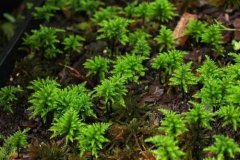
Common bryophyte: Climacium dendroides, how does Climacium dendroides reproduce, can Climacium dendroides be kept underwater, and is it easy to grow?
Climacium dendroides is a medicinal bryophyte. Its main medicinal effect is to relax muscles and stimulate blood circulation, and it also clears heat and removes dampness. Its distribution range is fairly wide, and it can be found in many regions of China, such as Jiangsu, Anhui, Zhejiang and other places. Climacium dendroides mainly grows in damp
-

Can Fissidens be kept underwater? A detailed guide to common moss transition-to-water methods
Fissidens is a bryophyte belonging to the Fissidentaceae family within the bryophytes. It mainly grows on moist soil along the edges of water-eroded gullies on plains, and it can often be seen in these areas. It is mainly distributed in the northeastern and northwestern regions of our country. The plants grow in dense tufts
-
How to Grow Potted Lavender, and Can It Be Kept in the Bedroom?
Lavender has a rich fragrance and beautiful flower colors and shapes, and when grown in pots it can accent a home environment, making it deeply loved by plant enthusiasts. Lavender has relatively high requirements for its growing environment, so what is the method for growing potted lavender? Can
-
How do you care for a potted jasmine plant, and can it be kept in the bedroom?
Jasmine is a very familiar ornamental flower, with pure white blooms and a fragrant scent, usually opening from May to August. Jasmine symbolizes loyalty, respect, purity, chastity and simplicity, and growing it in pots is also a fairly popular approach. So
-
How to grow and cultivate Christmas cactus (Schlumbergera), the soil should be kept moist
Summary Potting soil: choose a sandy soil that drains well, is airy, and yet retains moisture; place about 2cm of small stones at the bottom of the pot and apply base fertilizer. Watering: the soil needs to be kept moist, water every other day. Fertilizing: apply a dilute liquid fertilizer about once every 15 days, and stop fertilizing during the high-temperature period in summer. ⟦4 <p class="cintro"><span>Summary</span>Potting soil: choose a sandy soil that drains well, is airy, and yet retains moisture; place about 2cm of small stones at the bottom of the pot and apply base fertilizer. Watering: the soil needs to be kept moist, water every other day. Fertilizing: apply a dilute liquid fertilizer about once every 15 days, and stop fertilizing during the high-temperature period in summer. Light and temperature: the suitable temperature is 20-25°C, place it in a well-ventilated shaded spot. Pest and disease control: actively prevent and control red spider mite damage.</p> <p></p> <p>Christmas cactus is a beloved plant; it can effectively absorb carbon dioxide from the air and purify the air. The flower colors of Christmas cactus are divided into red, yellow, purple, orange, pink, etc., but red flowers are the most common.</p><p></p><p><strong>1. Potting soil</strong></p><p>Choose a sandy soil that drains well, retains moisture, and is airy. You can mix sandy soil, leaf mold, compost soil, and sand in a 3:4:2:1 ratio to make a soil suitable for Christmas cactus growth. When planting in a pot, you can place about 2cm of small stones at the bottom of the pot, then spread a layer of thin soil, then sprinkle some decomposed chicken manure, bone meal, and hoof and horn shavings on the thin soil as base fertilizer, then add another thin layer of potting soil over the base fertilizer. Then place the Christmas cactus in the center of the pot, add the previously prepared soil to maintain the original depth, then press the soil firmly. After watering thoroughly, place it in a semi-shaded spot.</p><p></p><p><strong>2. Watering</strong></p><p>Christmas cactus likes to grow in a semi-shaded, moist environment, and during its growing period the soil should be kept moist. You can water once a day or every other day, and you can spray from top to bottom to wet the plant. About every 4 days you can water the soil thoroughly. This kind of watering can maintain the moisture level of the soil without becoming too dry or too wet. Christmas cactus has two periods when growth stops: after flowering and during the high temperatures of summer. At these times, water appropriately, and water thoroughly only after the soil has dried out. During high temperatures, you can spray water, which can lower the temperature, but be careful not to water at noon, when moisture evaporates relatively quickly.</p><p></p><p><strong>3. Fertilizing</strong></p><p>During the growing period of Christmas cactus, apply a dilute liquid fertilizer about once every 15 days. You can mix 30 grams of potassium fertilizer, 15 grams of nitrogen fertilizer, and 20 grams of phosphorus fertilizer. During the high-temperature period in summer, fertilizing can be stopped. In autumn, you can fertilize Christmas cactus every week, which can provide sufficient nutrients and help flower bud formation, while in winter you can spray a 1000-fold potassium dihydrogen phosphate liquid fertilizer on the leaf surface once a week.</p><p></p><p><strong>4. Light and temperature</strong></p><p>During the growing period, Christmas cactus should be placed in a well-ventilated shaded spot. By mid-October, Christmas cactus has already produced flower buds, and it can be moved indoors or placed in a spot with ample sunlight to avoid frost. The suitable growing temperature for Christmas cactus is 20°C-25°C. If the temperature is above 22°C, place Christmas cactus in a ventilated shaded spot. In winter, the indoor temperature for Christmas cactus needs to be maintained above 10°C, because when the temperature is above 35°C or below 2°C, the plant will stop growing.</p><p></p><p><strong>5. Pest and disease control</strong></p><p>In hot weather, red spider mites are most likely to occur and spread. Small yellow-brown spots will appear on the stems, and in severe cases the stem color will turn yellow and cause wilting. Red spider mites are most likely to appear when there is no ventilation. If only a few are found, they can be washed off with clean water. In severe cases, you can spray a 0.2-degree lime sulfur mixture or a 40% dicofol emulsifiable concentrate 2000-fold solution.</p>
-
How to grow hibiscus as a potted plant at home, and can it be kept indoors
When you visit a friend's home, you will notice that they all have potted hibiscus plants, so it seems it has become one of the common varieties grown in households. Its flowers are brilliantly colored and make people feel very happy, so anyone who sees it will want to grow one at home too
条件筛选