-
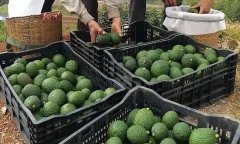
Menglian joins hands with China and Israel to build Asia's avocado hometown, expanding planting scale this year
Menglian, located in Pu'er City, Yunnan Province, China, is an autonomous county of ethnic minorities including the Dai, Wa and Lahu peoples. This obscure place, situated at the southwesternmost corner of China's border and adjoining Myanmar, has become known to more and more
-
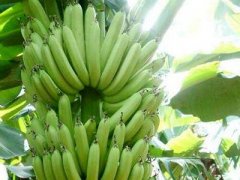
Banana agricultural insurance pioneers drone disaster assessment, what is the claim amount?
The Council of Agriculture has been piloting agricultural insurance one after another. Following fruit insurance for pears, mangoes, wax apples, and pineapples, this year it launched insurance for pomelo and banana plants. Among them, banana plant insurance is the first to combine drone aerial photography technology to assess disaster-damaged area. If the area of lodged banana plants exceeds
-

When is the wheat jointing stage? It can begin in mid-to-late March
Summary: The wheat jointing stage generally occurs around March 20 each year, that is, when the internodes at the base of the wheat plant emerge about 2cm above the ground, it enters the jointing stage. From the jointing stage to before heading is a period of relatively fast growth. To increase the number of spikes and the seed-setting rate, a small amount of quick-acting nitrogen fertilizer can be applied according to the growth
-
Field Management Techniques for Rice During the Jointing and Panicle Elongation Stage
Rice jointing begins around the peak tillering stage and internode elongation does not stop until several days after heading; in production, this period is called the jointing and panicle elongation stage. The field management goals during the jointing and panicle elongation stage are: on the basis of preserving tillers and increasing panicles, promote strong stems and large panicles, and prevent excessive vegetative growth
-
Solutions and Precautions for Yellowing and Withered Leaves on Parlor Palms
The parlor palm is also called the dwarf coconut palm or miniature palm. Because its plant shape closely resembles a scaled-down coconut palm tree, it got the name parlor palm. So today, the editor will introduce to you what to do when parlor palm leaves turn yellow and withered, as well as precautions for growing parlor palms.
-
What "Sesame Flowers Bloom, Rising Higher with Each Joint" Means, and the Benefits and Effects of Black and White Sesame, the Crown of the Eight Grains
Sesame is a common food in our daily life, and in some places it is called hulma. Among the kinds we most often encounter are southern black sesame, sesame oil, sesame paste, and so on, and it has many uses. So what does the rural post office saying "sesame flowers bloom, rising higher with each joint" mean?
-
How do brome grass and jointed goatgrass reproduce, and how should they be removed?
In recent years, a large number of grass-family weeds have appeared in some wheat-growing regions, such as brome grass, jointed goatgrass and wild oats. This type of grass-family weed is not very easy to remove; it is cleared year after year yet still grows year after year, and for this reason farmer friends feel helpless and get bad headaches. So how do grass-family
-
What are the latest management key points during the sugarcane jointing stage?
Sugarcane is a rather unique fruit crop, with very high demand in our country, and it is grown over large areas all across the country. It contains very abundant sucrose, and growing sugarcane is neither easy nor simple, as each growth stage of sugarcane has different management methods.
-
Latest Technical Key Points for Field Management of Wheat at the Jointing Stage
Wheat is a crop everyone is familiar with, and it is grown across large areas in northern China. Wheat goes through several different growth stages. Each stage has different management methods, and the jointing stage is one of them. The jointing stage is when wheat grows
-
Latest Field Management Techniques for Rice During the Jointing and Panicle Elongation Stage
Rice jointing occurs over a period of time around the peak tillering stage, and rice does not stop jointing growth until after it begins heading, so this stage is called the jointing and panicle elongation stage. This stage is extremely important for rice production and is related to changes in rice yield.
条件筛选