-

Can a Phalaenopsis orchid still survive if all its roots have rotted? Here's how to coax it into growing new roots
I believe friends who have kept Phalaenopsis orchids for the first time have all been through root rot, and generally speaking, even with a strenuous rescue effort, for less experienced growers the result is mostly in vain. Here I'd like to share one of the fastest root-inducing methods after root rot, namely the "inversion method." How exactly do you do it? Let's take a look below. "Inver
-

Is September still soon enough for pinching? Get these flowers pruned now for a burst of blooms in autumn and winter
Recently someone asked: "It's already September, can I still pinch back my flowers at home? Will I prune them to death?" Actually, whether you can pinch in September depends on the plant. Not all plants are suitable, but if you pick the right species and prune at the right time, it can actually make them grow more vigorously and bloom more. First, you need to understand what "pinching" really is
-

Don't throw away a Phalaenopsis orchid with a rotting crown - with the right method you can still save it
I believe many friends who grow Phalaenopsis orchids panic when they see rot appearing in the crown, but in fact, as long as you spot it in time and treat it properly, this "butterfly among flowers" still has a chance to recover. Especially for those growing Phalaenopsis orchids in the office or at home, mastering the correct steps is key, so here are the specific
-

Are aerial roots of Phalaenopsis still useful after being cut off?
Several plump white "little whiskers" have popped out from outside the Phalaenopsis pot. I looked it up and found out they are aerial roots. So can these things actually be cut? If they are accidentally broken off, are they still useful? The aerial roots of Phalaenopsis "can be cut, but it is not necessary to cut them, and you definitely should not cut them carelessly." You first need to understand what these aerial roots are for - Phalaenopsis in the wild originally grows on trees, not rooted in soil. These aerial roots are its "hands" and "nose": on one hand, they can grip the bark to anchor itself; on the other hand, they can directly absorb water and oxygen from the air, and even help with photosynthesis. So if the aerial roots are not damaged and are still green and plump, keeping them is only beneficial to the orchid, and there is no need to cut them at all.
-
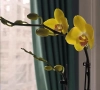
What to do when a Phalaenopsis orchid has stem rot and only the roots are left, can it still be saved?
Gardeners who grow Phalaenopsis orchids have probably all experienced this kind of crushing moment: an orchid that was perfectly fine suddenly has roots that are rotten, black and slimy, falling off at the slightest touch, and when you lean in there is a sour, foul smell, the leaves droop limply downward, and the stem even has brown rotten spots... At this point many people think "it's hopeless" and just toss it into the trash. But the
-

Can a Phalaenopsis orchid still grow back after its root tips turn black? Handle it this way
A perfectly healthy Phalaenopsis root tip, and for no apparent reason it turns black. These are the orchid's "lifeline," responsible for absorbing water and nutrients. Can it still grow back after turning black? How should you handle it? Can it still grow once the root tip turns black? Actually, there is no need to panic too much. As long as the Phalaenopsis root system has not completely rotted and the pseudobulb is still firm, there is hope. The root
-

Phalaenopsis leaves half-dried after sun scorching: can it still survive? Treatment methods
Once summer arrives, many flower lovers have made the same mistake: they leave their Phalaenopsis forgotten under the sun for half a day, then come back to find half the leaves dried and curled, feeling hard and stiff, as if scorched. At this point you must be really panicking: can this plant still survive? Don't worry, don't throw it away yet; with proper treatment it can most likely be saved. Actually
-

Do Phalaenopsis seedlings need to be divided into separate pots, and can the old plant still survive?
A little seedling has popped up in the Phalaenopsis pot - should it be divided into its own pot or not? Will dividing it harm the old plant? But if it's not divided, the seedling might get crowded and not grow well. Today let's talk about this - all practical experience, easy for beginners to understand too. When a Phalaenopsis seedling first emerges, don't rush to move it - it hasn't yet developed "independence." You
-

Can a Phalaenopsis with stem rot still be saved? Detailed explanation of the most effective treatment
Can a Phalaenopsis survive stem rot? Actually, as long as it is discovered early and treated promptly, there is a good chance it can be saved. But if you wait until the entire stem has rotted through, then even a miracle worker cannot save it. So the key is "early detection, early action." How do you tell if it is stem rot? The most obvious sign is brown spots appearing on the stem
-

Can a Phalaenopsis still bloom after it grows a new offshoot?
Growers of Phalaenopsis orchids have probably all run into this situation: a perfectly healthy pot suddenly sprouts a small green bud next to the roots, plump and round with tiny leaves - this is a new offshoot of the Phalaenopsis. Many people feel both happy and worried when they see this little offshoot, and there is also the question: if a Phalaenopsis has grown an offshoot, can it still bloom this year? Phalaenopsis
条件筛选