-

Intensive Cage Culture Techniques for Largemouth Bass
Using cages for intensive culture of largemouth bass can also achieve excellent economic benefits. Cages can be set up in reservoirs, lakes, rivers, or ponds. 1. Cage preparation and placement. The cage is a Lishi-type double-layer covered cage, with specifications of 4 m x 4 m x 2 m, and mesh size of 2.5 cm.
-
How Big Can Silver Carp Actually Grow in One Year of Intensive Culture?
Abstract: Silver carp in intensive culture can reach the market size of 4 jin in one year, while ordinary culture can only reach about 2.5 jin, so to reach about 4 jin in one year, you need to feed compound feed and also ensure good water quality. In silver carp culture, the first thing to pay attention to is the stocking density.
-
Detailed Explanation of Rice Super-High-Yield Intensive Cultivation Technology
I. Technical Characteristics Compared with traditional high-yield cultivation techniques, the rice super-high-yield intensive cultivation technology system has the following characteristics. 1. Early transplanting of young seedlings. The intensive cultivation technology allows transplanting of 2-3 leaf-age seedlings in winter fallow fields or winter paddy fields, and 3-5 leaf-age seedlings in double-cropping fields
-
Key Technical Points for Intensive Cultivation Management of King Oyster Mushroom
King Oyster Mushroom, also known as Pleurotus eryngii, gets its name because it has the fragrance of almonds and a thick, abalone-like texture. It is a rare new edible mushroom variety successfully developed and cultivated in recent years, combining food, medicinal and dietary therapeutic uses. There are relatively many King Oyster Mushroom products on the market, often
-
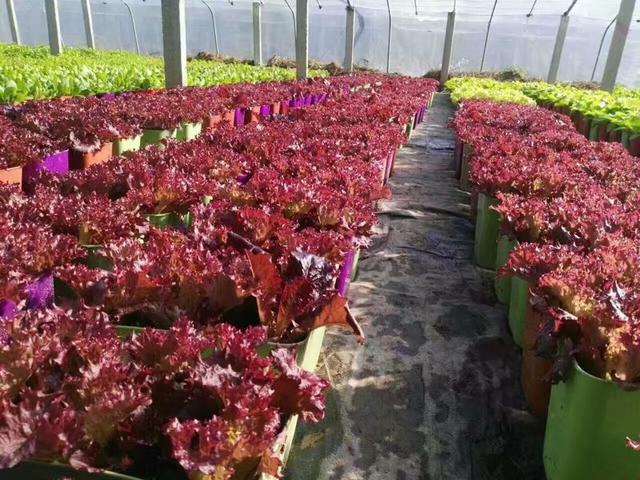
Growing vegetables this way is labor- and time-intensive, yet still profitable
Growing vegetables this way is labor- and time-intensive, yet surprisingly profitable!
-
Intensive Lake Duck Farming Brings High Profits, Little Ducks Turn into Swans
Intensive Lake Duck Farming Turns Them into "Swans"
-
Techniques for rearing summer fry fish: stock one main fish species, do not introduce carp, and combine feed with fertiliser for intensive feeding
Summer fry fish are small and delicate, with a weak ability to withstand adverse environments. In addition, at this stage the summer fry undergo a dietary transition, and their digestive system structure and function are not yet fully developed, so their digestive capacity is poor. If rearing methods are improper, mass mortality will occur. Through experiments, the author found that adopting the following rearing methods can significantly increase the survival rate and rearing efficiency of summer fry. Scientific stocking and rational matching: the traditional rearing method is mainly polyculture of multiple species. However, from production practice, because fish have different feeding habits, this kind of rearing
-
New Green Intensive Rice Cultivation Technology for Cold Regions
Agricultural science and technology innovation is the fundamental measure for improving overall agricultural production capacity. Safety, ecology, increased income and increased efficiency are the new directions for rice production development. The new cultivation technology - intensive rice cultivation - has been successfully tested over four years at Suihua Yong'an Farm. 1. Cultivation characteristics: saves seed, saves water, saves labor, saves seedling supplies, saves seedbed area, while being environmentally friendly, increasing yield, reducing costs, increasing benefits, and having wide adaptability. It is an advanced rice production cultivation technology in the world today. 2. Main cultivation technical measures and characteristics: 1. Select and breed early-maturing, high-yield, stress-resistant, strongly tillering
-
Key Technical Points for Sanitation Management and Disease Control in Intensive Rabbit Farms
An intensive rabbit farm is a large-scale rabbit product enterprise operated with factory-style management, featuring standardized management, high stocking density, rapid herd turnover, and high operational efficiency. Intensive production has many advantages: relatively enclosed production buildings, frequent breeding in all four seasons, efficient cyclical use of equipment, and balanced batch marketing of products. The disadvantages are: frequent high-speed operation puts pressure on disease prevention, making a high incidence of disease extremely likely. Disease control in intensive rabbit farms differs from traditional rabbit farming; any disease that may cause a decline in operating profit
-
New intensive cultivation technology for small oyster mushrooms originated in South Korea
The small oyster mushroom belongs to the subdivision Basidiomycotina, order Agaricales, family Pleurotaceae, genus Pleurotus. It is rich in protein, sugars, vitamins, iron, calcium and the 8 essential amino acids for the human body. Its flesh is plump and tender, with a fresh and pleasant taste, and it has high edible and health-care value, making it highly favored by consumers. It is a mushroom with relatively large production and consumption in South Korea. Because small oyster mushrooms are not easy to transport over long distances or keep fresh, very few fresh mushrooms are imported from abroad, and production is mainly domestic in South Korea. Compared with conventional oyster mushroom cultivation, the biological conversion rate of small oyster mushrooms is relatively low, only 50%-80%, and moreover, grading
条件筛选