-
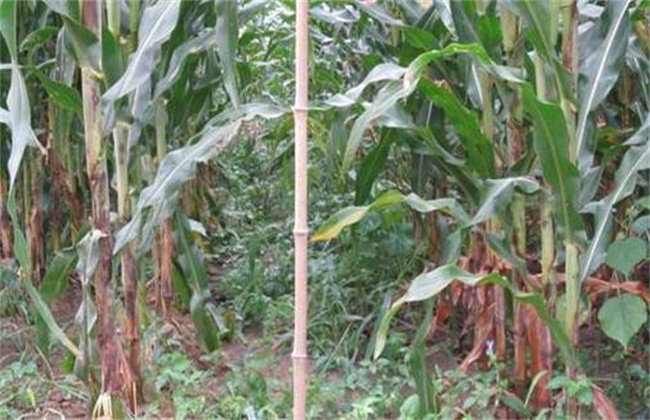
Identifying and Controlling Corn Nutrient Deficiency Symptoms
Corn Nutrient Deficiency Symptoms and Control Methods
-

How to identify common easily confused symptoms in rice
I. Several kinds of bacterial wilt 1. Purple sheath blight bacterial wilt. Mostly seen in the late stage of late rice, often occurring in clumps in the field, and also with several plants affected in one hill. The base tissue of the rice is soft-rotted, with dark brown lesions. Peeling open the basal leaf sheath and stem, many black sclerotia smaller than amaranth seeds can be seen. 2. Bacterial foot rot bacterial wilt. Occurs sporadically in the field, generally 1-3 plants affected in one hill; the base of diseased plants shows mouse-gray rot, the root system is sparse and decayed, and peeling open the basal stem reveals it is full of foul water, with no sclerotia. 3. Physiological bacterial wilt. The rice stem shrinks and dries, and when the base of the rice stem is pinched by hand it is shrunken and hollow, making the plant prone to lodging, resembling damage by brown planthopper sclerotia. But there is no insect body at the stem base, no lesions, and no sclerotia in the leaf sheath and basal stalk; it mostly occurs when late rice is near maturity, with patches and blocks of bacterial wilt and wilting.
-
Detailed Guide to Identifying Symptoms of Major Potato Diseases and Their Control Methods
I. Late blight. 1. Symptom identification. This disease is a fungal disease that affects stems, leaves and tubers. Affected parts of stems and leaves develop brown water-soaked spots, which later expand into black patches. When humid, a ring of white mold-like growth surrounds the lesions, very obvious on the underside of leaves. After tubers are affected, brown or blue lesions initially form, then expand, and the surface gradually becomes sunken, while the potato flesh beneath the lesion turns brown. 2. Control methods. Selecting disease-resistant varieties is the most economical and effective way to control late blight: such as Wushu No. 8, No. 9, No. 11, Longshu No. 3, No. 5
-
How to Identify and Control Southern Rice Black-Streaked Dwarf Virus
Southern rice black-streaked dwarf virus is a rice viral disease occurring in southern rice-growing areas, with characteristics of strong explosiveness, rapid spread, great difficulty in prevention and control, and heavy damage losses. Rice and corn infected at the seedling stage will basically suffer total crop failure. In 2011, after comprehensive prevention and control, a total of about 8,500 mu of southern rice black-streaked dwarf virus occurred in Lianyuan City, of which the affected area of middle-season rice was 6,500 mu, the affected area of late rice was 1,600 mu, and the affected area of corn and other crops was 400 mu. A total of 25.93 tons of rice was lost, of which
-
How to Identify Ginger Bacterial Wilt? Detailed Explanation of Prevention and Control Methods
Ginger bacterial wilt, also known as ginger rot or ginger bacterial blight, is the most serious disease in ginger production. It causes damage from the ginger seedling stage through the ginger rhizome harvest period as well as during storage, and it has a wide host range. The pathogen of ginger bacterial wilt belongs to the bacterium Pseudomonas solanacearum. The primary infection comes from diseased ginger seed or bacteria-carrying soil, and the pathogens from other diseased hosts such as peanut bacterial wilt and tomato bacterial wilt can also be transmitted to ginger. The ginger bacterial wilt pathogen invades through wounds on ginger roots and tubers (mainly insect-bored wounds). The affected roots first appear water-soaked and light brown, and the pathogen moves along the vascular bundles into the ginger rhizome, and the affected
-
A Detailed Guide to Identifying and Controlling the 28-Spotted Ladybird Beetle on Eggplant
The 28-spotted ladybird beetle on eggplant belongs to the order Coleoptera, family Coccinellidae, also known as the groundcherry ladybird beetle, commonly called "flowered big sister." Its host crops include solanaceous vegetables such as eggplant, tomato, green pepper and potato, as well as cucurbitaceous vegetables such as cucumber. In addition, it can also damage crops such as beans, groundcherry and Chinese cabbage, among which eggplant suffers the most serious damage. It is distributed throughout the country, but occurs in larger numbers and causes serious damage in areas south of the Yangtze River basin. 1 Field identification 1.1 Damage characteristics It damages crops as adults and larvae. Newly hatched larvae
-
Differences Between Pleione and Aspidistra and How to Identify Them
Scientific name: Pleione bulbocodioides. Alternative name: Yiyelan (one-leaf orchid). Family and genus: Orchidaceae, perennial herb. Morphological features: When Pleione blooms, a single leaf grows beside the flower, which is why it is also called Yiyelan (one-leaf orchid), while the name Pleione comes from its garlic-like pseudobulb. It is terrestrial or epiphytic; the pseudobulb is ovoid or conical, 2 cm to 3 cm long; the flowering period is April to June; the upright inflorescence is 15 cm tall to
-

How to identify nutrient deficiency symptoms in rapeseed cultivation?
How to identify nutrient deficiency symptoms in rapeseed cultivation
-

-

Detailed Guide to Identifying and Controlling Common Diseases of Water Spinach
Common Diseases of Water Spinach and Their Control
条件筛选