-
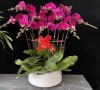
Detailed guide to fertilizing hydroponic Phalaenopsis orchids: how to fertilize for the best results
Many flower lovers always run into pitfalls when growing hydroponic Phalaenopsis orchids: either the roots rot and leaves turn yellow after fertilizing, or the plant only grows leaves and never blooms. In fact, the key to fertilizing hydroponic Phalaenopsis orchids lies in "choosing fertilizer by stage + controlling the concentration well." Today I will share the detailed method with everyone, and if you follow it, your Phalaenopsis orchids will have strong roots and bloom every year~ 1. By stage
-

Can Hydroponic Plants Absorb Formaldehyde? Which Plants Are Good at Removing Formaldehyde?
Many people who have just finished renovating their homes like to place a few hydroponic plants, feeling they are clean and can remove formaldehyde. But is this really reliable? Today let's talk about those plants that are often mentioned. Actually, whether soil-cultured or hydroponic, the principle by which plants absorb formaldehyde is much the same, mainly relying on the stomata on the leaves and the root system. However, hydroponics has a
-

Can a hydroponic Phalaenopsis survive with an iron skewer inserted? Here's how to fix the flower stem
Generally speaking, when growing Phalaenopsis, you choose between soil culture and hydroponics. Many bloggers online share soil-culture care tips, but few are found sharing the care troubles of hydroponics. Among them, how do you fix the flower stem shape in water culture so it grows better along the way? Because water culture is different from the support provided by potting medium, solving this also took no small amount of thought.
-
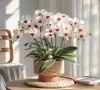
Reasons and Solutions for Yellowing Leaves in Hydroponic Phalaenopsis Orchids
Today I want to share with you the 4 main reasons for yellow leaves in hydroponic Phalaenopsis orchids and the targeted solutions, so your orchid can turn green and lush again. Reason one: temperature too high. The most suitable growing temperature for Phalaenopsis is 15-25°C. Once the ambient temperature stays above 30°C for a long time, the leaves are prone to turning yellow from being "stifled." This is especially true for hydroponic Phalaenopsis, whose roots are directly
-

Bare-Root Hydroponic Growing Methods and Precautions for Phalaenopsis Orchids
I believe that whether you are a new flower enthusiast or a veteran grower, anyone who has kept "Phalaenopsis" orchids has encountered root rot and hollow roots. The cause of hollow roots is that the root has lacked water for a long time, then after exhausting itself it becomes shriveled. As for root rot, it is mostly because the ventilation environment is not good enough while the growing medium retains water too well, which then leads to long-term water accumulation.
-

Are hydroponic plants easy to grow in summer? Recommendations for the easiest varieties to keep alive
As soon as summer arrives, many friends start to worry: with soil-grown flowers, watering too much causes root rot, and watering too little makes them wilt. Why not try hydroponics? But then they worry it is too hot and plants in water are hard to look after. Actually, hydroponics in summer is not as difficult as you might imagine. Pick the right varieties and master a few small tricks, and it is actually much less trouble than soil growing. Is hydroponics in summer really good
-
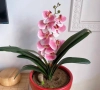
Causes and Solutions for Root Rot in Hydroponic Phalaenopsis Orchids
Root rot in hydroponic Phalaenopsis orchids? Don't panic! Below, I'll explain how to save the roots, so even orchids with rotten roots can be revived and reborn. Beginners, be sure to save this. Causes of root rot: watering too frequently. Hydroponics does not mean growing the plant submerged in water! Many people think hydroponics means adding water every day, and as a result the roots sit in standing water for a long time. Root rot from lack of oxygen is inevitable. Remember, "moist is not
-

How high should the water level be for hydroponic Phalaenopsis, and how should the water be changed?
Friends who have grown potted Phalaenopsis have probably also thought about trying hydroponic care, because it looks simpler, and when placed in the living room, water-grown plants always give a more elegant feeling. So for hydroponic Phalaenopsis, what level should the water be controlled to? And how should its roots be protected later during water culture? The method is actually
-
How to Grow Lychee Seeds So They Sprout and Bloom? A Detailed Guide to the Hydroponic Method
Today I'm sharing a step-by-step guide to turning lychee seeds into green plants, covering the whole process from soaking to a full pot, so even beginners can easily get it. Seed selection and soaking: not all lychee seeds can sprout! Give priority to varieties with large seeds and hard, plump shells, such as Lychee King and Bai Tang Ying, which are very suitable. Those shriveled ones or ones with wormholes
-

Is hydroponics or soil culture better for Phalaenopsis? There's an art to choosing the potting medium
As everyone knows, Phalaenopsis is beloved for its delicate, graceful bearing and flower shape that closely resembles a butterfly. At flower markets, many stallholders place it in the "C position" of their storefronts. When it comes to choosing one, it also comes in potted culture and water culture, so how do different media affect the growth of Phalaenopsis? In fact, once you find the right technique, both care methods work fine.
条件筛选