-

Which Trailing Plants Are Prone to Problems and How to Solve Common Issues
Does anyone else feel like they just can't walk past a trailing plant? Fuzzy leaves, cascading strings of flowers - hang one on the balcony and the whole vibe instantly goes up a notch! But as you care for them, you start to realize some trailing plants are absolute "problem children," throwing tantrums every few days. King fern: the King fern looks majestic, but it's actually a delicate
-

Reasons why tomato fruits expand slowly and how to solve them
Tomato fruits grown at home that expand slowly and stay on the small side are usually caused by a combination of factors such as variety, nutrition, environment, and management. Today let's talk about the reasons and the solutions, so even beginners can master them easily! 1. Reasons Variety-related: blindly introducing varieties that are not suited to the local climate and soil conditions, such as in high-temperature, rainy
-

Reasons for Poor Nutrient Absorption in Phalaenopsis Orchids and How to Solve Them
Many flower enthusiasts encounter the problem of poor nutrient absorption in Phalaenopsis orchids (moth orchids) during care, with plants showing symptoms such as yellowing leaves, slow growth and small, thin flowers. To solve this problem, it is necessary to first clarify the underlying causes and then treat them accordingly. Poor nutrient absorption in Phalaenopsis orchids is commonly caused by improper choice of potting medium.
-

The Impact of a Poor-Condition Mother Plant on Phalaenopsis Propagation and How to Solve It
In the propagation of Phalaenopsis orchids, the condition of the mother plant plays a decisive role. If the mother plant used for propagation is in poor condition, it will trigger a series of problems that affect the success rate of propagation and the quality of the new plants. When a Phalaenopsis mother plant is in poor condition, the first thing affected is a significant drop in propagation success rate. The mother plant itself grows poorly, with insufficient nutrient reserves
-
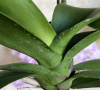
Reasons for Sticky Sap on Phalaenopsis Spikes and How to Solve It
For people who love flowers and plants, Phalaenopsis (moth orchid) is a flower that combines beauty with symbolism. After blooming, they have a unique butterfly-like quality, and because there are many varieties, their colors are also very vibrant. However, although it is the first choice for home decoration, during the care process many flower lovers encounter a confusing issue.
-

Reasons Why Phalaenopsis Does Not Bloom for a Long Time and How to Solve It
Phalaenopsis orchids have delicate, beautiful flowers and are a popular choice for indoor ornamental plants. However, many flower enthusiasts are full of anticipation, only to be disappointed when their Phalaenopsis does not bloom for a long time. Don't worry - as long as you identify the cause, you can help your Phalaenopsis bloom again. Reasons why Phalaenopsis does not bloom: Improper temperature: The suitable growing temperature for Phalaenopsis is
-

Reasons for Split Leaves on Phalaenopsis Orchids and How to Solve Them
The reason Phalaenopsis orchids are so widely appreciated is that they come in a huge number of varieties, and their petal colors are enough to suit most people's tastes, such as single-color types in pure white, pink, and purple, as well as bi-color types with spotted or striped flowers. Precisely because of this, many flower lovers simply cannot resist "chopping off their hands" and keep carrying pot after pot home.
-

Causes of Split Leaves on Phalaenopsis Orchids and How to Solve Them
Phalaenopsis orchids attract countless flower lovers with their elegant, dancing blooms. Yet this beautiful fairy among flowers has a "delicate" side, namely the problem of split leaves often encountered during care. When faced with this problem, how should flower lovers solve it? For growers, the last thing they want to see is definitely
-
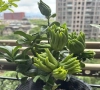
The symbolism of Buddha's hand and how to solve leaf drop in winter
Buddha's hand (Citrus medica var. sarcodactylis) gets its name from the unique shape of its fruit, which resembles the slender hand of Guanyin Bodhisattva, and it is also known as "Buddha's hand citron." With its graceful form, evergreen leaves that stay green all year round, and its small, delicate flowers and fruits of varying shapes, Buddha's hand has won the affection of many enthusiasts. Its leaves are long and oval, leathery and glossy, and its flowers are pure white.
-

Common Problems in Foliage Plant Care and How to Solve Them
In the process of growing foliage plants, many enthusiasts often run into tricky problems. To help everyone care for these beautiful green plants better, the following is a detailed breakdown of some common problems with foliage plants and the strategies for dealing with them. The common problems when growing foliage plants mainly include the following aspects: improper watering
条件筛选