-

The commodity attributes of farmers' homestead land should be recognized
To achieve the goal of building a moderately prosperous society in all respects, solving the problems of farmers and rural development is key. If rural areas cannot develop and farmers cannot become prosperous, the goal of building a moderately prosperous society in all respects will fall through. China has long had a urban-rural dual structure,
-
The prerequisite for encouraging farmers to buy homes is strengthening their sense of rights
To encourage farmers to buy homes in cities, how much financial support is available is especially critical. Encouraging farmers to buy homes in cities through financial support alone is far from enough. For more farmers to be willing to buy homes in cities, giving them stable expectations of their rights cannot be absent. Media reports say that the Ministry of Housing and Urban-Rural Development recent
-
Top-level Design for Rural Reform Unveiled; Land Reform to Explore Voluntary Paid Exit from Homestead Land
The recent release of two important documents has set the direction and path for China's rural reform and development in the coming years. In the proposal for the 13th Five-Year Plan released on November 3, regarding rural reform and development policy, it was proposed: stabilize rural land contracting relationships, improve the method of separating land ownership,
-
Why is homestead reform the key point of rural land reform? Expert interpretation
Promoting the orderly transfer of land management rights can improve the efficiency of land resource allocation and guide farmers and growers to advance appropriately scaled agricultural operations in forms such as self-operation or entrusted operation, which can improve the production and operation efficiency of farmers and growers while increasing their income. Yesterday, Zhong
-
Paid Use of Homestead Land Included in Top-Level Design of 13th Five-Year Rural Reform
On November 3, the "Recommendations of the Central Committee of the Communist Party of China on Formulating the 13th Five-Year Plan for National Economic and Social Development" (hereinafter referred to as the Recommendations) was officially released. The Recommendations proposed: stabilize rural land contracting relationships, improve the measures for separating land ownership rights, contract rights and management rights,
-
Rural homestead land voluntary paid exit mechanism to be explored and established
Beijing Times graphic by Xie Yao Original title: Rural homestead land to explore voluntary paid exit mechanism The General Office of the Central Committee of the Communist Party of China and the General Office of the State Council recently issued the "Comprehensive Implementation Plan for Deepening Rural Reform", which is the top-level design for China's current rural reform and a
-
A Review of Research on Rural Homestead Issues in China: A Synthesis of Core Viewpoints
With the rapid development of China's economy and the continuous acceleration of urbanisation, urban construction land has been continuously expanding. Urban construction land resources are becoming increasingly scarce, and the expansion of urban scale has incorporated the rural collective land on the outskirts of cities into urban land. After the 1978 reform
-
Revisiting the Issue of Rural Homestead Withdrawal
I. Introduction With the acceleration of urbanization, China's rural population has been migrating to cities and towns on a large scale, and the issue of rural homestead withdrawal has become increasingly prominent. Under the situation of conserving land use, topics such as the utilization of rural homesteads, the establishment of a homestead withdrawal mechanism, and the reform of the rural homestead system have been given considerable theoretical and practical significance. To summarize, there are mainly the following five points: First, the current rural residential land occupation scale is large and the utilization efficiency is low, causing a waste of land resources and being unfavorable to the protection of the red line of 1.8 billion mu of arable land. Second, industrialization and urbanization have brought about the paradox of a decrease in rural population and an increase in rural construction land, which is unfavorable to the intensive use of land and the improvement of farmers' lives. Third, the current homestead management system hinders the realization of the value of land factors and farmers' property rights, and is unfavorable to the objective requirements of coordinated urban-rural development and market-oriented resource allocation. Fourth, the establishment of a homestead withdrawal mechanism should have an economic and social foundation; the current social situation already has the economic and policy conditions, and the opportunity should be seized to carry out reform as soon as possible. Fifth, the establishment of a homestead withdrawal mechanism helps the urban transfer of rural population, accelerates the urbanization process, and promotes the efficient use of land resources. Regarding how to establish a homestead withdrawal mechanism, scholars mainly have the following three suggestions: First, establish a complete homestead use and transfer system to guarantee the realization of land asset value and curb the many problems caused by farmers' uncompensated land occupation. Second, improve the mechanisms for rural homestead exchange, consolidation, and reclamation, and guide farmers to withdraw from homesteads in an orderly manner through supporting policies and funds. Third, reform the rural homestead management system, liberalize the transfer of homestead use rights, protect farmers' property rights and interests, and improve farmers' living conditions.</p> <p> From the rural field surveys conducted by the author and the author's team in recent years, most of the above discussions on the issue of rural homestead utilization and the establishment of a homestead withdrawal mechanism are specious and inconsistent with the general rural situation that accounts for 95% of the total. The emergence of the current problem of rural homestead utilization is related not only to the rural land system, the urban-rural dual structure, and the imperfect social security system, but also to China's development strategy, economic structure, and population structure. Farmer mobility and household livelihood models are important factors affecting homestead withdrawal. Attributing problems such as hollow villages, multiple homesteads per household, small property-rights housing, and illegal homestead transfers to the lag of the legal system and the entanglement of the welfare nature of homesteads is not only far from the reality of the vast rural areas but also involves problems of argumentative logic. In view of this, the author attempts to respond from three aspects: the population mobility mechanism, the nature of rural homesteads, and rural homestead utilization; to discuss the causes and social harms of homestead problems in general rural areas; and to try to propose a long-term sustainable homestead withdrawal plan that does not require excessive resource input.</p> <p> II. The Connotation of Rural Homesteads and Their Utilization Efficiency</p> <p> 1. Local Knowledge and the Connotation of Homesteads</p> <p> At present, political and academic circles have not formed a unified understanding of the connotation of rural homesteads. Multiple legal documents have not clearly defined the connotation and extension of homesteads, and scholars classify and define rural homesteads according to different standards. From existing research, there are mainly four views on the definition of rural homesteads: First, rural homesteads are land used by farmer households to build residences, including housing, ancillary buildings, and courtyard land. Second, rural homesteads are residential land built by farmers, allocated by rural collective economic organizations and used by farmers on a long-term basis. Third, rural homesteads are land allocated by rural collective economic organizations to farmer households to guarantee their living needs, including housing sites, courtyards, ancillary housing (kitchens, warehouses, toilets), biogas pits, livestock and poultry sheds, and firewood stacks. Fourth, rural homesteads are non-cultivated vacant land in rural areas, including land with and without buildings. Academic disputes mainly focus on the following aspects: first, whether courtyards belong to homesteads; second, whether greening land in front of and behind houses belongs to homesteads; third, where the geographical boundary of a homestead with integrated house and land lies; fourth, what the relationship is between homesteads with houses, homesteads without houses, and planned homesteads.</p> <p> Chinese rural society varies greatly across regions, and popular understandings of rural homesteads differ considerably. This different understanding creates difficulties in statistically measuring the total amount of rural homesteads. In the rural areas of Jingmen City, Hubei Province, a homestead is land centered on housing occupation and extending over a large area around it. A standard homestead mainly consists of house occupation land, a grain-drying yard, a garden plot, a vegetable plot, and a pond, which has become a widely accepted "local knowledge" at both the township and village levels. Therefore, the homestead area in rural Jingmen City is relatively large, with 2-3 mu per household being very normal, and a small number of farmers' homestead areas even reaching 7-8 mu, mainly because the garden plots and grain-drying yards occupy a relatively large area. During the first and second national land resource surveys, surveyors used the locally consensual concept of homesteads as the measurement standard, which led to a statistical expansion of homestead area.</p> <p> In fact, in rural areas of central and western China, many places have relatively large homestead areas. For example, rural houses in Sichuan Province and Chongqing Municipality generally have a threshing floor in front and a woodlot behind, which farmers generally regard as part of the homestead, so the average homestead area per household is 2-3 mu. Moreover, in the eyes of many farmers, homesteads and arable land differ little in nature, and only land conducive to production and living has value. The classification of agricultural land, construction land, and unused land determined by the Land Administration Law of the People's Republic of China has little connection with farmers' real lives, and farmers do not care much about those abstract land rights.</p> <p> 2. Farmers' Subject Position and Homestead Utilization</p> <p> Farmers understand homesteads from the perspective of social function, which means that the relevant components of homesteads are important to farmers' production and living, and farmers will also change their understanding and utilization of homesteads with the changes of the times, so the utilization efficiency of rural homesteads is not low. For example, in some rural areas of Jingmen City, with technological progress and industrial development, the function of ponds has been shrinking, and some ponds have even been abandoned, so farmers no longer regard ponds as part of homesteads. The problem is that academia has generally formed a consensus that the amount of idle rural homesteads is large, that ancillary land such as grain-drying yards, garden plots, and ponds is used extensively, and that utilization efficiency is low. For example, Wang Xudong's statistics show that from 1997 to 2008, the rural population decreased by 14%, while village land increased by about 4%, showing a reverse trend of people decreasing and land increasing. The total land use per rural household exceeded 1 mu, and the per capita residential land use reached as high as 229 square meters, far higher than the stipulated 150 square meters. Starting from the large scale, low utilization rate, and scattered, disorderly, and empty phenomena of rural residential land, scholars have concluded that rural land resources are seriously wasted and that the potential for rural land consolidation is huge, and therefore suggestions to carry out land consolidation through the policy of linking increases and decreases in urban and rural construction land and the urban-rural coordination policy have become widely popular.</p> <p> In this regard, the author will not for the time being comment on whether the measurement and estimation logic of rural residential land is scientific under the background of an uncertain concept of homesteads, but will only explain the state of homestead utilization efficiency from the perspective of rural homestead utilization under macro-structural constraints. At present, there are different versions of China's farmer population, with commonly seen figures of over 700 million, over 800 million, and over 900 million. The author agrees with He Xuefeng's judgment that China's current rural population is about 880 million. On the premise of China's sustained and rapid economic development, even if the pace of population urbanization increases to 50% in the next 50 years, rural areas will still have 700-800 million people. In other words, for a considerable period in the future, most farmers will still find it difficult to settle in cities and will still have to move back and forth between urban and rural areas like migratory birds. The non-withdrawal of rural homesteads is closely related to the instability of farmers' migrant work income and the irreplaceability of the production function of homesteads. Examined from the perspective of farmers' subject position, it can be found that rural homestead utilization is reasonable, and the waste of land resources is merely a superficial understanding from the top down.</p> <p> Farmers' income mainly comes from two parts: first, going out to work, and second, farming at home. On the one hand, China's economic structure and its position in the international system determine that most farmers who enter cities earn meager wages from work and find it difficult to complete the urban reproduction of their labor power. Moreover, with the rapid advancement of urbanization and industrialization, a large number of farmers have poured into cities, making the labor market oversupplied, and the income space of urban migrant workers has been further compressed. On the other hand, under the resource constraints of a large population and little land and the background of economic globalization, the situation of agricultural growth without income growth has long existed. As a result, agricultural income and migrant work income together support the livelihood of small farmer households, and neither can be missing. Under the above macro-structural constraints, rural homesteads must not only assume the living function of providing shelter for residents and the production function of guaranteeing agricultural income, but also assume the social security function of coping with market risks.</p> <p> In order to better obtain family development funds, under normal circumstances, the elderly farm in the village to support themselves, while young people go out to earn money to support their small families. This has to some extent caused idle homesteads. Affected by farmers' urban employment, some homesteads remain idle for a long time, while others remain idle for a shorter time, and cases of homesteads being permanently abandoned are not common. Therefore, the floor area ratio of 0.268 per household calculated by some scholars from the perspective of village spatial form, used to show that rural homestead use efficiency is low, does not conform to the actual situation of rural homestead utilization. Homestead use efficiency should be considered from the perspective of small farmer household livelihoods and approached from the role of social security. Discussing homestead use efficiency based on residential occupancy, without considering the small farmer household livelihood model and without considering farmers' mobility mechanisms, does not conform to rural social reality.<br /> <br />
-
Hollow Village Governance Calls for a More Flexible Homestead Mechanism
Recently, some media reported that about 20,000 natural villages in Shandong are hollowing out, and the waste of rural construction land is very prominent. At present, the situation of "one household with multiple homesteads" exists in large numbers in China's rural areas. With the massive transfer of rural population, the "hollow village" phenomenon is becoming increasingly serious. On the other
-
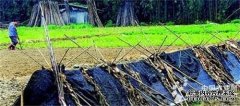
Winter melons move into new greenhouse homes, young seedlings move into tents
The arrival of the strongest cold wave has not only brought much inconvenience to citizens' daily lives, but has also had a considerable impact on the growth of crops. Recently, reporters visiting Huiyang District, Huidong County, and Boluo County saw villagers taking anti-freeze measures to protect crops from the cold. In Lianghua Town, Huidong County, vegetable
条件筛选