-

Green copper emulsion is highly effective against rice bacterial leaf streak
In an average epidemic year, the control efficacy reaches 85-91%, which is 10-15 percentage points higher than that of Japanese-made chlorothalonil. Method of use: in an average epidemic year, spraying twice is sufficient. The first spray is applied at stages 2-4 of young panicle differentiation in rice; 7 days after treatment the disease tends to stabilize, new acute lesions decrease significantly, and the original lesions stop developing after turning yellow. The second spray is applied 10 days later, using 100 mL of 12% green copper emulsion per mu each time, diluted 500-600 times for spraying. After 20 days, the rice leaf color turns noticeably greener, and the newly emerged flag leaf and the second leaf from the top have no
-
What are the highly effective pesticides for controlling rice skipper?
1. Optimal control period: This should be strictly timed to the peak egg-hatching stage and young larval stage of the rice skipper in the field, that is, July 29 to August 6 is the best period for pesticide application. 2. Targets for control: Rice fields with tender green growth, late transplanting and late development, late development after sitting, and seed-production maternal rice fields are all key target fields for control. 3. Protect natural enemy resources, prohibit the application of highly toxic pesticides, increase the parasitism rate of eggs, larvae, and pupae, and achieve pest control through beneficial organisms. 4. Chemical control: For rice skipper, use Qiansheng 8000 at 50 grams per mu, 90%
-
What herbicide is used to control rice barnyardgrass? Rongjie is a highly effective herbicide.
Rongjie is a rice field herbicide newly developed by Dow AgroSciences of the United States, with penoxsulam (25 g/L oil suspension concentrate) as its main ingredient. Years of trials and demonstrations have proven that Rongjie is particularly outstanding in controlling rice barnyardgrass, a vicious weed in paddy fields in Northeast China. In the rice fields of the Fushun area, there are two types of barnyardgrass: water barnyardgrass and rice barnyardgrass. Water barnyardgrass has no auricle or ligule, while rice barnyardgrass, though also lacking an auricle and ligule, has fine hairs on the internodes between the leaf and leaf sheath. In recent years, after conventional barnyardgrass-killing herbicides were applied in rice fields, water barnyardgrass has been effectively controlled,
-
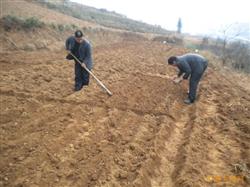
Controlling Pests and Diseases at Peanut Sowing Time Is Highly Effective
Many types of pests and diseases harm peanuts, they occur over a wide range, and the damage is severe. Because the occurrence, distribution, epidemic patterns, damage periods, and living habits of the various pests and diseases all differ, it is quite difficult to time control measures properly in production. Practice has shown that controlling pests and diseases at sowing time can save part of the major losses peanuts suffer from pests and diseases...
条件筛选