-

Where is the best place of origin for Gastrodia elata? A nationwide review of high-quality production areas
Where is the best place of origin for Gastrodia elata
-
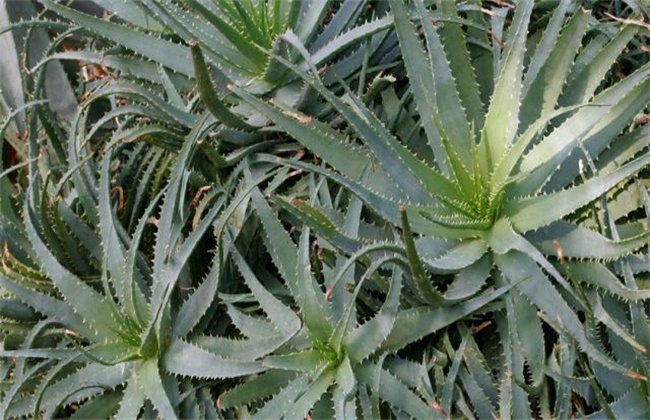
Why won't your aloe vera grow bigger? Here are a few solutions
Reasons why aloe vera won't grow bigger and how to fix them
-

What precautions are there for growing Houttuynia cordata (fish mint)?
What problems need attention when growing Houttuynia cordata?
-

Where do good medicinal herbs come from? Yunnan abounds in high-quality medicinal herbs
Good medicinal herbs come from Yunnan
-

What varieties and types of Polygonatum are there? Let us introduce you to the common ones
According to their different characteristics, commercial Polygonatum is divided into three categories: "chicken-head Polygonatum," "ginger-shaped Polygonatum," and "large Polygonatum." Chicken-head Polygonatum is irregularly conical, with a large head and a thin tail, resembling a chicken's head. It is 3-10 cm long and 0.5-1.5 cm in diameter. The surface is yellowish-white to yellowish-brown, semi-transparent, with fine wrinkles over the whole body and slightly raised, wavy rings. The scar of the aboveground stem is disc-shaped, often with a concave center, and the root scars are mostly dot-like protrusions. The cut surface is light brown, slightly horny, and has numerous yellowish-white dot-like veins (vascular bundles). The odor is slight, the taste is sweet, and it is sticky,
-
What varieties and types of Asarum are there? A detailed guide in one article
Commercial Asarum is mostly divided into two types: Liaoxixin (northeastern Asarum) and Huaxixin (Chinese Asarum). Liaoxixin refers to Asarum heterotropoides var. mandshuricum and Asarum sieboldii var. seoulense produced in Northeast China. The two are similar in characteristics, but there are distinctions between wild and cultivated products. Wild Liaoxixin is usually gathered in small bundles of a dozen or so plants, often rolled into clumps. The rhizome is irregularly cylindrical, 1-10 cm long, with short branches, grayish-brown on the surface, rough with ring-shaped nodes, and the internode spacing is about 2-3 mm. The branch tips have bowl-shaped stem scars. The roots are slender, densely growing on the nodes, about 1 mm in diameter and 10-20 cm long, grayish-yellow on the surface, smooth or with fine longitudinal
-
What varieties and types of Angelica sinensis are there? This article explains in detail
The whole Angelica sinensis root is roughly cylindrical. The upper end of the root is called the "gui tou" (head), the main root is called the "gui shen" (body) or "cun shen," the branch roots are called the "gui wei" (tail) or "gui tui" (leg), and the whole is called "quan gui" (whole root). The whole root is 15-25 cm long, with a fine, dense outer skin, yellow-brown to dark brown, with longitudinal wrinkles and transversely elongated lenticels; the upper end of the root is swollen, 1.5-4 cm in diameter, bluntly rounded, with residual leaf sheaths and stem bases; the main root is thick and short, l-3 cm long, l.5-3 cm in diameter, with 3-5 or more branch roots below, thick at the top and thin at the bottom, mostly twisted, with a few fibrous root scars. The texture is flexible and tough, and the cut surface is yellow-white
-
What varieties and types of Panax notoginseng are there? A detailed introduction to common varieties
Panax notoginseng: slightly spindle-shaped or subconical, 1-6 cm long, l-4 cm in diameter. The surface is grayish yellow (commonly known as "iron skin") or grayish brown (commonly known as "copper skin"), with intermittent longitudinal wrinkles and a few lenticels, a stem scar at the apex, and nodular protrusions around it (commonly known as "lion's head"). There are broken rootlet scars on the sides. The texture is firm, and after being crushed, the bark and wood often separate. The cross-section is grayish green, yellow-green, or grayish white (commonly known as "iron bone"), and the bark has small brown resin canal spots. The odor is slight, and the taste is bitter followed by slightly sweet. Spring
-
How do you set the row and plant spacing for Schisandra chinensis? How many methods are there?
There are now three methods for planting Schisandra chinensis: the first is a row spacing of 1.2 m and a plant spacing of 0.5 m; these are all older methods. Poor land and sandy land still use this planting method today. If the soil quality is good and the soil is fertile, this method cannot be used. The second is a row spacing of 1.4 m and a plant spacing of 0.4 m. This method suits good soil quality, has good ventilation and light penetration, is convenient for operations, and is not prone to pests and diseases. This method is currently used everywhere. The third is a row spacing of 1.4 m-1.5 m and a plant spacing of 0.5 m. This method separates the 2 vines of each plant into a plant spacing of 0.25 m for single-vine growth; for each plant's 2 vines, either two bamboo poles or woolen yarn can be inserted to train the vines.
-
Real or fake Panax notoginseng? Here are a few practical ways to tell them apart
Panax notoginseng is a precious medicinal herb native to Guangxi, Yunnan and other provinces and regions, with a history of use spanning at least 500 years. It is a remarkable Chinese herbal medicine that combines both strengthening and pathogen-clearing effects; it belongs to the same family and genus as ginseng, to which it is botanically related. Besides the qi-tonifying and blood-nourishing effects similar to those of ginseng, it also has actions that ginseng cannot match. For traumatic injuries, fractures with swelling and bruising, various internal and external bleedings, and uterine bleeding in women, it has marked effects. In recent years it has been used to treat coronary heart disease, neurasthenia, peptic ulcer, rheumat
条件筛选