-

Protest against burying waste in the Moon World mudstone; Longqi residents head north to confront the government: "You owe this land a debt of gratitude"
Protest against burying waste in the Moon World mudstone; Longqi residents head north to confront the government: "You owe this land a debt of gratitude"
-
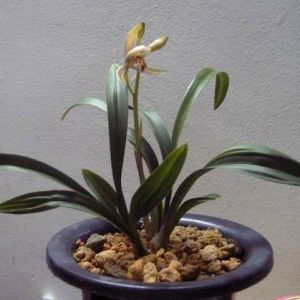
Introduction to Hybrid Dwarf Round-Head Jianlan (Cymbidium ensifolium) Varieties
Origin: Taiwan, China Content: Of the ten round-head dwarf plants now appearing online, more than nine are this line of Taiwanese hybrid varieties. This group of flowers has all the characteristics of dwarf varieties: thick leaves, large heads, and sometimes dragon-like growth. I heard this line produces lotus-type flowers. Mine has been grown for two years and only produces shoots diligently, never blooming (a major characteristic of dwarf varieties). I also gave one to a beginner...
-
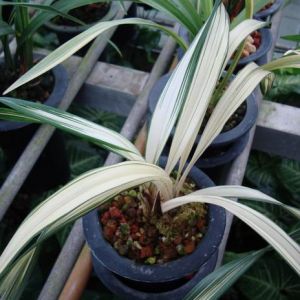
Orchid leaves develop pinhead-sized spots on the underside; prevent sand spot disease in the hot season
Cymbidium sinense 'Chinese Prince'
-
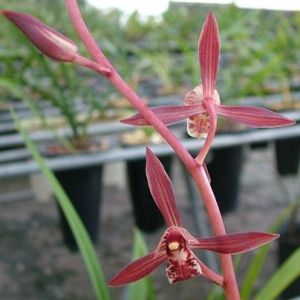
Appreciation of the Cymbidium sinense 'Red Dragonfly' Golden Head Golden Foot variety
A rather distinctive red-flowered orchid selected from wild-collected orchids from Guangxi, small in number. Locally it is commonly called Golden Head Golden Foot; the flower opens red with level shoulders slightly tilted backward, like a red dragonfly in flight, so I call it Red Dragonfly. This variety has fairly distinct characteristics: the yellow-waxy leaves are relatively thick and supple, not prone to scorched tips, the leaf stalks develop red lines, the leaf material is medium, and the flowers...
-
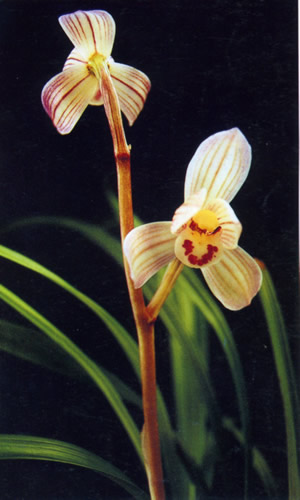
What variety of orchid is the Round-headed Lotus-petal Orchid?
Originally named Lotus-type Speckled Red Lotus-petal. The flower color is white and purple, with purple-red vein lines. The main and secondary petals are broad and rounded, with flat and round petal tips, gently rounded corners, tightly edged and bluntly concave petal heads, and 9 veins. The keel petals are concave at the center and face each other, with the clam seam open. The lip is broad and round, hanging down and slightly curled, with a half-moon red patch on it, and the lip cavity is clear and bright.
-
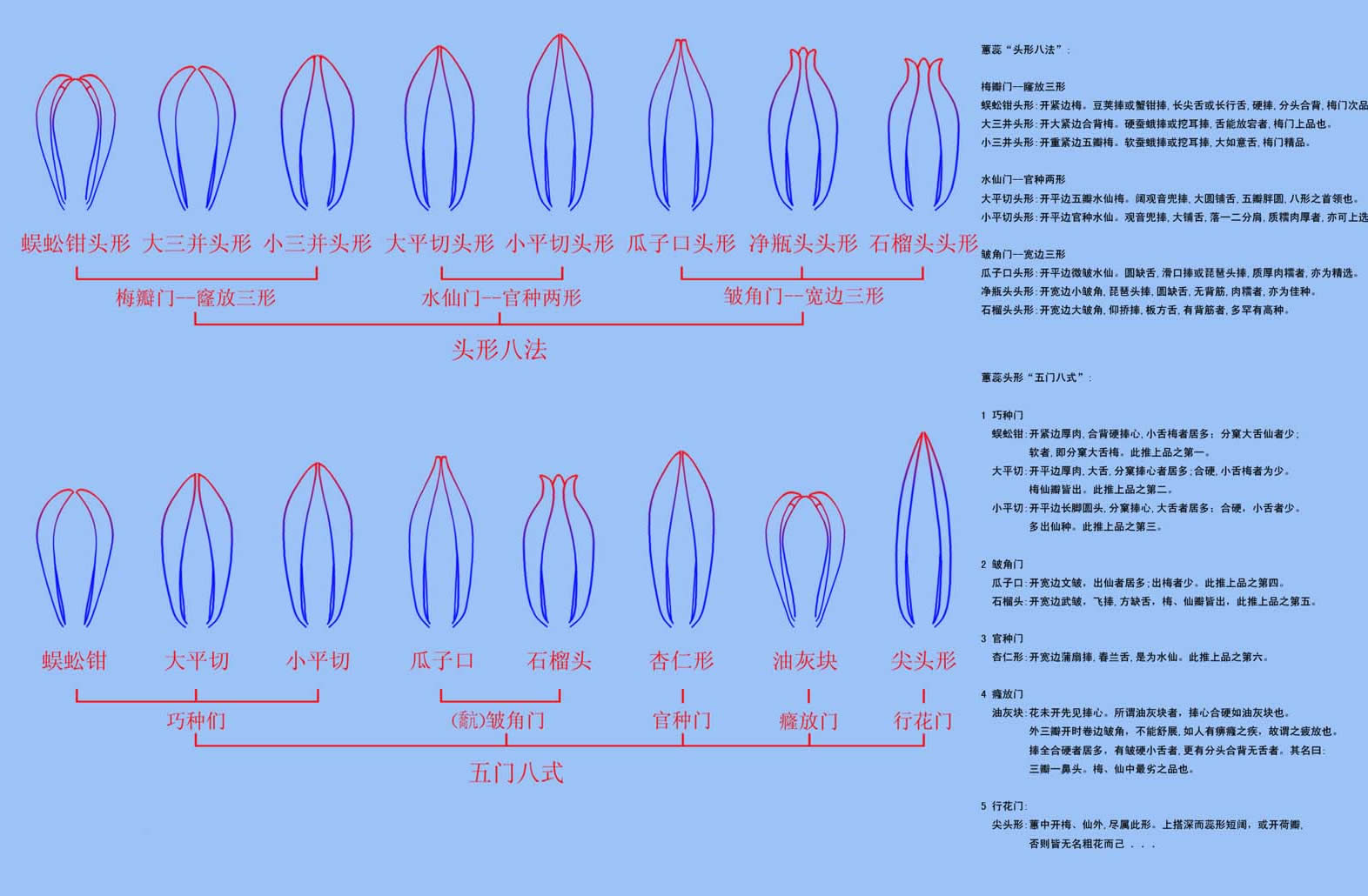
Detailed Explanation of the Eight Head Shapes and the Five Categories and Eight Forms of Cymbidium faberi
The "Five Categories and Eight Forms" of the small bud head shapes of Cymbidium faberi flowers is a summary of valuable experience left by predecessors in selecting superior varieties based on the shape of the small buds of Cymbidium faberi flowers, and is a priceless treasure left to us by our orchid-growing forebears. The "Five Categories and Eight Forms" has spread throughout the world, has had a profound influence in the community, and is an eternal topic often on the lips of orchid enthusiasts. However, because the writings of predecessors were mostly in classical Chinese...
-
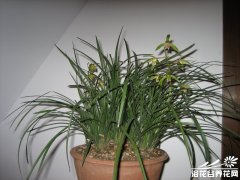
Cultivation methods for the nine-segment orchid (also known as nine-head orchid, nine-flower orchid)
The scientific name of the nine-segment orchid is Cymbidium faberi (C. Faberi Rolfe), commonly known as nine-segment orchid, nine-head orchid, nine-flower orchid. Roots are thick and long, pseudobulbs are inconspicuous, leaves number 5-7, 25-80 cm long, 1.0 cm wide, strongly upright, with coarse serrations along the edges, flowers solitary, midrib prominent, with a translucent quality, flower scape upright, 30-80 cm tall, bearing 5-12 flowers, bracts small,...
-
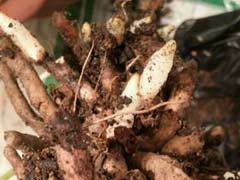
What Does the "Crystal Head" of an Orchid Mean? A Detailed Explanation
While growing orchids, enthusiasts may notice the "crystal head." This crystal head is not a network cable connector. So what does the orchid crystal head mean? Let's look at the explanation below. The swollen part at the end of an orchid root (at the root tip) is commonly known as the crystal head...
-
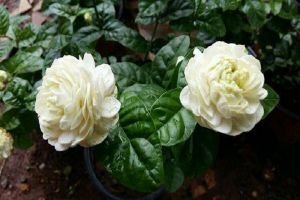
Is the Tiger Head Jasmine (Jasminum sambac 'Grand Duke of Tuscany') toxic? Toxicity analysis and care precautions
When seeing this name, we probably all wonder: what relationship does this plant have with "jasmine"? Why add the two characters "tiger head" in front? Actually, it is a variety, purely for ornamental use, and cannot be used as an economic crop. Since it can be used for ornamentation, those who want to grow it will certainly ask one question: is it toxic? Can it be placed indoors? Below we will specifically answer these questions.
-

条件筛选