-

How can the rapeseed industry be made stronger? Five provinces join hands to promote development
Hubei Daily dispatch (reporter Wu Wenjuan, correspondent Zhong Ping) On the 12th, at the Yangtze River middle and lower reaches rapeseed yield increase model research technical exchange meeting held in Wuhan, heads of agricultural departments from five provinces - Hunan, Sichuan, Jiangxi, Jiangsu and Hubei - as well as rapeseed experts, discussed tackling ⟦4 <p> Hubei Daily dispatch (reporter Wu Wenjuan, correspondent Zhong Ping) On the 12th, at the “Yangtze River middle and lower reaches rapeseed yield increase model research technical exchange meeting” held in Wuhan, heads of agricultural departments from five provinces - Hunan, Sichuan, Jiangxi, Jiangsu and Hubei - as well as rapeseed experts, held discussions on overcoming technical challenges in rapeseed breeding, transplanting and segmented harvesting.</p> <p> Experts explained that in recent years, despite repeated calls, the rapeseed planting area has been difficult to expand, mainly because the level of rapeseed mechanization is low, especially the lack of new early-maturing and very early-maturing varieties. In 2012, the national level of mechanized rapeseed planting and mechanized harvesting stood at 12.3% and 13.3% respectively, far lower than other crops.</p> <p> To keep the “oil bottle” stable, in April last year, the Ministry of Agriculture launched the Yangtze River middle and lower reaches rapeseed yield increase model research project, led by the Hubei Provincial Department of Agriculture, with the participation of the departments of agriculture of the four provinces of Hunan, Sichuan, Jiangxi and Jiangsu, to overcome the bottlenecks of early-maturing, high-yield, high-oil, high-resistance varieties and mechanization technology in rapeseed production.</p> <p> Over more than a year, new breakthroughs have been made in research on early-maturing varieties. Hubei has bred several promising early-maturing varieties and combinations such as “Shengguang 127” and “Huazao 291”, which can be harvested from late April to early May in the southeast and central regions. They are suitable varieties for the “rapeseed-rice-rice” combination, can ease the tight conflict in crop rotation, and can expand the rapeseed planting area in triple-cropping regions; in Hunan, a batch of early-maturing varieties (combinations) maturing around April 25 have been bred, and a batch of extremely early-maturing rapeseed lines sown in the Changsha area at the end of October and maturing around April 20. At the same time, the project areas have balanced grain and oil and pursued coordinated development, exploring triple-cropping planting models for grain and oil such as “rapeseed-rice-rice” and “rapeseed-rice-ratoon rice”.</p> <p> The meeting revealed that through large-scale promotion of mature technical models, by 2020, the rapeseed area in the Yangtze River middle and lower reaches project areas will achieve stable development, reaching more than 73 million mu, an increase of about 7 million mu; total output will approach 10 million tons, an increase of 1.3 million tons; the full-process mechanization rate of rapeseed will increase by 15 percentage points; and grain yield per unit area will increase by an average of 1.5 percentage points per year.</p>
-
Oilseed rape polyploid genome jointly decoded by Chinese and foreign scientists
Recently, led by the International Brassica Genome Sequencing Consortium, the genome sequencing of Brassica napus (oilseed rape) was completed for the first time. This is the first complete sequencing and assembly of the complex genome of a traditional polyploid crop internationally, and it also completed a systematic comparison and
-
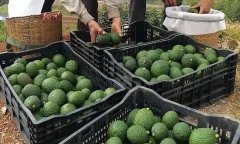
Menglian joins hands with China and Israel to build Asia's avocado hometown, expanding planting scale this year
Menglian, located in Pu'er City, Yunnan Province, China, is an autonomous county of ethnic minorities including the Dai, Wa and Lahu peoples. This obscure place, situated at the southwesternmost corner of China's border and adjoining Myanmar, has become known to more and more
-
How to grow the succulent Sedum pachyphyllum (Thousand Buddha Hands)? Master watering, fertilizing, and propagation methods to easily fill the pot
Sedum pachyphyllum is a succulent variety introduced to China from abroad. It has many leaves, which are relatively slender and round. Many people like to grow it, presumably because in addition to its attractive appearance, it also has the benefits of purifying the air and shielding against radiation. When growing it, if you want
-
The fastest way to peel taro, and your hands won't itch at all
Taro is very common in this editor's hometown. Because my grandmother likes growing taro, every autumn when the leaves wither, she would take me and my younger sister, each with a hoe, to dig up taro. Once the taro we dug up was washed clean, Grandma would make all kinds of delicious dishes for us.
-
Why Cutting Chili Peppers Burns Your Hands and the 6 Most Effective Solutions
Usually, every time after cutting chili peppers, your hands feel as if they have been burned by fire, stinging from the heat, and no matter how you wash them, it only relieves the pain temporarily, and after a while they burn again. So what should you do when chili peppers burn your hands? What are the most effective solutions? 1. Why do chili peppers burn your hands
-
The key medicinal herb for tonifying deficiency: the effects and functions of Chinese yam, and whether the skin can be eaten and how to peel it to prevent itchy hands
Chinese yam, also known as Huaishan, earth potato, white yam, etc., is a health-promoting food that combines medicinal and culinary uses. Because of its high nutritional value and its effects of tonifying qi and blood, aiding digestion, and prolonging life, it is deeply loved by people. At present, many people like to stew it together with black-boned chicken, pork ribs, etc.
-
How to Peel Taro Without Itchy Hands? Benefits, Uses and Recipe Collection
Taro, also called yu or yunai, is the underground corm of a plant in the Araceae family; its shape and flesh vary by variety, and the small taro is the kind usually eaten. Many friends do not know what to do about peeling it after buying it home, so how do you peel taro without itchy hands? The benefits and uses of taro
-
Differences Between Huaishan and Shanyao, Authentic Producing Areas, and How to Treat Itchy Hands
Huaishan generally refers to Chinese yam (Dioscorea polystachya), roughly equivalent to Huaishan yam, and broader than Huai yam. So is there a difference between it and Shanyao? What are the authentic producing areas? What to do about itchy hands? It is understood that in the Xinxiang region of Henan, in Wen County, Wuzhi, and Bo'ai, with most concentrated in Qinyang County, Henan (formerly part of the Huaiqing Prefecture
-
Poodle Training Methods: How to Teach It to Shake Hands in a Short Time
There are many people who love keeping dogs nowadays, some because they love small animals, and others because they want a little life to keep them company; whichever choice it is, it is all based on our affection for dogs. The Poodle is one of the top choices for many people, because it is small
条件筛选