-
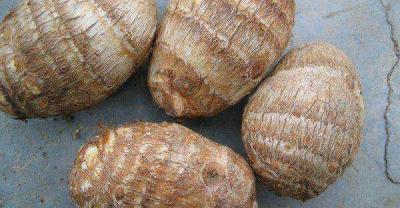
Vegetables can also be used to kill pests, so you might want to give it a try
In daily life, we can use vegetables to make homemade pesticides for killing pests and sterilizing. Homemade pesticides have low cost, good effect and are harmless to people. You might want to give it a try...
-

Applying microbial fertilizer to garlic at the seedling stage gives remarkable results
Jinxiang County in Shandong Province is the nationally famous "hometown of garlic." In Jinxiang, the year-round garlic planting area exceeds 33,000 hectares, ranking first among all counties (cities) and districts in China, and it is known as the "Chinese garlic capital." Thanks to the superior local natural conditions, the average garlic yield per 667 sq m reaches more than 1,200 kg, with the highest reaching 3,000 kg. Jinxiang garlic accounts for 70% of China's total garlic exports, and there is a saying that "to see the world's garlic, look to China; to see China's garlic, look to Jinxiang." The people of Jinxiang have also relied on growing gar
-
Harvesting wheat at the late dough stage gives both high quality and high yield
In recent years, researchers have studied the grain-filling rate of several wheat varieties, and the 1000-grain weight reaches its maximum at the late dough stage of wheat. If harvesting begins 3 days after this, the 1000-grain weight decreases by an average of 0.3-9.4 grams per day, while if harvesting begins on the 4th-5th day, the 1000-grain weight decreases by an average of 1-1.2 grams per day. If calculated at 350,000-400,000 ears per mu and 35 grains per ear, for every 1 gram decrease in 1000-grain weight, the yield per mu drops by 13-15 kg. Studies show that harvesting wheat at the late dough stage is most suitable, because during the milk-ripening stage, the stems and leaves
-
What are the basic facts about Ophiopogon japonicus? This article will give you a rundown
Ophiopogon japonicus is a new and superior ground cover plant promoted and planted by China's landscaping departments in recent years. It is enjoyed for its flowers in summer and its greenery in spring, autumn and winter. Its tuberous roots are used in medicine and have the effects of moistening the lungs to stop coughing and benefiting the stomach to promote fluid production. Ophiopogon japonicus is a perennial evergreen herbaceous plant of the Liliaceae family, with spindle-shaped tuberous roots at the ends of the roots. The leaves are velvety, 15 to 20 cm long. The flower stems emerge from the leaf clusters, with racemes in spike form, bisexual flowers, and 6 tepals. The flowers are light purple when they first open and gradually turn white. It can be used as ground cover under trees. The flowering period is July to August; the fruiting period is September to October. Ophiopogon japonicus
-
What variety is the Iron Stalk Giant Onion? This article gives you a detailed introduction
Variety characteristics: This variety was developed by crossing selected and purified superior typical plants from Japanese bunching onions with a stable male sterile line of Zhangqiu bunching onion. Its characteristics: the white stalk is long, thick and firm, with a tight sheath opening, highly resistant to lodging, and thick leaf flesh. The leaves are dark green with a thick waxy layer. It is cold-resistant and highly heat-resistant. The inner leaves of the white stalk can still grow at minus 7 degrees, and it turns green early in spring, growing thick and long quickly. After bolting, the side buds grow rapidly, and it has strong disease resistance and stress resistance. It is a high-yielding variety that can be harvested all year round, making it an ideal choice for filling the off-season market. Cultivation points: ten-day average temperature 16-17°C
-
What pesticide gives the best control effect against older larvae of the rice leaf roller?
Chlorpyrifos and abamectin-monosultap are effective agents for controlling the rice leaf roller, but they must be applied during the 1st-2nd instar young larval stage (at this stage the rice leaf roller has not yet rolled leaves and caused damage, or has just begun rolling the leaf tips and causing damage), when the rice in the field has just begun to roll leaves. For rice leaf roller larvae of the 3rd instar and above, on the one hand they are protected because they are wrapped inside the rice leaves, and on the other hand they are insensitive to nereistoxin-type pesticides such as monosultap and to organophosphorus pesticides such as chlorpyrifos, methamidophos and monocrotophos, so the control effect after spraying is poor. Relatively speaking, older rice leaf
-
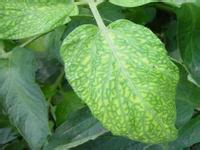
Early prevention and control of autumn tomato virus disease gives good results
Virus disease: In the early stage of the disease, spray with a 500-fold dilution of 20% Virus A wettable powder, or a 1000-fold dilution of potassium permanganate, once every 7 days, for 2 to 3 consecutive sprays.
-
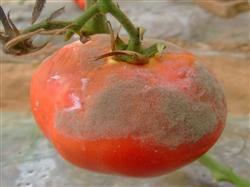
Early prevention and control of gray mold in autumn tomatoes gives good results
Gray mold: During the flowering period, 0.1% of 50% procymidone wettable powder or 50% iprodione wettable powder can be added to the flower-dipping medicinal solution, with very good results. Spraying the fruit is also possible, but care should be taken to rotate the medications to prevent the pathogen from developing resistance. 50% duoke dust formulation can also be used, applying 1 kg of dust per mu.
-
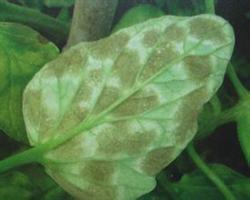
Early prevention and control of leaf mold in autumn tomatoes gives good results
Early blight: after the disease develops, concentric ring-patterned lesions appear on the leaf surface, dark brown and water-soaked. Before and after the disease appears, spray with a 500-fold dilution of 70% mancozeb wettable powder, or a 400-fold dilution of 75% chlorothalonil wettable powder, once every 7 days, for 3~4 consecutive sprays.
-
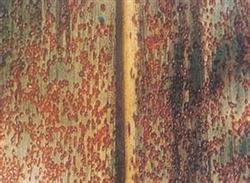
Which fungicides give good control of sorghum rust?
Symptoms Sorghum rust begins to develop around the heading stage of sorghum. Red or purple to light brown small spots form on the leaves, then as the pathogen spreads, the spots enlarge and form elliptical raised uredinia (summer spore pustules) on the leaf surface; when they rupture, they expose rice-brown powder, namely urediniospores (summer spores). Later, telia form in the original spots...
条件筛选