-
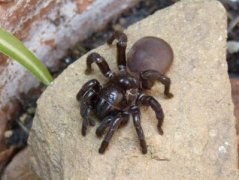
Getting Started with Tarantula Keeping: Essential Tools and Substrate for Beginners
What tools are needed for keeping tarantulas? What substrate is best for tarantulas. Essential tools for keeping 1. Enclosure: You can choose an acrylic box or a plastic enclosure, or even buy a storage box and drill holes in it. Basically, the size just needs to be 1 to 2 times the tarantula's leg span.
-

How to manage pond fish in autumn? Getting them to fatten up is key
The golden autumn season is the peak period for fattening fish, and doing a good job of feeding and management during this period is the key link to increasing fish production and improving economic returns. The main measures are as follows: 1. Improve water quality. Maintaining good water quality is an important condition for promoting fish fattening, so new water should be added frequently to increase the dissolved oxygen content in the water. Generally, add new water once about every 5-6 days, with each water exchange of 15-25 cm. Sprinkle quicklime solution 2-3 times a month to eliminate bacteria and increase calcium. Generally, for a pond with a water depth of 1.5 m, use 10-15 kg of quicklime per mu each time.
-
Five-pace snake breed introduction: getting to know this snake species
The five-pace snake is also known as the money white-flowered snake, the many-banded krait, the small white-flowered snake, the white-flowered snake, and the hundred-joint snake. It belongs to the family Elapidae in the phylum Vertebrata. The snake's body is slender, coiled into a round shape, with the head in the center and the tail held within the mouth, resembling the size of an ancient copper coin, hence the name "money white-flowered snake." The snake's head is slightly thicker than the body, rectangular-round, and dark brown. There is a raised vertebral ridge on the back, and the entire body is covered with transverse ring bands composed of fine dark brown and white scales. The dark brown bands are relatively wide, with 45 to 60 bands. The belly is grayish-white or yellowish-white, and the dark brown bands
-
What Is the Wine Cap Mushroom? Getting to Know This New Mushroom Variety
The wine cap mushroom, also known as the wine-red stropharia, has brightly colored fruiting bodies, tender and smooth flesh, a crisp and refreshing stem, rich nutrition, and excellent taste; dried mushrooms have a strong aroma comparable to flower shiitake. It is a rare edible fungus with great market development potential, and it is also one of the new mushroom varieties recommended by the Food and Agriculture Organization of the United Nations to developing countries. It is suitable for cultivation in areas such as western Guangdong and northern Guangdong in our province.
-
What are the reasons why oyster mushroom yields are getting lower and lower
Recently, many growers have called to ask: why are oyster mushroom yields getting lower and lower these days? Compared with previous years, the difference is far too great. For this reason, the author conducted a survey and found the following problems: Serious pollution of the cultivation environment. The vast majority of growers cultivate in greenhouses year after year. Deteriorating environmental conditions and incomplete disinfection are the main reasons for reduced oyster mushroom yields. According to tests, the background count of contaminating microorganisms in a new site was 63.95 per square meter, with bacteria accounting for 95%, and 150 colonies per square meter. After the first cultivation cycle ended, the background count of contaminating microorganisms was 20 times higher than before. These contaminating microorganisms control the growth of oyster mushrooms to some extent, and the more cultivation cycles there are, the lower the oyster mushroom yield.
-
Farmer Grows Poppies to Prevent Chickens and Pigs from Getting Sick
The Wanshi Police Station of Yixing City seized 50 illegally planted poppy plants on Xu's private plot in Mazhuang Village. The investigation revealed that Xu, during a casual chat with someone, heard that poppies were effective in treating sick chickens, pigs and other poultry. Thinking of his own chickens and pigs, he tried to obtain poppy seeds and secretly planted them on his private plot. Recently, the police have strengthened anti-drug publicity efforts, helping villagers learn how to identify poppies. When someone discovered that the plants blooming vibrantly on Xu's private plot were poppies, they reported it to the police.
-
For garlic to be high-yielding, getting these four stages right is key
To make garlic high-quality, high-yielding and early to market, you must get the following four stages right: The sprouting stage: harvested garlic seed remains dormant for a certain period. Therefore, 10 days before planting, the selected garlic seed should be placed in a cool spot and covered with fine sand or loess. Before sowing, soak it in well water for 12 hours. This not only brings germination forward by 2-3 days, but also gives even, sturdy growth. The soil preparation stage: garlic likes moist sandy soil; other loess and clay soils can also be planted as long as they are broken up. The
-
Getting the five key steps right in Gastrodia elata cultivation can effectively increase yield
To achieve stable and high yields of Gastrodia elata, the first thing is to get the five pre-planting steps right: First, choose the site. Gastrodia elata cultivation can be adapted to local conditions, whether indoors, in air-raid shelters, semi-basements, or chicken coops. Because Gastrodia elata likes dark, damp, and cool environments, choose places with good ventilation and shade as much as possible, with semi-basements and outdoor trenches giving the best results. You can lay a layer of bricks before use, or increase the thickness of the bottom sand layer to enhance its water permeability. Second, if the indoor floor is concrete, use high-quality Armillaria mellea fungal material (spawn). Armillaria mellea fungal material
-
What Flower Is the Primrose? A Complete Guide to Getting to Know It
Scientific name: Primula spp. Other names: yingcao (Japanese name), nianjinghua Family and genus: Primulaceae, Primula The plants of the genus Primula are widely cultivated around the world and have a fairly long history, and in recent years they have developed rapidly, becoming an important class of garden flowers today. Both the Chinese name baochun and the scientific name Primula contain the meaning of "early flowering." Blooming in early spring is an important characteristic of this genus. Cultivation history of the primrose: based on records in local gazetteers and the traditional custom in Yunnan of growing primroses in pots for appreciation during the Spring Festival. China's Tibetan primrose
-
What are the characteristics of the garden balsam? A complete guide to getting to know the garden balsam
Characteristics of the garden balsam: The garden balsam, also known as fingernail plant and spotted gold flower, belongs to the Balsaminaceae family. It is an annual herb. Plant height ranges from 30 to 80 cm, the stem is thick, multi-branched and smooth, with swollen nodes, green or dark brown, and the stem color is related to the flower color. The leaves are alternate and lanceolate. There are glands on both sides of the leaf stalk. Flowers are solitary or in clusters of several in the leaf axils, the corolla is butterfly-shaped, with single-petaled and double-petaled types, and flower colors include white, pink, red, purple, etc. The flowering period is from June to October. The seeds burst open on their own when mature.
条件筛选