-
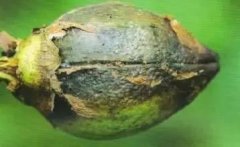
Common diseases of cotton bolls and control methods for cotton boll blackening
Do you know what diseases can occur during cotton cultivation? Below we introduce the most common cotton boll blackening disease. Do you know this disease? What do the symptoms of this disease look like on cotton? What are the control methods? Let's take a look together.
-

Fruit and vegetable prices generally fall after the Spring Festival; building dedicated cold-chain fruit and vegetable trains to prevent fruit and vegetable prices from falling
Last year, Taipei Agricultural Products Marketing Corporation saw overall vegetable auction prices drop by 30% due to multiple factors such as a surge in fruit and vegetable supply, weak consumption, and consecutive market closures. This year, subsidies are expected to help Taipei Agricultural Products Marketing Corporation build a cold-chain system to extend the freshness period of fruits and vegetables. Let's take a look. Connecting production areas, using cold chain
-

Forecast for the occurrence trend of the first generation of the striped stem borer in rice is released
1. Occurrence level: The first generation of the striped stem borer, the main rice pest in our city, is expected to occur at a moderate-to-severe level, with the affected area in the city reaching more than 250,000 mu, of which more than 50,000 mu are early-planted idle fields. 2. Occurrence period: Moths seen under light on April 11, the beginning of the peak moth emergence period 5/9-12, the peak moth emergence period 5/20-24; the peak egg hatching period 5/27-5/30, the peak period of first and second instar larvae 6/4-6/10, the occurrence period is 3 days later than the average of the past three years. 3. Forecast basis 1. Development progress: This year 4/2
-
What to Do About Tulip Variety Degeneration? Detailed Solutions
Imported tulips often perform well in the first year of bulb growth, with large flowers and vivid colors. Starting from the second year, the flowers become smaller, the colors turn dull, the leaves and petals show color-breaking patterns, and the plants grow poorly. This is mainly due to virus damage, commonly mosaic virus and color-breaking virus, which cause yellow and white stripes and irregular spots on the leaves. In severe cases, the leaves rot and the flower colors become mottled. Control methods: 1. Use virus-free plants obtained through shoot-tip culture when planting, or choose varieties with strong virus resistance; 2. Promptly
-
What are the general principles for raising velvet deer?
(1) Scientifically and rationally match the feed. To improve the production performance of deer, the feed should be scientifically and rationally matched according to local feed sources, types, reserve quantities, feed quality, deer management conditions, etc., so as to meet the nutrient requirements of velvet deer. Velvet deer have different nutritional needs at different stages. For example, male deer need more nutrition during the mating period and antler-growing period than female deer, while female deer need even more nutrition during pregnancy and lactation. Therefore, during the feeding process, feed supply plans should be prepared in advance to ensure that feed can be matched and adjusted promptly, scientifically, and rationally, so as to achieve good results.
-
Causes of Potato Degeneration and How to Prevent It
(1) Causes of Potato Degeneration When potatoes are planted in spring in the hot summer regions of the south, after one or several years the yield gradually declines, and there may even be no harvest at all; this phenomenon is called potato degeneration. The direct external cause of potato degeneration is damage by viruses. Common ones in the south include mosaic virus, leafroll virus, common mosaic virus and spindle tuber viroid. These viruses are transmitted through mechanical friction, aphids, leafhoppers or soil nematodes and other vectors, infecting the plants and causing degeneration. High temperature is the indirect external cause of potato degeneration.
-
Scientific control methods for the first-generation Asiatic rice borer (Chilo suppressalis) in rice
According to surveys conducted across Hubei Province, the overwintering mortality rate of the Asiatic rice borer this year was higher than last year, and the post-winter population base was lower than last year but still relatively high. In addition, suitable climate conditions and the expansion of high-quality rice varieties are both favorable to the occurrence and damage of rice stem borers, and the first-generation Asiatic rice borer will show a major outbreak trend in the rice-growing areas of our province, making the control situation still severe. In response to this severe situation, all localities should strengthen leadership, raise awareness, actively organize control efforts, and quickly launch a campaign to wrest grain from the pests to ensure the safety of grain production. 1. Recognize the situation clearly and strengthen organizational leadership. Last winter, our province suffered freezing ice and
-
General Observation Methods for Fox Diseases
Fox raisers generally need to pay attention to abnormal changes in foxes during management, promptly discover sick foxes, and provide timely treatment. The general observation methods for fox disease onset are: 1. Overall observation. Overall observation mainly includes changes in body condition and nutrition, posture and movement, temperament, fur, and mental state. 1. Body condition and nutrition: After a fox becomes ill, its nutritional body condition begins to decline. Some rapidly become emaciated, such as with acute diarrhea; some gradually become emaciated, mostly seen in chronic diseases. 2. Posture and movement: Incorrect or abnormal posture is an important manifestation of disease onset, such as lying down and being unable to rise.
-
Causes of Gastrodia elata trait degeneration and control methods
Degeneration of Gastrodia elata traits usually manifests as a decline in the yield of arrow gastrodia, with the individuals becoming smaller and slender; the yields of rice gastrodia and white gastrodia drop substantially, the tubers turn ginger-yellow or light brown, stress resistance is poor, and the original yield and traits cannot be fully expressed. The causes are generally as follows: 1. Multiple generations of asexual propagation. Degeneration generally begins to appear after 5 to 6 generations of asexual propagation, but the speed of degeneration differs when cultivated on different soils; degeneration is slower when cultivated on granite soil, followed by yellow-brown earth sandy soil parent material, and the acidic soil formed by the weathering of shale or limestone.
-
What to Do When Oyster Mushroom Mycelium Breaks or Degenerates? Causes and Prevention Methods
After inoculation, normally growing mycelium is dense and pure white, advancing forward in a fan shape, and the cottonseed hull substrate decomposed by the mycelium turns yellowish-brown. If a section of mycelium breaks and becomes disconnected, it is called "mycelium break." This situation is caused by excessive water content in the substrate and high temperatures during cultivation. Choosing appropriate humidity and temperature can prevent the "mycelium break" phenomenon. The degeneration and shrinkage of mycelium that has already grown well on the substrate is called "mycelium degeneration." If the substrate is too dry and too loose, the mycelium that grows will be thin and weak; excessively high temperatures during cultivation, poor ventilation, or pest infestation
条件筛选