-

How to grow strong spring cabbage seedlings? Key points of cold-frame seedling raising techniques
Cabbage (Brassica oleracea L.) is an annual or biennial herbaceous plant of the genus Brassica in the family Brassicaceae, and is one of our important vegetables. Apart from Chinese kale (gai lan), which originated in China, all the varieties of cabbage originated along the coast from the Mediterranean to the North Sea. As early as 4000~4500 years ago, the ancient Romans and ancient
-
What are the common diseases of cucumbers in cold frames? How to prevent and control them
Abstract Downy mildew: spray 25% metalaxyl 800x solution, once every 7-10 days, for about 3-6 days in a row. Fusarium wilt: use 50% thiophanate-methyl 400x solution, or 50% carbendazim 500x solution and other chemicals to drench the roots. Powdery mildew: spray 40% DuPont Fuxing 2000x solution
-
What to Do If Something Goes Wrong with Hsinchu's Water? First Local Referendum Case Filed After Amendment of the Referendum Framework Act
After the amendment of the Referendum Framework Act, the first local referendum case is filed: What should be done if something goes wrong with Hsinchu's water? Push for referendum legislation to solve it!
-
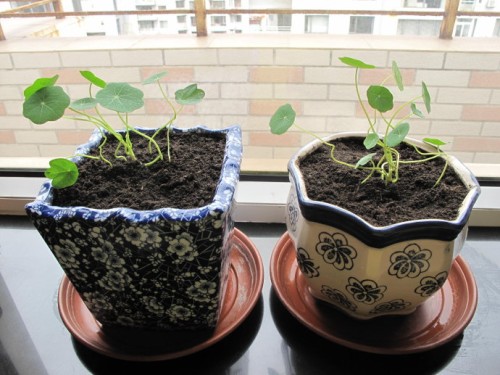
Nasturtium Sowing Diary and Photos of Potted Nasturtium Climbing Frames
Nasturtium is an annual or perennial climbing succulent herbaceous plant. The stems are slender, succulent and hollow, smooth and hairless. The leaves have long stalks, are round and peltate, shaped like lotus leaves. The flowers are yellow or orange-red and give off a sweet fragrance; under suitable climate conditions, it can bloom all year round. The fragrance is rich and the colors are brilliant.
-
Recycling of agricultural residual film requires a multi-party collaborative framework
Residual film recycling requires a multi-party collaborative framework
-
How Shanxi Builds a Grand Agricultural Silicon Valley Framework
Building a Grand "Silicon Valley" Framework for Shanxi Agriculture
-
Detailed Explanation of High-Yield Indoor Bed Frame Cultivation Techniques for Straw Mushrooms
1. Basic Conditions for the Growth and Development of Straw Mushrooms 1.1 Nutrition The cultivation material must contain components such as carbon, nitrogen, minerals and vitamins. Therefore, rice straw, wheat straw, hemp stalks, waste cotton, cottonseed hulls, and sugarcane bagasse, which are rich in cellulose, are all raw materials for producing straw mushrooms. Nitrogen-containing compounds are important elements for straw mushrooms to synthesize cell protein. Straw mushrooms can only utilize low-molecular-weight amino acids. Organic nitrogen substances such as wheat bran, rice bran and peptone can serve as nitrogen sources. Straw mushroom cultivation generally does not require the addition of ammonium nitrogen, nitrate nitrogen or urea. In addition to carbon and nitrogen, various minerals such as potassium, magnesium, calcium and phosphorus are also necessary. Generally, cellulosic raw materials already contain sufficient amounts, so no supplementation is needed. When preparing the cultivation material, attention should be paid to the carbon-to-nitrogen ratio of the material. Practice has shown that a carbon-to-nitrogen ratio of 60:1 is most suitable for straw mushroom growth.
-
Detailed Explanation of the Key Technical Points for Bed-Frame Cultivation of Straw Mushroom
1 Cultivation Time The time for bed-frame cultivation of straw mushroom should be chosen in seasons when the daily average temperature reaches above 25°C. This is because the growth and development of straw mushroom require the room temperature of the mushroom house to be kept above 27°C, and sharp rises or drops in temperature must be strictly avoided to prevent the young mushroom buds from shriveling and dying. According to several years of trials, the sowing period in this county can generally be arranged from early May to early September (if the room temperature is slightly low in May, a gasoline drum can be used for heating). 2 Structure and Requirements of the Mushroom House Ordinary slate-roofed mushroom houses or general tile-roofed mushroom houses require internal sealing with plastic film or
-
How to cultivate Gastrodia elata in indoor bed frames and troughs
① Bed frame setup: Basically the same as the bed frames used for cultivating mushrooms, generally the frame is 1.2 m wide, 2.5-3 m high, and 5.5 m long. The lowest layer can be cultivated on the ground, using the pit-style double-layer Gastrodia cultivation method. The spacing between each layer of the bed frame is 60 cm, and 5-6 layers can be planted. Either iron frames or wooden poles can be used to build the frame, as long as they are sturdy and durable. The bottom of each layer of the bed frame can use wooden boards, board scraps (preferably not pine or fir boards; if broadleaf tree boards really cannot be found, pine or fir boards can also be used as a substitute), wide slats, etc. If there are no wooden boards, bamboo
-
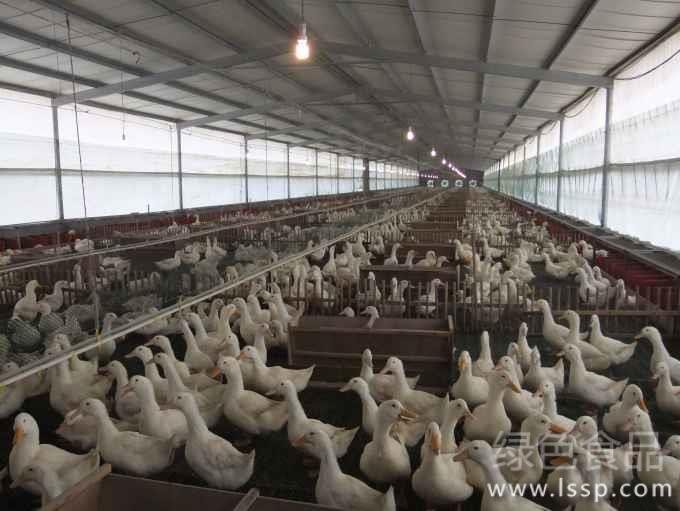
Raising Ducks on Greenhouse Frames: Fewer Diseases, Higher Profits, and a Detailed Guide to the Farming Method
Raising Ducks on Frames in Greenhouses: Fewer Diseases, Higher Profits - How to Raise Ducks on Greenhouse Frames
条件筛选