-

-

Key Technical Points for Post-Flood Care of Submerged Rice
After rice is submerged, in view of the actual situation of severe damage to the root system and leaves and a serious decline in the total number of stems and tillers, measures should be taken to nourish the roots, protect the leaves and promote tillering, so as to increase the percentage of productive panicles and strive for heavier grains. 1. Make an all-out effort to drain the standing water from the fields. The standing water in the fields should be drained as early as possible, and the fields should be exposed and the seedlings hardened to improve the soil's physical and chemical properties and remove toxic substances. For fields submerged for a relatively long time, the water can be drained completely in one go during rainy weather; in hot weather with strong sunlight, dehydration should be carried out gradually, first allowing the upper part of the rice plants to emerge above the water surface, then dehydrating at night to aerate the soil, and irrigating by day and exposing at night, so as to help the rice recover its growth. 2.
-
After rice is flooded, attention must be paid to the three prevention measures
From mid-to-late June to mid-to-late July, southern regions are often hit by heavy rain, and some areas are prone to flooding disasters. If flooding occurs, in addition to carrying out conventional remedial measures, attention must also be paid to preventing outbreaks of bacterial diseases and mass outbreaks of migratory pests. Prevent the spread of bacterial brown stripe disease. As floodwaters overflow, the pathogen spreads and is transmitted and infects through wounds on rice plants caused by rain and floodwaters. The resistance of submerged rice plants declines, which is more conducive to disease spread. There is a process from after flooding to disease spread, therefore, for middle-season rice in flooded areas,
-
How to manage water and fertilizer well after rice is hit by floods
What should be noted when righting and washing rice seedlings? For flooded paddy fields, drain the standing water promptly and right the lodged seedlings; clear the ditches in time to lower the groundwater level. Where irrigation facilities have suffered heavy damage, organize forces promptly for emergency repairs. After the water in the paddy field recedes, open ditches to drain it, so that soil water in the field seeps into the ditches and is discharged, lowering the field moisture content as quickly as possible, so that the floating mud formed by flooding gradually settles and compacts, thereby promoting new root growth. For fields that have been submerged for a long time, the water can be drained off all at once in rainy weather; if there is scorching sun and high temperature, drain gradually, first letting
-

-
Key Cultivation Techniques for Potatoes After Flooding
Select good varieties It is advisable to choose varieties with good shape, high yield, fast tuber expansion, and tolerance to high temperatures at the seedling stage, such as Kexin No. 4, and it is best to use virus-free seed potatoes. Selecting seed potatoes and sprouting Seed potatoes should be spring potatoes harvested in the same year, and diseased potatoes, rotten potatoes, damaged potatoes, and poorly shaped tubers must be strictly removed, with small whole tubers of 20-40 g being the best. In autumn, whole-tuber sowing should be used, with seed potatoes of about 25-50 g and a sowing rate of 150-200 kg per mu. Soak whole tubers in 1 g of gibberellin mixed with 120-180 jin of water for 15-20 minutes in mid-to-late July, and place them in
-
What are the remedial measures after rice suffers from flooding?
Rice has strong waterlogging tolerance. After being submerged for about 3 days, about 80% of the rice seedlings can still survive, and it is enough to strengthen management. After being submerged for 4-7 days, 50%-80% of the rice seedlings survive, so it is necessary to promptly thin and replant seedlings to ensure a sufficient population. After being submerged for more than 7 days, only about 30% of the rice seedlings survive, so replanting or switching to other crops should be considered. It is necessary to adapt to local conditions, provide guidance by category, and carefully carry out post-disaster management of rice. As long as rice seedlings still have green leaves, the inside of the leaf sheath is still green and has a certain hardness, and the white roots or root system are light yellow, and 2-
-
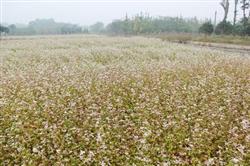
Cultivation Techniques for Autumn Buckwheat After Flooding
Buckwheat has a short growth period, strong adaptability, moderate yield and high nutritional value. It is an excellent catch crop and disaster-relief crop, and can be planted from south to north in our province. The key technical steps are as follows: 1. Timely sowing. Buckwheat prefers a cool environment and is afraid of frost; sowing too early or too late will seriously affect yield. In the riverside areas of southern Anhui in our province...
-
What rescue measures are there after rice is flooded
Rice fields flooded for 1-4 days below 25°C suffer little damage; flooding for 1-4 days above 30°C can cause abnormal grain filling in rice; flooding for 1-4 days above 40°C can cause rice to wither and die with total crop loss. When rice is flooded at the seedling stage, the seedlings become thin and elongated with yellowing leaves, and generally are difficult to recover; at the tillering stage, the lower leaves necrose and the heart leaves curl, and after the water recedes the leaves wither, but generally do not rot; at the jointing stage, the plants become thin and weak and are prone to lodging and breaking; at the booting stage, resistance is weakest, and rotten ears and deformities easily occur, reducing the seed-setting rate; at the grain-filling stage, the lower leaves wither and yellow, the top leaves yellow, and the ears
条件筛选