-
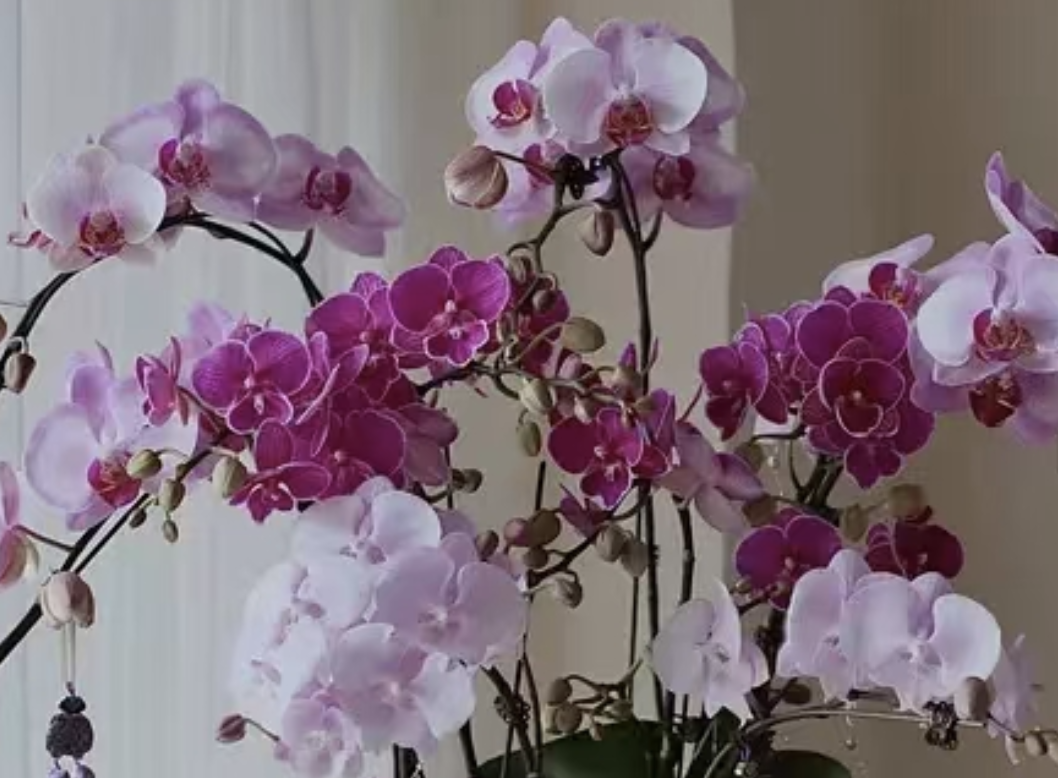
Do orchid leaves need to be fixed? Will uneven orchid leaves affect blooming?
In the morning, when watering your orchid, you might notice the leaves leaning to one side and wonder, "Why aren't the leaves even? Should I tie them up? Will
-

Do Phalaenopsis leaves need to be fixed in place, and will uneven leaves affect blooming?
In the early morning, while watering your Phalaenopsis, you stare at a leaf leaning to one side and think, "Why are these leaves so uneven? Should I tie them up with string? Will this affect blooming?" Phalaenopsis is an epiphytic plant, naturally growing on tree trunks or rocks, and its leaves stretch out toward the light (this is called "phototropism"), so a slight tilt is actually its normal response to "looking for the sun."
-

Can Messy Phalaenopsis Leaves Be Fixed with String, and How Long Should They Stay Tied?
Speaking of Phalaenopsis, when it blooms it looks ethereal and graceful, but once the leaves get messy, the whole plant looks listless. This is especially true for older plants that have been grown for a long time - the leaves lean every which way, and some can even droop outside the pot. So can you use string to tie the leaves in place? Actually, fixing them with string is completely fine, but you have to go about it
-

How do you arrange Phalaenopsis orchids in a pot so they look beautiful and stay firmly fixed?
Phalaenopsis orchids are the darling of many flower lovers. To arrange Phalaenopsis orchids in a pot so they are both beautiful and stable, you need to master certain techniques and steps. The following introduces in detail how to arrange a beautiful potted Phalaenopsis display and how to secure it. Key steps for a beautiful Phalaenopsis pot arrangement: Choosing flower material: Openness: Choose at least
-

What are the ways plants spread their seeds?
Plants generally grow fixed in one place. To reproduce and expand their growing range, they need to spread their seeds. So what plants spread their seeds? 1. What plants spread their seeds? Almost all plants spread their seeds,
-
-
Why do pothos leaves turn yellow and how should it be fixed?
Why do pothos leaves turn yellow and how should it be fixed
-
Why do pothos leaves turn yellow, and how can it be fixed?
Reasons for yellowing pothos leaves - What to do when pothos turns yellow
-
To raise high-quality fish, adhere to the four-fixed feeding method
Fixed quality means the feed given must be fresh and palatable, not rotten or spoiled, nutritious, and easily digested and absorbed by the fish. Grasses must be disinfected, manure must be fermented, and hard, coarse feed must be chopped or processed. For the fixed quantity, the monthly feeding amount should be determined according to water temperature, fish growth and feed supply. The daily feeding amount depends on the season, water color, weather and the feeding situation of the fish, and is generally calculated at 2%-5% of the fish stock in the pond. It can also be determined according to how the fish eat; for example, if grass is fed at 8-9 a.m.,
-
Detailed Explanation of the Key Technical Points of the Fixed Bacterial Material Companion Planting Method for Gastrodia elata
The fixed bacterial material companion planting method for Gastrodia elata, also called the fixed material cultivation method, uses pits or boxes to cultivate 2 to 3 layers of bacterial material before planting the gastrodia. When planting, first remove the covering from the pit or box, take out the upper bacterial sticks layer by layer, leave the bottom layer of bacterial sticks undisturbed, then gently pull out the middle bacterial sticks, leaving one and skipping one, replace them with new wooden sticks, and plant the seed gastrodia close against both sides and both ends of the bacterial sticks. The spacing for planting large white gastrodia is 20 to 25 cm, for medium white gastrodia 7 to 9 cm, for small white gastrodia 4 to 6 cm, and rice gastrodia is broadcast scattered. Be careful to place the gastrodia seed close to where the fungal strands of the seedlings are dense. After planting the gastrodia, cover with soil
条件筛选