-
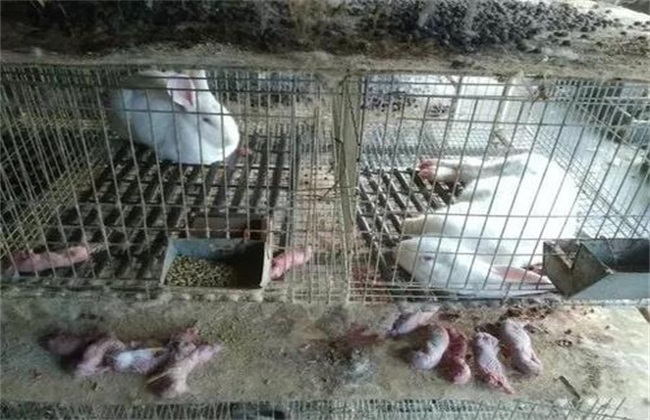
Why Do Female Rabbits Miscarry? A Comprehensive Analysis of Common Causes
What Are the Causes of Miscarriage in Female Rabbits
-
-
-

How do you identify male and female pigeons in meat pigeon farming?
In the process of farming meat pigeons, how do you identify male and female pigeons? Squab identification (1) Cloaca identification method: 4 to 5 days after the squab hatches, the upper edge of the male pigeon's cloaca covers the lower edge and protrudes slightly;...
-

How to care for a red-eared slider? I'll teach you how to tell males from females and how to determine their age
Many friends like keeping turtles, because turtles are not only cute but also very long-lived. However, quite a few friends find that after keeping a turtle for a while, the turtle either...
-

What Is the Dog Birth Process Like? A Detailed Guide to the Full Whelping Process in Female Dogs
Dogs are polytocous animals, and because breeds differ, the number of puppies per litter also varies. Generally, small breeds have 1-4 puppies per litter, at most 6. Medium and large breeds usually have 6-9, at fewest 1-2, at most 12-13, and the recorded maximum is 25. Whelping in dogs occurs through contractions of the uterus and the abdominal wall muscles and diaphragm, which push out the fetuses and their associated tissues. The contractions of the uterus come in waves, with intervals, so uterine contractions are usually called "labor pains." The contractions of the abdominal wall muscles and diaphragm are called "straining." Stra
-
What to Do About Low Hatch Rates in Female Turtles? Cause Analysis and Solutions
Artificial turtle farming has sprung up in many places in recent years, especially as the soft-shelled turtle market has flattened while the turtle market has held firm, prompting many soft-shelled turtle farmers to switch to turtles. But farmers have found that although some female turtles lay a good number of eggs, the fertilization rate is not high and the hatch rate is low, especially with eggs from turtles at their first laying age, where the fertilization rate is even lower. Many people assume the female turtle is the problem, little realizing that the cause does not lie with the female turtle at all, but is mainly related to factors in the male turtle itself. Through practice, people have found that in nature many animals show differences in the timing of sexual development
-
Why do female swordtail fish undergo sex reversal?
The so-called "sex reversal" of female fish refers to the gradual masculinization of some female fish that have given birth to fry: the body becomes slender, a sword-shaped protrusion grows below the caudal fin, the anal fin transforms into a rod-shaped gonopodium, and they begin to chase female fish, mate with them and fertilize them, and reproduce offspring. But it is only female fish turning into male fish; male-to-female reversal has not been observed. Regarding this issue, some people have recently raised different opinions: they believe that swordtail fish cannot undergo sex reversal, and their natural male-to-female ratio is always 1:2 to 1:1.5. Although the reproductive organs of swordtail fry begin
-
How to tell male from female yellow catfish? A few practical methods
Yellow catfish, commonly known as geyayu, is a fish native to this area. It is a widely distributed bottom-dwelling fish, and its reproduction rate and yield in Nansi Lake are second only to crucian carp in catch volume. The yellow catfish has a yellowish-brown body, with a large hard spine on the back and tail respectively, a large head and a wide mouth. It grows rather slowly; in the 1950s the largest individuals reached more than 200 grams, close to half a jin. After the 1980s, because of excessive catching, its body weight gradually decreased; common individuals are about 15 cm long and weigh around 80 grams, while female yellow
-
Detailed Explanation of the Reproductive Organs and Physiological Characteristics of the Female Fox
The reproductive organs of the female fox consist of the ovaries, fallopian tubes, uterus, vagina, and external genital organs. The external genital organs include the vestibule of the vagina, labia, and clitoris. The ovaries of the female fox are located at the third and fourth lumbar vertebrae, at the posterior margin of the kidneys. The left ovary is positioned more anteriorly than the right ovary. The ovaries are flat in shape and grayish-red; during estrus, the ovary is 2 cm long and 1.5 cm wide; the fallopian tubes are 5-7 cm long. The ovaries and fallopian tubes are covered by adipose tissue. The uterus is a bicornuate uterus, with the uterine horns and uterine body suspended by the broad ligament of the uterus on the lower lateral walls of the pelvis. The uterine horns are 10-13 cm long, the uterine body is 4-6 cm long, and the cervix protrudes into the vagina. The vagina is 6-8 cm long, with its anterior end connected to the cervix and its posterior part adjoining the urogenital vestibule. The vestibule has two relatively well-developed protrusions, mating. During mating, the vestibule is stimulated and contracts violently, the two lateral protrusions swell, and together with the bulbous body of the male fox's penis, this results in a copulatory tie. The vulva of the female fox, together with the bulbous body of the male fox's penis, results in a copulatory lock. The vulva of the female fox is round on top and pointed at the bottom; outside the breeding season it is covered by pubic hair and not visible; during the breeding season it shows morphological changes.
条件筛选