-

Ensure Biogas Digester Cleaning Safety and Strengthen Biogas Management: 5 Precautions
Ensure Biogas Digester Cleaning Safety and Strengthen Biogas Management: 5 Precautions
-

The Value, Propagation, and Pest and Disease Control Techniques of Western Azaleas
What values do Western azaleas have? Western azalea belongs to the order Ericales, and was developed in the Netherlands and Belgium through complex hybridization of Rhododendron indicum, Rhododendron simsii, and Rhododendron mucronatum. The flowers are brilliantly colored and diverse, producing buds and blooming multiple times a year, with flowers in all four seasons, possessing three major values: ornamental, ecological, and medicinal.
-
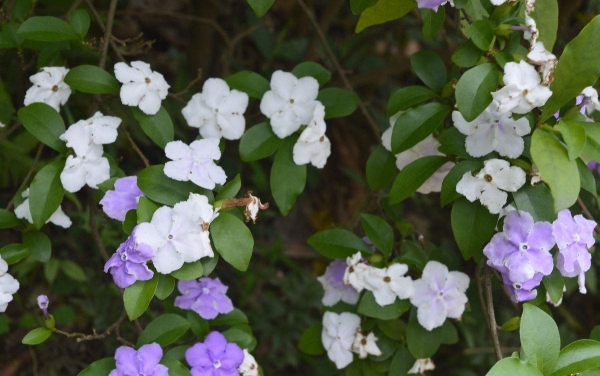
What are the care methods for yesterday-today-tomorrow (Brunfelsia pauciflora)?
Timely pruning: When you notice the yesterday-today-tomorrow plant growing too tall, you can promptly cut off the leaves and flower buds at the top. This not only encourages more side branches to grow, but also reduces poor development of flower buds on the branch tips. Fertilizing before flowering: Start fertilizing one month before flowering to provide nutrients, focusing on phosphorus and potassium fertilizers while reducing nitrogen fertilizer.
-
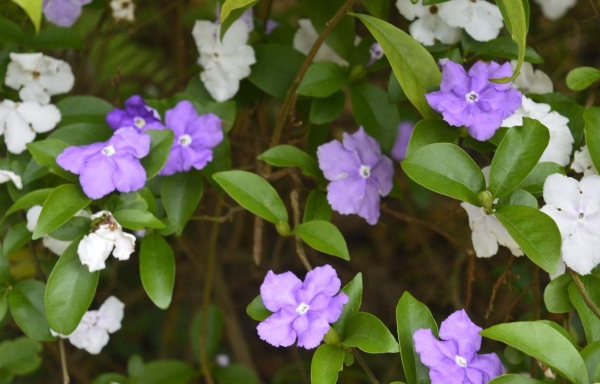
What are the care precautions for growing yesterday-today-and-tomorrow (Brunfelsia pauciflora)?
Yesterday-today-and-tomorrow loves a sunny environment, but it cannot be exposed to harsh direct sunlight, because excessive exposure easily causes the flowers and leaves to wither. It is best to ensure 4 hours of light each day. Also, to keep the air humid, you can spray plain water on the leaves. In winter, keep the potting soil dry, and in the rainy season reduce watering as well.
-
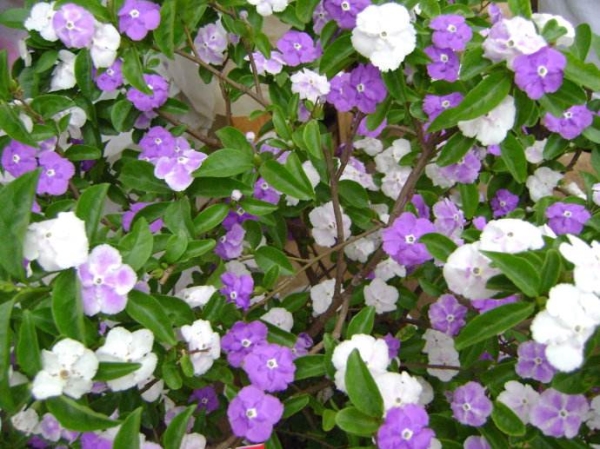
What are the reasons why yesterday-today-and-tomorrow (Brunfelsia pauciflora) does not bloom
Improper watering. If watered too much, it easily causes leggy leaf growth, and the branches and leaves absorb the nutrients, thus affecting flowering, so watering should follow the principle of "dry before wet". To keep the air moist, you can spray clean water on the leaves. Improper fertilizing. Choosing a fertilizer with too much nitrogen will cause vigorous branch and leaf growth
-
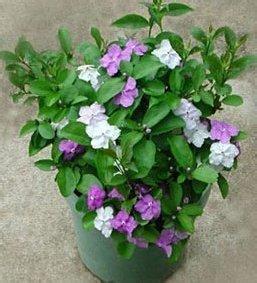
What are the cultivation methods for yesterday-today-and-tomorrow (Brunfelsia pauciflora)?
Yesterday-today-and-tomorrow, also known as morning-noon-and-night (Brunfelsia pauciflora), five-color jasmine, or Brunfelsia, belongs to the Solanaceae family and the genus Brunfelsia. It is an evergreen shrub with a height of 30-100 cm. It is native to tropical America. When the flowers open from bud to first bloom, the color is deep blue, but after two or three days, under the influence of light, temperature and various other factors
-

Why isn't my yesterday-today-tomorrow (Brunfelsia pauciflora) blooming?
When seeing other people's yesterday-today-tomorrow plants full of flowers and lush leaves, some flower lovers find that their own yesterday-today-tomorrow isn't blooming, and search everywhere for the reason, trying all kinds of fertilizing, lighting and watering, but still can't find the cause. If you want your yesterday-today-tomorrow to bloom on time, the correct care method is the most important thing.
-
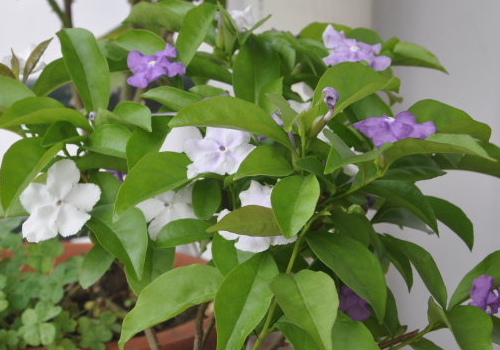
Propagation Methods and Pruning Techniques for Yesterday-Today-and-Tomorrow
In reality, people grow plants less for what the plants can provide for us, and more because people take care of the plants. This is a harmony between humans and nature, and also a sign of improved aesthetic taste after material abundance.
-
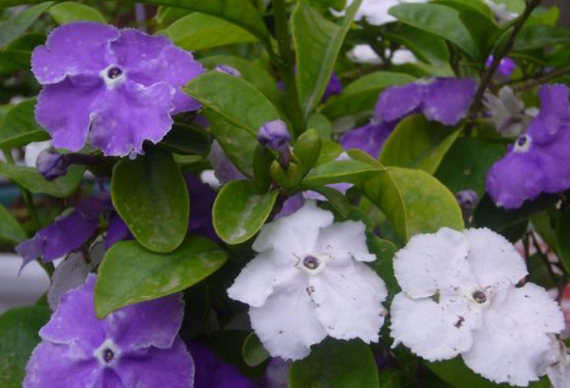
What to Do When Yesterday-Today-Tomorrow Leaves Turn Yellow and Drop
Yesterday-Today-Tomorrow (Brunfelsia pauciflora) is a plant that changes its face: yesterday the small flower opened deep blue, today it has turned light purple, and tomorrow it will turn white. Isn't this magical face-changing plant especially interesting? Let's take a look at this face-changing flower.
-
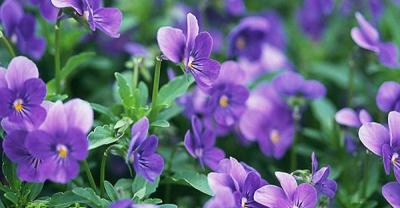
How to Grow and Care for Yesterday-Today-and-Tomorrow (Brunfelsia pauciflora)
Morphological characteristics: The plant grows 70-150 cm tall. Leaves are alternate and long lanceolate; flowers are solitary or in clusters of 2-3 in the leaf axils, salverform, with a five-lobed corolla, opening first...
条件筛选