-

What plant is the emerald green plant, and is it suitable for growing indoors?
What kind of plant is the emerald green plant and is it suitable for growing indoors?
-

Emerald plans to capture 7% of wheat export share this year
Emerald plans to capture 7% of the wheat export share this year
-
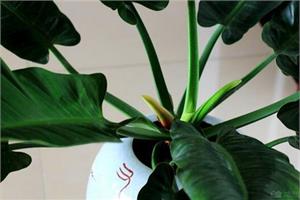
Emerald flower is easy to grow, and its daily care is not difficult
Emerald flower growing methods: keeping emerald flower well day to day is not hard
-
Introduction to the Characteristics of the Emerald Pear Fruit Tree Variety
It ripens in mid-July. The fruit is round, with an average single-fruit weight of 268 grams and a maximum of 550 grams. The skin is greenish-white with few fruit dots, and the flesh is white, fine in texture, crisp and tender, juicy, and sweetly fragrant, with a sugar content of 16.5%, reaching up to 19%. It stores well, looks beautiful, and has excellent quality, strong early fruiting, and extremely high yields, and it is resistant to black spot disease and ring rot. In 2000, the purchase price of bagged fruit was 4 yuan per jin. It is a replacement variety for Xinshui, Kosui, Hosui, and Zaosu. It has great development prospects. Contact: Li Sai. Telephone: 03183556676
-
Key Techniques for Introduction and Cultivation of Emerald Pear in the Old Course of the Abandoned Yellow River Region
I. Overview of the Introduction Site Xiangshui County is located in the northeastern part of Jiangsu Province, in a warm temperate monsoon climate zone, within the floodplain of the old course of the abandoned Yellow River. The average annual temperature is 13.9°C, annual precipitation is 912mm, extreme maximum temperature is 38.7°C, extreme minimum temperature is 17°C, frost-free period is 220 days, and precipitation is mainly concentrated from May to September. The introduction demonstration orchard has sandy loam soil with deep soil layers, medium fertility, good aeration, and a pH value of 7.2. A total of 1440 Emerald Pear trees and 350 Golden Pear trees were introduced, planted in spring 2001.
-
8 common appearance problems of bagged Emerald pear and their solutions
Emerald is an excellent new pear variety bred by the Zhengzhou Fruit Research Institute, developed by crossing New Century and Zaosu. Since 2000, after 6 years of bagged cultivation through top-grafting to change the canopy in our city, we have found that this variety has a regular fruit shape, a smooth and glossy fruit surface, creamy white flesh, a crisp and tender texture with abundant juice, and few stone cells, making it an early-maturing pear variety of excellent quality. However, in production we have found that bagged pears often show abnormal phenomena such as black wrinkling, fruit russeting, tiger-skin markings, floral green coloration on the fruit surface, black spots, cracking, and deformities that affect the external quality of the fruit. For this reason we conducted an investigation and analysis and proposed solutions.
-
Detailed explanation of the processing method and steps for emerald garlic cloves
Emerald garlic cloves are crystal clear, salty-sweet, crisp and tender, with a unique flavor. They are a popular nutritious and health-promoting dish and sell well on the international market. The processing method is introduced below. 1. Select raw materials: The large-hand garlic used for processing garlic cloves must be mature, dry, clean, have a complete outer skin, and be free from insect damage, mold, heating and deterioration. Remove cloves that are too small and single-clove garlic. 2. Separate cloves and soak: Separate the cloves manually, remove the outer skin, soak in clean water for 12 hours, and pay attention to changing the water in a timely manner. 3. Remove skins and rinse: After soaking
-
Detailed Explanation of Key Cultivation Techniques for Emerald Pear
Emerald Pear, also known as Zhongli No. 1, was bred by the Zhengzhou Fruit Research Institute of the Chinese Academy of Agricultural Sciences through hybridization between Shinseiki and Zaosu pear. It is one of the early-maturing pear varieties with better overall traits currently available. I. Characteristics. This pear variety has strong growth vigor, a high germination rate, medium branching ability, and a small branching angle. The leaves are long ovate, flat, with sharp and dense serrations along the leaf margins. It has strong early fruiting ability; high-grafted trees can form flower buds in the same year and bear fruit the following year. It has a high fruit-setting rate and good yielding ability, with a habit of fruit setting on axillary flower buds, and in the full bearing period, short fruit spurs are the main bearing sites. The fruit is large,
-
Crystal Grass Emerald Jade Plum of Douban Orchid, with lovely flower colors
Douban Orchid, also called Line-art Spring Orchid, as a member of the large family of Chinese orchids, has a long history of cultivation in Yunnan Province, with many varieties, wide distribution and rich resources. After years of selection, cultivation, development and utilization by orchid circles, some excellent varieties have appeared among Douban Orchids, attracting the attention of the orchid world and increasingly favored by orchid art lovers at home and abroad. Among them, Emerald Jade Plum, developed by Mr. Zhang Qilin, standing director and deputy secretary-general of the Dali Prefecture Orchid Association, combines crystal flowers, plum petals, flying shoulders, hard lips, crystal-clear color and strong fleshy texture
-
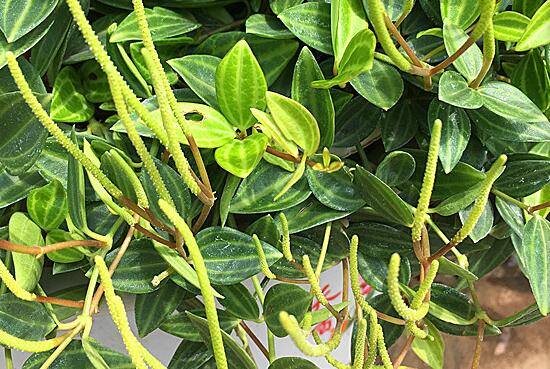
Does Pilea glauca (diamond emerald) bloom? Care for it like this after flowering and pull out the flower spike
As for the diamond emerald, many plant lovers probably know it; it is also called white-veined peperomia, named for its leaf color being as green as jade and as white as diamond, and it is a beautiful foliage plant. And we know that all plants bloom, so does the diamond emerald plant bloom? If it blooms, how do you care for the emerald diamond after flowering
条件筛选