-

What are the effects of macronutrient water-soluble fertilizers?
Macronutrient water-soluble fertilizers have the effects of promoting growth and activation, promoting roots and strengthening seedlings, preserving fruit and promoting swelling, detoxifying and preventing senescence, biologically resisting continuous cropping obstacles, and resisting disease while preserving fertilizer. According to the fertilizer requirements and characteristics of different crops, the corresponding fertilizers have different formulas. Those sold on the market include special water-soluble fertilizers for various crops such as vegetables, fruit trees, flowers, grain, cotton, and oil crops.
-
Detailed Explanation of the Standard for Water-Soluble Secondary Element Fertilizers
Secondary element content a, g/L 100; water-insoluble matter content, g/L 50; pH (1:250 dilution) 3.0-9.0; moisture content (H2O) % 3.0; secondary element content refers to calcium content or magnesium content or the sum of calcium and magnesium content, with a content of not less than 1.0%; both calcium and magnesium elements shall be counted as secondary
-
Can eating spinach really supplement iron? How do you replenish the human body's trace elements such as iron, copper, zinc, chromium, molybdenum, selenium, iodine and cobalt?
In our daily life, have you also heard the saying that spinach is rich in iron and can make people strong and healthy? So does eating spinach really help supplement iron? Some experts point out that relying on spinach to meet the human body's need for iron is not reliable, because only
-
Fast-acting chemical fertilizer means good fertilizer? A full breakdown of each element's role
Many farmer friends today judge the quality of a fertilizer by whether it acts quickly. This is a very serious misconception about fertilizing; in fact, it is quite the opposite, fast-acting does not necessarily mean good fertilizer. The speed at which a fertilizer acts is related to the content of each element, the application method, the fertilizer type
-
What are the misconceptions about calcium supplementation for apples? A look at the latest analysis
Calcium is a secondary element essential for apple growth and is also very important for the growth of apple trees. If apple trees are deficient in calcium, various physiological diseases will often occur. This affects the growth of apple trees and leads to reduced yield and quality. There
-
What to do about nutrient deficiencies in cucumbers? The latest prevention and control methods are here
The common nutrient deficiencies in cucumber cultivation are: potassium deficiency, magnesium deficiency and boron deficiency, 3 types in total. Their symptoms and prevention and control methods are as follows: Potassium deficiency: slight yellowing appears at the leaf margins, then the leaf margins die, and as the leaves grow, the leaves curl outward. Prevention and control method: apply potassium fertilizer in a timely manner
-
What are the nutrient requirements of pigs?
Mineral elements generally account for only 3%-4% of the pig's body, and are the main component of bones. Some are distributed in the hair coat, muscles, blood and other soft tissues, and some are components of vitamins, hormones and enzymes. Although these elements are not a source of energy, they participate
-
Precautions for Applying Photosynthetic Microelement Fertilizer to Walnut Trees
Pictured: Walnut. Photosynthetic microelement fertilizer is a nutritional foliar fertilizer. In addition to containing the three essential elements for plants - nitrogen, phosphorus, and potassium - as well as various trace elements such as calcium, magnesium, sulfur, iron, manganese, zinc, aluminum, and copper, it also contains a photorespiration inhibitor (namely photosynthetic fertilizer), and has the effect of improving
-
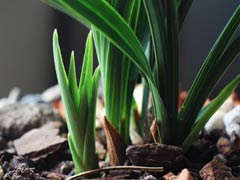
How to grow orchids well? Master five elements and three keys
Orchids are both easy and not easy to grow. To grow orchids well, you need to understand their natural growth attributes and their growth patterns, plant them according to those patterns, learn from others' experience, and based on your own actual conditions, think more, summarize more, and adapt to local conditions...
-
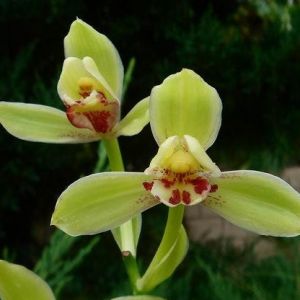
Orchid selection and breeding has its finer points; these six elements must be mastered well
A Jianlan (Cymbidium ensifolium) lotus-type narcissus from the mountains of Fujian, China. This variety blooms easily and recovers vigor easily; when the lotus-type narcissus flower opens fully it closely resembles the old Fengqiao of Huilan (Cymbidium faberi). Large flower, one bloom 5.2 cm in diameter and 1 cm in petal width. It stands well above the leaves and has a good fragrance.
条件筛选