-

Straw burning ban efforts must also adhere to combining restriction with guidance.
Straw burning bans also need to combine restriction with guidance.
-
Wang Yuanzhen of Dashan Village: No gain without effort, hard work leads to prosperity
Wang Yuanzhen of Dashan Village: "To make a fortune, you gain only if you work for it"
-
Agricultural modernization requires a convergence of theoretical efforts
Converging theoretical efforts for agricultural modernization
-
Formalistic poverty alleviation is unacceptable; poverty alleviation must be carried out with real effort and solid work
Formalistic poverty alleviation is unacceptable
-
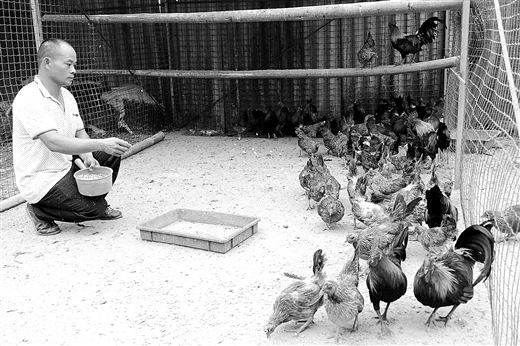
Taming red junglefowl and taking a new path to prosperity through collective effort
Taming "red junglefowl" and prospering together
-
With greater efforts to promote grain-to-forage conversion, who will find opportunities to prosper?
Xiaogu Talks Policy Episode 10 | With greater efforts to promote "grain-to-forage conversion," who will get opportunities to prosper?
-
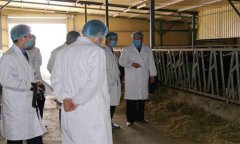
2018 avian influenza cases drop by nearly 50%, strengthen prevention efforts
Now we have once again entered the peak period for avian influenza, so we need to strengthen our defenses in this regard. What exactly should be done? Let's take a look together. Ducks must be screened before slaughter, and prevention efforts are working. To contain the spread of avian influenza, the Council of Agriculture has since last year mandated that all ducks across Taiwan be comprehensively screened for the virus before being brought to market.
-
Winter control of rice pests and diseases can yield twice the result with half the effort
In winter, rice pests and diseases are in a dormant state: pests stop feeding and pathogens stop infecting. If farmers seize this favorable opportunity to carry out control, they can achieve twice the result with half the effort. 1. Dispose of diseased rice straw. Diseased straw is the overwintering site for the pathogens of rice bacterial leaf streak, bacterial blight, rice blast and many other diseases, and is the main source of infection the following year. Before the end of March, farmers can compost diseased straw at high temperature, or process it as feed or fuel, which can greatly reduce the number of pathogens. For diseased rice straw that cannot be fully processed before the end of March,
-
Careful management of cotton at the seedling stage can yield twice the result with half the effort
On May 25, at the invitation of the Guangzong Service Station of the Cotton Committee of the China Agricultural Technology Association, I went to Gaojiazhuang, Fengjiazhai Township, Guangzong, to look at cotton fields and talk with farmers about current management techniques. Guangzong County borders Wei County and lies in the rain-scarce, drought-prone zone of south-central Hebei. With mostly sandy soil, it is very well suited to growing cotton and is one of the key cotton-producing counties. At present the seedlings are growing well, with 4 true leaves already showing and thinning just beginning; there is basically no disease. Some plants near trees are damaged by cotton mirids, and a few cotton seedlings have cotton aphids, which the villagers have already treated. Because they used
-
Pests and Diseases Increase in Single-Season Rice, Do Not Relax Control Efforts
This year, the single-season rice planting area in our province is 6.0143 million mu. Currently, most single-season rice has entered the late tillering stage to the young panicle differentiation stage. According to recent incomplete statistics from various regions, various pests and diseases have occurred in 2.5 million mu of single-season rice fields, an increase of 40% compared to the same period last year, including 1 million mu of rice planthopper, 500,000 mu of rice leaf roller, 400,000 mu of stem borer, 400,000 mu of sheath blight, and 80,000 mu of rice blast. 1. Rice planthopper: This year, the occurrence of rice planthopper is severe, and the large amount of foreign insect sources migrating in is rare in past years.
条件筛选