-
Complete Illustrated Guide to Flower Pests and Diseases: Quickly Identify Disease and Pest Symptoms
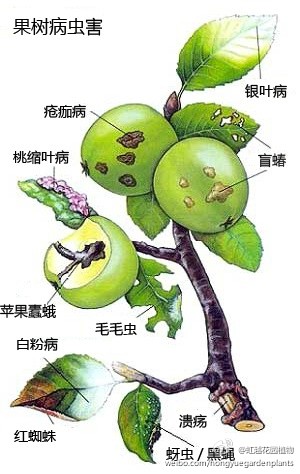
Pest and disease illustrations are always somewhat scattered. The few images below bring together illustrations of several dozen common flower pests and diseases, plus illustrations of fruit tree pests and diseases, rose pests and diseases, and tree pests and diseases.
-

What are the control methods for pests and diseases of sweet wormwood?
Control methods for pests and diseases of sweet wormwood
-

What are the common control methods for Schizonepeta diseases?
Common control methods for Schizonepeta diseases
-

Detailed Explanation of the Control Methods for Diseases and Pests of Radix Adenophorae
Control Methods for Diseases and Pests of Radix Adenophorae
-

Control Methods and Key Technical Points for Codonopsis Diseases
I. Rust mainly damages the stems and leaves of Codonopsis. Control methods: clean the field, eliminate field weeds and diseased plants. In the early stage of the disease, spray 25% triadimefon wettable powder at 1000-1500 times dilution, or 90% dithianon sodium at 400 times dilution for control. Spray once every 7-10 days, for 2-3 consecutive sprays. II. Root rot mainly damages the roots of Codonopsis. Control methods: from July to August, apply additional phosphorus and potassium fertilizer. Before transplanting Codonopsis, soak the roots in 50% thiophanate-methyl wettable powder at 1000 times dilution for 5 minutes. When the disease occurs
-
Pathological Analysis and Control Techniques for Diseases of the Tea Tree Mushroom
The tea tree mushroom (Agrocybe aegerita), also known as the tea mushroom, is a fashionable and rare mushroom variety that has become increasingly popular in domestic and international markets in recent years, emerging as a highlight among cultivated varieties. However, because the mycelium and fruiting bodies of this mushroom contain an almond-like aroma, they tend to attract a relatively high number of pests and diseases. Most of these are caused by infection from pathogenic fungi and insect pests, and are known as infectious diseases. Growers often fail to properly identify the disease symptoms and pathogens, leading to blind application of chemical pesticides. As a result, not only is effective control not achieved, but the mushroom bodies are harmed, product pesticide residues exceed standards, and cultivation returns
-
What are the common pests and diseases of Euonymus japonicus?
1. The box tree pyralid (Glyphodes perspectalis) larva spins silk to connect surrounding leaves and tender twigs into a temporary nest, then feeds inside it; in severe cases it eats all the leaves, causing the seedling to die. Morphological features: the adult has grayish-white body and wings; the front wing's costal margin, outer margin and inner margin have purplish-brown broad bands; on the purplish-brown band of the costal margin there are two white spots; the scales are glossy with a purplish-red sheen. The larva has a black head, a yellow-green body, dorsal line, subdorsal line and spiracular upper line from dark green to ink green, and the spiracular line is orange-yellow. Occurrence pattern: in northern regions there are 2 to 3 generations a year, with larvae
-
Control Methods for Bacterial Diseases in Orchids (Part Two)
Bacteria are also single-celled organisms and can only be seen under a microscope. The harm bacteria cause to plants is mainly through the production of toxins, which cause plant rot or tissue death, or block and destroy vascular bundles, forming tumors. Since bacterial control is relatively difficult, the best control method is to prevent the occurrence of the pathogens. 1. Orchid brown rot is one of the common bacterial diseases worldwide. Its pathogenic bacteria are Erwinia cypripedii, Pseudomonas gladioli, etc., and it mostly occurs in humid, warm environments. It generally damages the
-
Detailed Guide to Preventing and Treating Diseases in Home-Grown Orchids
First, strengthen cultivation practices. Orchids need an environment with good ventilation and air flow, unimpeded drainage, and moderate light. Taking home potted orchids as an example, the orchid pot chosen should have ample space at the bottom, good breathability, and no water accumulation; the soil for growing orchids is best made by mixing pond mud with fired soil, slightly acidic; when the orchid plant is moved into the pot, it should be placed in a spot with good ventilation and moderate light, to reduce and prevent the occurrence of orchid diseases. When watering orchids, water control should be carried out differently according to the season, to keep the soil in the orchid pot slightly moist
-
How to prevent bee diseases in spring beekeeping? A detailed explanation of comprehensive measures
In beekeeping practice, it has been found that the occurrence of bee diseases is directly related to feeding and management techniques. Especially in northern China, where the temperature difference between early and late spring is large and nectar and pollen sources are scarce, bee colonies are most prone to bee diseases. Once a disease breaks out, it will inevitably cause losses and affect colony multiplication and economic returns. Therefore, in spring, the measure of "prevention first, treatment supplementary" should be used to control the occurrence of bee diseases. The specific measures are as follows: 1. Selection and treatment of the bee site. The most basic conditions for beekeepers when choosing a site should be shelter from the wind, facing the sun, and dry terrain. In spring, choose
条件筛选