-

Infectious hematopoietic necrosis (IHN) of fish is a viral disease
[Pathogen] The pathogen of infectious hematopoietic necrosis of fish is infectious hematopoietic necrosis virus (abbreviated IHNV). [Symptoms and pathological changes] Affected fish initially show slow swimming and drift downstream, then swim with a swaying motion, and subsequently float up and roll sideways, often dying shortly after violent swimming. The diseased fish have darkened body color, protruding eyeballs, a distended abdomen, congestion at the base of the fins, and often a long, thick white mucous string hanging from the anus. On necropsy, a large amount of fluid is visible in the abdominal cavity, the liver, spleen and kidney are pale in color, the intestine is hemorrhagic, and the oral wall and skeletal muscle
-
What are the prevention and treatment methods for fish lice disease in snakehead (Channa maculata)?
(1) Pathogen: fish lice. (2) Symptoms: After being parasitized by fish lice, the diseased fish become extremely restless, swimming frantically and leaping about, with increased mucus on the body surface, and are prone to concurrent saprolegniasis and other diseases. The harm to fingerlings is enormous, and in severe cases it can cause mass death of the diseased fish. The peak incidence period is from May to September each year. It is a common disease of snakehead (Channa maculata). (3) Prevention and treatment: Sprinkle 0.4×0.000001 Yuchongqing over the entire pond.
-
Two Key Techniques for High and Stable Yields of Yellow Catfish: Disease Control and Fishing Technology
In artificial farming of yellow catfish, the key technical measures for high and stable yields should focus on two things - disease control and daily harvesting of yellow catfish. Yellow catfish, also known as yellow catfish, yellow sprout head, yellow ding fish, yellow fish, yellow drum fish, river catfish, ga ya zi, river yellow catfish, Wallace's yellow catfish, mo ding, ounce fish, yellow horn, ga fish, yellow spine fish, yellow ox withered, grass withered, yellow cheek fish, ounce male fish and yellow bone fish, etc., is a small freshwater economic fish and a famous, special and excellent variety. To farm yellow catfish well, the key work lies in doing a good job of disease and pest control for yellow catfish,
-
The integrated fish-goose farming model can increase economic returns by 30%.
Integrated fish-goose farming is a three-dimensional ecological farming model that combines poultry rearing with fisheries management. According to comparisons, under the same conditions, integrated fish-goose farming increases economic returns by about 30% compared with raising fish or geese separately. 1. Benefits of integrated fish-goose farming. 1. Geese are fully automatic, energy-saving and highly efficient aerators for fish ponds. In integrated fish-goose farming, farmers do not need to worry about oxygen depletion in the water caused by weather changes, because whenever the weather changes, the geese will scramble to jump into the water to bathe and chase each other, churning up splashes, which has a particularly good oxygenating effect on the fish pond.
-
What diseases are fish prone to when suffering from malnutrition?
With the rapid development of factory farming, the use of compound feed is becoming more and more widespread. However, some compound feeds cannot meet the nutritional needs of fish due to raw material problems or formulation technical problems. In particular, feed designed, formulated, processed and produced by small feed mills and farmers themselves may cause nutritional deficiencies or excesses, weakening the fish's constitution and, in severe cases, causing fish death. This article will discuss the causes of fish diseases from the nutritional aspect, in order to guide farmers to take timely measures in breeding production to prevent fish diseases.
-
What are the prevention and treatment methods for white plastron disease in soft-shelled turtles?
Cause: unknown, possibly caused by viruses, bacteria or feed-related factors. Symptoms: the body surface of the sick soft-shelled turtle is intact, the plastron is pale, showing a state of extreme anemia, most of the body is edematous, the liver is mostly earth-yellow and earth-gray, the muscles are pale and bloodless, and there is generally fluid accumulation in the abdominal cavity. Prevention and treatment: 1) The cause is unknown, so prevention is the main approach; 2) In the early stage of the disease, feed "Qiangke 103" or "Biebikang" for 3 to 6 consecutive days; 3) When the disease occurs, use "Mieduling" or "Yuyong Bomie" and
-
How to Diagnose and Treat Pig Diseases That Cause Neurological Symptoms
Pig diseases with "convulsions" as the main symptom are frequently encountered in pig farming. There are 6 commonly occurring diseases that present with "convulsion" symptoms, and they are easily confused in clinical practice, leading to misdiagnosis. Especially for pig farms, households, or rural veterinarians lacking laboratory conditions, clinical differential diagnosis is particularly important. 1. Porcine edema disease: the pathogen is septicemic Escherichia coli. It is prone to occur under stress conditions such as temperature changes, weaning, and feed changes, and mostly affects pigs weighing 20-30 kg after weaning that eat a lot and grow fast. Affected pigs show no elevated body temperature, excitement and restlessness, blind walking, circling
-
What are the treatment methods for swine gastric ulcer disease
The treatment principle is to eliminate the causative factors, neutralize gastric acid, and protect the gastric mucosa. For mildly affected pigs, keep them quiet to reduce stress responses. Sedatives may be injected, such as: chlorpromazine hydrochloride, 1 to 3 mg per kg of body weight each time. To neutralize gastric acid and prevent damage to the gastric mucosa, antacids such as aluminum hydroxide magnesium silicate or magnesium oxide can be used to reduce the acidity of the gastric contents. To protect the ulcer surface, prevent bleeding, and promote healing, bismuth subnitrate 5 to 10 g can be administered before feeding, 3 times a day. Tannalbin can also be given orally, 2 to
-
What are the prevention and treatment methods for sheep heartwater disease?
Sheep heartwater disease is a non-contagious infectious disease that frequently occurs in sheep flocks. The disease is generally caused by a cold with high fever. A large amount of yellow blood-containing fluid accumulates in the pericardium of affected sheep, causing rickettsial pathogens in the vascular endothelial cells of the cerebral cortex and renal glomeruli to attach to red blood cells, and the disease spreads to healthy sheep through the blood-sucking transmission of ticks. In sheep suffering from acute heartwater disease, body temperature rises above 42°C, breathing is rapid, pulse is short and fast, they refuse to eat, grind their teeth, protrude their tongue, walk unsteadily, and fall
-
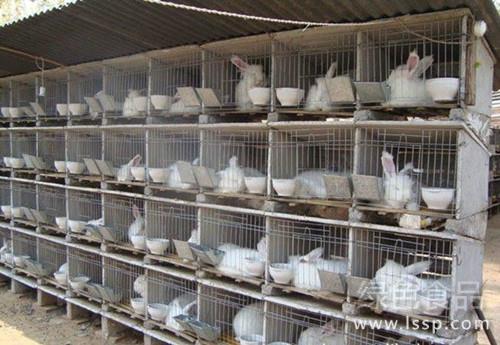
Seven key elements of fattening domestic rabbits, which can effectively improve meat quality and increase output
Fattening can improve meat quality and increase output: the seven key elements of fattening domestic rabbits
条件筛选