-
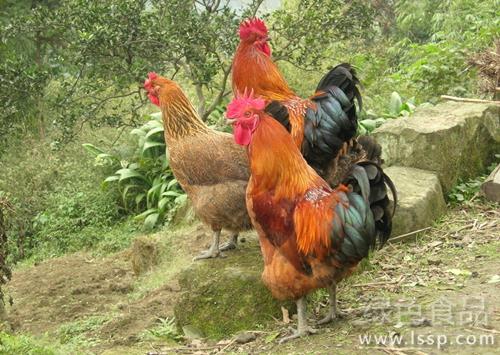
Chicken diseases affect weight gain and egg production, folk remedies to help you
Chicken diseases affect weight gain and egg production, chicken raising requires disease prevention, folk remedies to help you
-

Honeysuckle cultivation helps farmers increase income and achieve prosperity
Honeysuckle is also known as "double flower"; because it is a climbing woody plant, it is also called honeysuckle vine or mandarin duck vine. The flowers are snow-white when they first open and turn golden yellow after 2-3 days, hence the name honeysuckle. Because its leaves do not wither through winter, and in spring the old leaves slowly fall only as new leaves emerge, it is also called Japanese honeysuckle (Lonicera japonica), a semi-evergreen perennial climbing woody plant. Honeysuckle is one of the 70 precious and commonly used traditional Chinese medicinal materials designated by the State Council. It has wide uses, an extremely high prescription usage rate, a large clinical formula volume, and a very large demand as a raw material for Chinese patent medicines. In the Chinese patent medicines produced year-round by major pharmaceutical enterprises at home and abroad, honeysuckle
-
Identification of Honeysuckle Disease Symptoms and Control Methods
Brown spot disease is a common leaf disease that causes plants to grow weakly. It mostly occurs in the middle and late growth stages, with August and September being the peak period of onset, and it is severe under rainy and humid conditions. In the early stage of onset, small brown spots form on the leaves, then expand into brown round lesions or irregular lesions. Grayish-black mold-like substances grow on the underside of the lesions. When the disease is severe, the leaves fall off, affecting plant growth and flowering. Control method: prune diseased leaves, then spray with 1:1.5:200 Bordeaux mixture, once every 7 to 10 days, for 2 to 3 consecutive times. Powdery mildew occurs under warm and dry
-
What are the control methods for licorice rust disease?
① Pathogen The pathogen of licorice rust (Uromyces glycyrrhizae) belongs to Basidiomycota → Teliomycetes → Uredinales → Pucciniaceae → the genus Uromyces. ② Disease pattern a. Urediniospore stage In the seedling stage of licorice, infected plants show a light brown uredinium at the tip of leaves that have not yet unfolded. As the young leaves flatten and grow, the spore masses appear densely along the leaf tip and the underside of the leaf, and finally the entire underside of the leaf is covered by spore masses, appearing as a sheet of yellow rust color; generally all leaves of the whole plant become diseased, and diseased plants are noticeably dwarfed.
-
Licorice Disease Prevention and Control Methods and Key Technical Points
(1) Rust disease: When infected, yellowish-brown scar-like lesions appear on the underside of the leaves. After the epidermis ruptures, brown powder is released; this is the uredinium of the pathogen. From August to September, dark brown telia form, causing the leaves to turn yellow and wither, and in severe cases to fall off. Control methods: Apply more phosphorus and potassium fertilizer to improve the plant's disease resistance. Remove diseased plant debris and burn it in a centralized manner. At the early stage of the disease, spray with 15% triadimefon at 1000 times dilution, or 97% diniconazole at 400 times dilution. (2) Brown spot disease: It damages the leaves, and affected leaves develop round or irregular lesions. The
-
What are the common disease control measures for rhododendrons?
The common diseases of rhododendrons and their control measures can be grouped into the following categories: 1. Rhododendron gray mold Symptoms Gray mold occurs on the leaves and flowers of rhododendrons. Freeze damage is often the trigger for leaf infection. In spring, the flowers of rhododendrons grown indoors and outdoors are often infected with gray mold. In the early stage of the disease, necrotic spots appear on the petals, spread quickly, and connect with each other to form large lesions. Under conditions of high humidity, the diseased parts produce a large amount of gray conidial layers, which is how gray mold got its name. Pathogen Botrytis ci
-
Comprehensive Prevention and Control Methods and Techniques for Common Rhododendron Diseases
The main diseases of rhododendrons include root rot, brown spot, black spot, leaf blight, and iron deficiency chlorosis. After a rhododendron contracts root rot, its growth weakens, the leaves wilt and dry up, and water-soaked brown patches appear on the root surface; in severe cases soft rot develops, with gradual decay and peeling of the bark, and the xylem turns black. This disease occurs most easily under conditions of high temperature and high humidity. The control method is to strictly disinfect the potting soil before repotting, and to keep the soil loose and moist with good permeability, avoiding waterlogging. If an affected plant is found, promptly deal with the diseased plant and the potting soil. For treatment
-
Occurrence and Control Methods of Brown Spot Disease in Rhododendrons
Brown spot disease is a common leaf spot disease of rhododendrons. It occurs fairly commonly throughout the country, and is especially severe in Guangzhou, Suzhou, Nanjing, Lianyungang, Wuhan, Hefei, Shenyang and other places. Besides harming rhododendrons, this disease also harms other plants of the genus Rhododendron. Symptom characteristics: Brown spot disease mainly occurs on the leaves. Initially, small reddish-brown spots appear on the leaf surface. They then gradually expand into nearly circular lesions, or polygonal lesions due to restriction by the leaf veins. The lesions are 2-5 mm in diameter and dark brown; in the later stage, the center of the lesion turns yellowish-white to grayish-white, with a dark brown edge (varying by variety).
-
Magnolia Propagation and Cultivation Methods and Pest and Disease Control Techniques
I. Morphological characteristics: A deciduous tree, about 25m tall. Leaves alternate, relatively large, broadly obovate to obovate, entire. Flowers solitary at the top of branches, white bell-shaped, fragrant. The flowering period varies by region, such as Kunming from November to December, Guangzhou from February to March, Hangzhou in March. Cultivated varieties are short with dense branches, and flowers are large and abundant. Seedling plants are tall with straight trunks, branches slightly sparse, flowers sparse and foliage luxuriant, but with strong adaptability and rapid growth. Propagated by sowing, grafting, layering and cuttings. Growth habits: Warm and humid, with a shaded side environment, slightly shade-tolerant, mature trees prefer light, suitable for growing in acidic or slightly
-
Pest and Disease Control Methods and Technical Key Points for Bonsai
Diseases on branches and trunks: These manifest as rot of the phloem and cambium of branches and trunks, stem rot and cankers on branches and trunks, surface rot of branches and trunks, decay of the inner wood, and spots on twigs. In such cases, Bordeaux mixture should usually be sprayed, followed by lime sulfur mixture, and the decayed parts should be scraped off. Foliar diseases: Foliar diseases usually show symptoms such as yellow-brown or black spots, leaf curling, wilting, and early leaf drop, and may be chlorosis, leaf spot disease, sooty mold, powdery mildew, etc. For leaf spot disease, remove the diseased leaves and spray Bordeaux mixture; for chlorosis, use 0.1-0
条件筛选