-
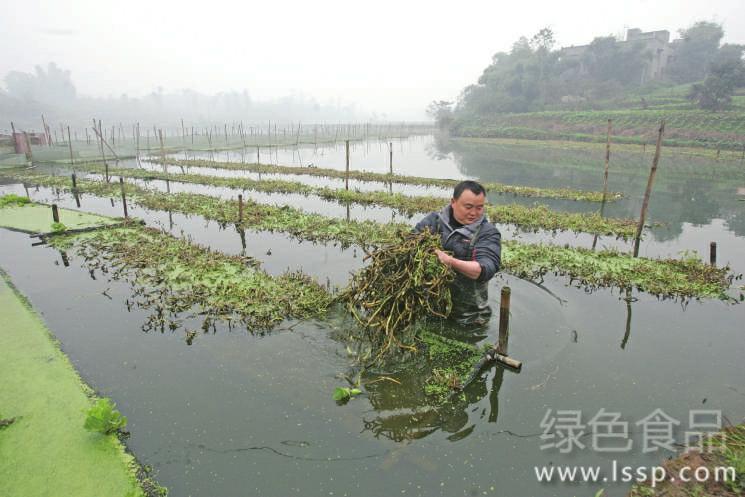
Fish Disease Prevention Is More Important Than Treatment: Detailed Explanation of Prevention Methods and Measures
Fish Disease Prevention and Control: Prevention Is More Important Than Treatment - Methods and Measures for Fish Disease Prevention
-

Review of Research Progress on Pig Disease-Resistance Breeding Technology
High-yield objectives usually lead to reduced pig resistance. At the same time, pig farm diseases, especially viral infectious diseases, severely threaten pig health. Although vaccination has played an important preventive and control role, it has not been able to completely control and eliminate the prevalence of infectious diseases. In the long run, adopting genetic methods to improve pigs' resistance to pathogens at the genetic level, and carrying out disease-resistance breeding, has a fundamental effect. In the 1930s, some scholars reported that different chicken breeds differed in susceptibility to Marek's disease, and in the subsequent
-
Laminitis in pigs is a surgical disease of swine.
[Causes]In the past, clinical cases of laminitis in pigs were relatively few, but in recent years the incidence has increased. There are many factors that trigger laminitis. At present, due to the use of various additives, pig feed is formulated with comprehensive and sufficient nutrients, the feed is rich and highly palatable, pigs are greedy eaters and lethargic, and exercise little. In addition, with the increase in confinement and cage rearing, pigs become fat and fleshy in a short time and their body weight increases rapidly. Such a huge pig body increases the pressure on the narrow hoof capsule, and coupled with insufficient exercise, poor blood circulation in the hoof, and impeded and obstructed hoof mechanism, when digestive disorders occur, the feed in the gastrointestinal tract ferments and produces histamine-like toxins, causing the hoof, which is rich in
-
Detailed Explanation of Disease Diagnosis by Observing Colors in Cattle and Sheep and Prevention and Treatment Techniques
In long-term livestock and veterinary production practice, we have summarized nearly thirty years of experience and relevant reports. By observing the colors of cattle and sheep, diseases can be diagnosed quite accurately, and at the same time, effective new techniques can be adopted for prevention and treatment, achieving good therapeutic results. 1 "Cylinder color" disease diagnosis 1.1 Cattle and sheep "red eye disease" The pathogen of this disease is Haemophilus or conjunctival Rickettsia, and both cattle and sheep can be infected. 1.1.1 Symptoms Both eyes are affected simultaneously, eyelids are swollen, photophobia and tearing: conjunctivitis, diffuse
-
Detailed explanation of other diseases such as duck fungal disease and spirochetosis
Spirochetosis is an acute, septicemic infectious disease caused by Borrelia anserina in poultry and wild birds such as ducks and geese. Its main clinical and pathological features are fever, diarrhea, enlargement of the liver and spleen, and necrosis. The disease has a high mortality rate, and affected birds often die in large numbers after onset. Spirochetosis occurs worldwide, but is more common in free-range poultry in tropical and subtropical regions. 1. Pathogen and epidemiological characteristics The pathogen is Borrelia anserina, which belongs to the order Spirochaetales, family Spirochaetaceae. Spirochetes cannot grow on ordinary bacterial culture media
-
Prevention Methods for Pig Urate Deposition Disease in Cold Weather
Pig urate deposition disease is a metabolic disease caused by pigs eating protein-rich concentrated feed, and it mostly occurs in winter and early spring. Clinical symptoms mostly occur in nursing piglets and growing pigs that are physically strong, well developed, and have a vigorous appetite. The most acute form often shows no symptoms at all before sudden death. Most cases take an acute course, with sudden onset, reduced or lost appetite, and body temperature initially rising by about 0.5 degrees Celsius, then quickly returning to normal or falling below normal. Most affected pigs are lame in the hind legs, while some are lame in the front legs, gradually progressing to swollen joints
-
How to prevent and control swine lungworm disease? Prevention and control methods every pig farmer must read
Swine lungworm disease is a helminthic disease caused by Metastrongylus nematodes parasitizing the bronchi and bronchioles of pigs. It is highly harmful to pigs, often causing bronchitis and even pneumonia, and is prone to complicating with pulmonary infectious diseases such as swine pasteurellosis and swine enzootic pneumonia. It often occurs as an endemic disease, mostly infecting pigs when they eat earthworms containing infective larvae. One month after infection, piglets mainly develop coughing, especially obvious when exercising in the morning and evening or when encountering changes in external temperature. Sometimes purulent mucus flows from the nostrils, and there are eye secretions. The appetite of sick pigs is generally normal, but growth and development stagnate, and they gradually become emaciated.
-
How to prevent and control pig lice disease? Detailed explanation of prevention and control techniques
Pig lice disease is an external parasitic disease caused by the pig louse (Haematopinus suis) parasitizing the body surface within the hair coat. Although it cannot cause the death of pigs, it has a considerable impact on the growth and development of pigs, especially a serious impact on piglets. The pig louse has a short development cycle and spreads rapidly. After male and female lice mate, the female louse sucks enough blood and then lays eggs, laying 3~4 eggs per day. The eggs adhere to the pig's hair coat and hatch into nymphs after 12~15 days. The nymphs become adult lice after 10~14 days, with a development cycle of 23~32 days. Poor hygiene in pig houses, narrow sites, dense overcrowding, and poor management
-
How to prevent and treat fish outbreak of hemorrhagic disease in autumn
Fish are prone to outbreak hemorrhagic disease in autumn. This disease has a sudden onset, spreads quickly, lasts a long time in its epidemic period, and has a high mortality rate and causes great losses. Once it breaks out, it is difficult to control, and the condition easily recurs. Fish farmers should strengthen their awareness of prevention to prevent the occurrence of this disease. 1. Fish fry disinfection: Before fish fry are put into the pond, they must be disinfected by soaking in 1%-2% salt water. The soaking time depends on the fish's physique and the temperature. When conditions permit, fish fry can be soaked with outbreak hemorrhagic disease vaccine. 2. Timely water changing and oxygen increasing: Keep the water quality fresh and change the water frequently. If
-
Detailed Explanation of Prevention and Treatment Methods for Bacterial Diseases in Sweetfish
I. Vibriosis 1. Symptoms Depending on the species of Vibrio involved, vibriosis can be roughly divided into three types: yellow liver type, intestinal tip type, and ulcerative type. Diseased fish show weak swimming, darkened body color, protruding eyeballs, and epidermal hemorrhage that in severe cases penetrates into the muscle layer. The inner surface of the operculum, fin bases, and snout tip show congestion followed by ulceration, the anus becomes red and swollen, and gill color becomes pale. The liver of diseased fish becomes enlarged, with some livers completely fading to a yellowish-earth color and others showing localized fading and congestion. Blister-like structures filled with bloody fluid appear in the liver of diseased fish, the gallbladder becomes enlarged and filled with orange-yellow or brown-green bile; the kidney
条件筛选