-

How to deal with leaf spot disease on Euonymus japonicus? Detailed explanation of prevention and control methods
Euonymus japonicus is a commonly used evergreen small shrub grown for its foliage in landscaping, and it has many advantages, but the occurrence of leaf spot disease causes the plant to drop its leaves prematurely, resulting in bare branches and even death, seriously affecting the normal growth and ornamental effect of Euonymus japonicus. Symptoms of leaf spot disease: In the early stage of the disease, there are small yellow spots on the leaves, which gradually turn yellowish-brown and expand into round or irregular spots. The diameter of the spots is 2 mm to 10 mm. In the later stage, the spots are grayish-brown or grayish-white with darker edges, and many small black dots grow on the spots.
-
Symptom Identification and Control Methods for Leaf Spot Disease on Japanese Spindle (Euonymus japonicus)
Symptoms: The disease affects the young and old leaves of Japanese spindle (Euonymus japonicus). Yellow-brown spots appear on the upper surface of the leaves and expand into nearly circular or irregular shapes, 4 mm to 14 mm in diameter, with a grayish-white center, light brown concentric rings, and a dark brown slightly raised edge. Dense tiny black mold dots form within the lesions. The spots show through to the underside, though the color on the underside is slightly lighter than on the upper surface. After the lesions dry up, they crack apart from the healthy tissue, eventually forming holes. This often causes early leaf drop. Pathogen: fungus, Cercospora destructiva Rav. of the order Moniliales, class Hyphomycetes, subdivision Deuteromycotina.
-
Causes and Control Methods of Euonymus japonicus Wilt Disease
Euonymus japonicus wilt disease is a common disease of Euonymus japonicus in recent years. It is characterized by sudden onset, rapid spread, and a major impact on landscaping effects. Although this disease is stubborn, if correct measures are taken, targeting the pathogen and applying multiple measures at once, satisfactory control results can still be achieved. Symptoms: In affected Euonymus japonicus, at first only the upper leaves of individual branches turn green-dry and lose water, then the entire branch and the whole plant's leaves and branches show a green-wilted, water-loss appearance. In the late stage of the disease, the leaves turn yellowish-white, and severe infection can lead to plant
-
What are the common pests and diseases of Euonymus japonicus?
1. The box tree pyralid (Glyphodes perspectalis) larva spins silk to connect surrounding leaves and tender twigs into a temporary nest, then feeds inside it; in severe cases it eats all the leaves, causing the seedling to die. Morphological features: the adult has grayish-white body and wings; the front wing's costal margin, outer margin and inner margin have purplish-brown broad bands; on the purplish-brown band of the costal margin there are two white spots; the scales are glossy with a purplish-red sheen. The larva has a black head, a yellow-green body, dorsal line, subdorsal line and spiracular upper line from dark green to ink green, and the spiracular line is orange-yellow. Occurrence pattern: in northern regions there are 2 to 3 generations a year, with larvae
-
Pathological Analysis and Control Techniques for Diseases of the Tea Tree Mushroom
The tea tree mushroom (Agrocybe aegerita), also known as the tea mushroom, is a fashionable and rare mushroom variety that has become increasingly popular in domestic and international markets in recent years, emerging as a highlight among cultivated varieties. However, because the mycelium and fruiting bodies of this mushroom contain an almond-like aroma, they tend to attract a relatively high number of pests and diseases. Most of these are caused by infection from pathogenic fungi and insect pests, and are known as infectious diseases. Growers often fail to properly identify the disease symptoms and pathogens, leading to blind application of chemical pesticides. As a result, not only is effective control not achieved, but the mushroom bodies are harmed, product pesticide residues exceed standards, and cultivation returns
-
What are the main pest and disease control methods for mushroom sheds?
1. Mushroom flies: The larvae, also called fungus maggots, mainly feed on the fruiting bodies, boring tunnels that affect quality, and the wounds they create are very easily infected by pathogens, causing rot. Different methods should be used to control mushroom flies at different stages. If large numbers of fungus maggots appear before mushroom emergence, you can fumigate with dichlorvos at a rate of 0.90 kg per 100 sq m, and at the same time spray each culture block with another 0.15 kg of 1% potassium chloride or sodium chloride solution (5% salt water can be used as a substitute); if fungus maggots cause damage after mushroom emergence, you can spray low-toxicity pesticides such as derris extract, permethrin, and nicotine. (Nicotine
-
Symptoms and control methods of pinellia virus disease
It mostly occurs in summer; infected leaves curl and twist, and the plants grow stunted. Control methods: ① Select disease-free plants for seed. ② Disinfect the soil before sowing and control pests promptly. ③ When diseased plants are found, pull them out immediately, burn them in a centralized pile and bury them deep, and pour 5% lime milk into the diseased planting holes.
-
Control Methods and Key Technical Points for Codonopsis Diseases
I. Rust mainly damages the stems and leaves of Codonopsis. Control methods: clean the field, eliminate field weeds and diseased plants. In the early stage of the disease, spray 25% triadimefon wettable powder at 1000-1500 times dilution, or 90% dithianon sodium at 400 times dilution for control. Spray once every 7-10 days, for 2-3 consecutive sprays. II. Root rot mainly damages the roots of Codonopsis. Control methods: from July to August, apply additional phosphorus and potassium fertilizer. Before transplanting Codonopsis, soak the roots in 50% thiophanate-methyl wettable powder at 1000 times dilution for 5 minutes. When the disease occurs
-
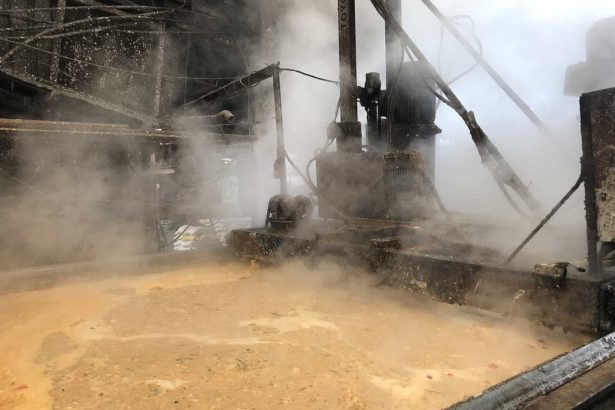
The Battle Over Epidemic Prevention and Food Waste 01"A Close Look at Pig Farming with Food Waste: Pig Farmers Say, "This Is Our Life and Property, We Fear the Disease More Than Anyone!"
The Battle Over Epidemic Prevention and Food Waste 01"A Close Look at Pig Farming with Food Waste: Pig Farmers Say, "This Is Our Life and Property, We Fear the Disease More Than Anyone!"
-
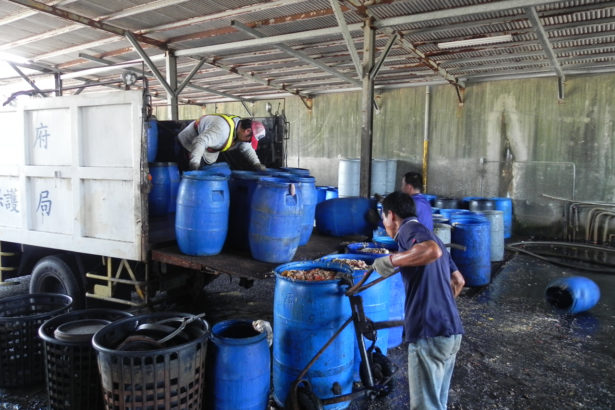
Rushed Food Waste Ban: EPA Protests as Swine Fever Chaos Hits Home Before the Disease Does
The Battle Over Epidemic Prevention and Food Waste 04"Rushed Food Waste Ban: EPA Up in Arms, Saying "Swine Fever Hasn't Even Arrived, and the Country Is Already in Chaos"
条件筛选