-
Sword Bean Growing Techniques, Propagation Methods, and the Differences Between Vining and Dwarf Varieties
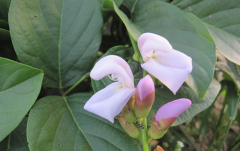
Do you know the red phoenix bean? This plant has another name, the sword bean. So what are the planting time and methods for sword beans? Let's take a look together! The sword bean blooms from June to July and fruits from August to October. Among plants, those commonly called "sword bean" come in vining
-

Symptom Identification and Control Methods of Rice Dwarf Disease
The symptoms are mainly distributed in the southern rice-growing areas. Also known as rice common dwarf disease, common dwarf, green dwarf, etc. After rice is infected from the seedling stage to the tillering stage, the plant becomes dwarfed, tillering increases, leaves are dark green and stiff, and in the later growth stage the diseased rice cannot head or set grain. Diseased leaf symptoms manifest as two types. In the white-spot type, dashed-line-like yellowish-white dotted streak spots parallel to the leaf veins appear on the leaves or leaf sheaths, most obvious at the base. The new leaves above the first diseased leaf all show dotted streaks, while the older leaves below generally do not. In the twisted type, under insufficient light conditions, the heart leaf emerges twisted
-
How to Identify and Control Southern Rice Black-Streaked Dwarf Virus
Southern rice black-streaked dwarf virus is a rice viral disease occurring in southern rice-growing areas, with characteristics of strong explosiveness, rapid spread, great difficulty in prevention and control, and heavy damage losses. Rice and corn infected at the seedling stage will basically suffer total crop failure. In 2011, after comprehensive prevention and control, a total of about 8,500 mu of southern rice black-streaked dwarf virus occurred in Lianyuan City, of which the affected area of middle-season rice was 6,500 mu, the affected area of late rice was 1,600 mu, and the affected area of corn and other crops was 400 mu. A total of 25.93 tons of rice was lost, of which
-
Introduction to the Characteristics and Traits of the Dwarf Indica Rice Variety Aixianzhan
A new conventional rice variety, Aixianzhan, developed by crossing Yueyezhan 21/Yuanxianzhan and suitable for both early and late seasons with high quality and high yield, has been identified by the Food Quality Supervision and Testing Center of the Ministry of Agriculture (Wuhan) through physicochemical analysis as a national standard premium grade 1 rice, breaking the zero record for new rice varieties of national standard premium grade 1 in our province. It is reported that this variety is a temperature-sensitive indica rice, medium-maturing in the early season and early-maturing in the late season. In the 2002 late season, it participated in the provincial regional trial, with an average yield of 383.29 kg per mu, an increase of
-
Detailed Explanation of Propagation Methods and Technical Points for Dwarf Lilyturf
Dwarf lilyturf is propagated by division. In April, when dwarf lilyturf is harvested, select vigorous clumps with many formed tuberous roots and no pests or diseases to keep as seed stock. Pick off the tuberous roots, trim away the fibrous roots, then use a knife to cut off the stem nodes at the lower part of the rhizome, leaving only 2-3 cm of stem nodes; it is best if the cut surface of the rhizome is white and the leaves do not splay apart. When cutting, the rhizome must not be left too long, otherwise after planting it will mostly form double stem nodes and produce few tuberous roots. To reduce water evaporation, cut off the tips of the leaves, leaving only about 6 cm. Separate the individual plants, remove
-
Planting Methods and Care Tips for Dwarf Lilyturf
Dwarf lilyturf (Ophiopogon japonicus) is a new and superior groundcover plant recently promoted for cultivation by Chinese landscaping departments. It is a perennial evergreen herb in the Liliaceae family, grown for its foliage in spring, autumn and winter, and enjoyed for its flowers in summer. Because the plant is short, it can also be grown in pots for ornamental display. Its tuberous roots are used in medicine and have the effects of moistening the lungs to stop coughing and benefiting the stomach to promote fluid production. Dwarf lilyturf grows in clumps with rhizomes, and spindle-shaped tuberous roots form at the ends of its fibrous roots. The leaves are linear, 10 to 15 cm long; the flower stalks emerge from the leaf clusters, and the raceme is loose and spike-like, with bisexual flowers and 6 tepals. The flowers are pale
-
Detailed Explanation of the Processing Technology and Production Method of Candied Dwarf Lilyturf Root
Candied dwarf lilyturf root is not only sweet and palatable with a unique taste, but also has health benefits such as nourishing yin and promoting fluid production, moistening the lungs and relieving cough, and preventing and treating lung deficiency. The raw materials for candied dwarf lilyturf root are widely available, and the processing technology is simple. The key technical points are as follows. 1. Raw material selection: Select mature, well-developed dwarf lilyturf roots with larger grain shapes as raw materials. 2. Cleaning and peeling: Place the selected dwarf lilyturf roots into a washing tank, wash them clean with running water, remove and drain. Remove the outer skin by abrasion peeling or chemical peeling, wash clean, and place in a concentration of
-
Planting Methods and Key Technical Points for Dwarf Lilyturf (Ophiopogon japonicus)
Generally, planting is carried out on cloudy days from mid-April to early May each year. Trench planting and hole planting are usually adopted. For trench planting, open trenches 5 cm deep at a row spacing of 15 cm, first apply diluted pig manure water in the trenches, then plant seedlings at a plant spacing of 6-8 cm, with 3 plants per clump; after planting, cover with soil and firm it so that the seedlings stand upright and stable, achieving a level ground surface and upright seedlings. In some areas, for trench planting, trenches 5-6 cm deep are opened on the surface of the bed at a row spacing of about 20 cm, and 1-2 seedlings are planted in the trenches at a plant spacing of 15 cm; after planting, cover with soil and firm it. Use 700 kg of seed seedlings per 667 sq m.
-
Harvesting, Processing Methods and Key Technical Points for Dwarf Lilyturf (Ophiopogon japonicus)
Dwarf lilyturf is harvested in the first or second ten days of April of the second or third year after planting. Choose a sunny day, first plow the soil to a depth of 25 cm so that the dwarf lilyturf is turned up, shake off the soil, cut off the tuberous roots and fibrous roots, put them separately into bamboo baskets, and place them in running water, trampling and rubbing them with the feet to wash away the mud and sand. Spread the washed dwarf lilyturf on a drying mat or in a drying yard to sun-dry; once the water has dried, rub it gently with the hands, then sun-dry again after rubbing, repeating this several times until the fibrous roots are rubbed off, then sun-dry until completely dry, and sieve out impurities to finish. If rainy weather occurs, use a gentle heat of 40-50°C to dry for 15-20 hours
-
Occurrence and Control Methods of Rice Dwarf Disease in Japonica Rice
I. Damage Symptoms The rice plant becomes stunted, with increased tillering, dark green leaves, and transparent yellowish-white dashed line streaks on young leaves and leaf sheaths. When the disease occurs at the seedling stage, tillering is reduced and the plant cannot head; when it occurs after booting, yellowish-white streaks appear only on the flag leaf or other leaf sheaths, and late-onset plants mostly produce neck-enclosed heads, small heads, many empty and shriveled grains, and a low seed-setting rate. II. Preventive Measures Once japonica rice contracts dwarf disease, it is very difficult to cure, so comprehensive preventive measures should be actively adopted. 1. Select disease-resistant
条件筛选