-

Detailed Explanation of Agronomic Supporting Techniques for Drip Irrigation Under Plastic Mulch in Cotton
Drip irrigation under plastic mulch is a technique that combines drip irrigation technology with plastic film mulching cultivation technology. Water is supplied through a controllable pipeline system; after water and fertilizer are mixed, they are delivered drop by drop evenly, at set times and in set amounts, moistening the crop root development zone and always keeping the root-zone soil loose and at optimal moisture. It reduces evaporation between crops and improves water use efficiency. 1. Irrigation regime. For subsurface drip irrigation, total water use was 175.48 million cubic meters. Dripping was done 9 times. For precision drip irrigation, total water use was 177.84 million cubic meters. Dripping
-
Detailed Explanation of Key Points of Cotton Cultivation Technology with Drip Irrigation under Plastic Film
I. Pre-sowing Preparation 1. Variety Selection: According to climate and soil conditions, select varieties with a growth period of about 130 days, resistance to Fusarium and Verticillium wilt; compact plant type, short fruiting branches type I~II, small insertion angle; moderate to small leaves, short petioles, not prone to vegetative branches; strong boll setting, and good fiber quality. Such as 9665, JD~3, Fengmian No. 8, Jiumian No. 2, etc. 2. Deep Application of Base Fertilizer: The amount of chemical fertilizer is 8~12 kg of pure nitrogen, 7~10 kg of phosphorus pentoxide, and 3.5 kg of potassium oxide. When deep plowing to kill stubble, apply farmyard manure
-
Detailed Explanation of Key Technical Points for Drip Irrigation and Fertigation under Cotton Mulch
Drip irrigation under cotton mulch is a new water-saving technology that allows artificial control of irrigation volume and field microclimate, greatly alleviating the **tension of water use for the first irrigation, and can control the reproductive growth and vegetative growth of cotton, helping to shape an ideal plant architecture and reduce ineffective nutrient consumption. Although some problems still exist in practical application, cotton under drip irrigation generally opens bolls earlier, has better quality and higher yield. At the same time, under special climatic conditions, drip irrigation has demonstrated unique cold resistance. When encountering special low-temperature conditions in spring and autumn, growth and development remain normal, with strong high and stable yield, and a relatively concentrated maturity period.
-
Key Technical Points for Cultivation and Management of Cotton under Hose Drip Irrigation
As the crop area in Jimsar County has increased year by year, water resources have become scarce, and the cost of cotton has risen, the comparative benefit of cotton has declined year by year. For this reason, we introduced and promoted the technique of cotton drip irrigation under film at normal pressure (hose). I. Main indicators 1. Yield: 100-130 kg of lint cotton per 667 sq m. Yield composition: 13,000-15,000 harvested plants per 667 sq m, 5-6 bolls per plant, 5 g per boll, lint percentage 33%-35%. 2. Fertilizer and water
-
Analysis of Key Technologies and Economic Benefits of Deep-Buried Drip Irrigation for Cotton
Cotton "deep-buried" drip irrigation technology is another new high-efficiency water-use technology that has emerged following cotton subsurface hose micro-porous irrigation technology. This technology can utilize fertilizer and water with high efficiency, and its yield-increasing effect is obvious. I. Key Technologies 1. Irrigation The start of irrigation is at the cotton squaring stage. In the cotton region of northern Xinjiang, this is generally June 7-10, with irrigation carried out on a 3-day rotation cycle. If autumn is rainy, irrigation can be carried out on a 5-day cycle. Irrigation amount: at the squaring stage, each irrigation is 8 cubic meters per 667 sq m; at full flowering, 10 cubic
-
What is the application ratio of special fertilizer for cotton drip-irrigated fields?
I. Total fertilizer application for cotton In high-latitude marginally suitable cotton areas, for a seed cotton yield of 300-380 kg, 70-80 kg of natural fertilizer is needed, equivalent to 160-180 kg of standard fertilizer. This achieves "a jin of fertilizer for a jin of cotton." Applying 1 kg of standard fertilizer can produce 1 kg of lint cotton. Soil test results and cotton plant nutrient diagnosis in Regiment 137 generally show zinc deficiency; applying 1-2 kg of zinc fertilizer in autumn increases yield by 5%-10%. For plots with abundant potassium according to test results, potassium fertilizer application is 5-10 kg, especially
-
Occurrence Patterns and Control Methods of Cotton Pests under Drip Irrigation
With the large-scale application of drip irrigation technology for cotton, the irrigation method has been improved. It delivers water and nutrients evenly and continuously to the vicinity of the cotton root system at scheduled times and specific locations, and the supporting cotton cultivation techniques have changed accordingly, causing corresponding changes in the ecological environment of cotton field pests and their occurrence patterns. For this reason, it is highly necessary to clearly understand the occurrence patterns of cotton pests and the technical control measures under mulched drip irrigation, so as to ensure sustained and balanced increases in cotton yield. 1. Cotton bollworm 1. Occurrence level Compared with previous years, the occurrence in 2005 was moderate to severe
-
-
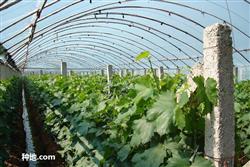
Correct use of drip irrigation in greenhouse vineyards
How is drip irrigation used in greenhouse vineyards? Drip irrigation is the most ideal technique for watering grapes in greenhouses; it has advantages such as saving water, increasing yield, lowering temperature, saving labor and high efficiency. 1. Making simple drip irrigation: build a reservoir with a capacity of 3-5 cubic meters and a height of 1-3 m at the head of the greenhouse, install a gate valve and a water meter at the reservoir outlet pipe, and use 38 mm plastic pipe as the lateral pipe inside the greenhouse, connected to the reservoir outlet pipe. There are two layout forms for the branch pipes and lateral pipes:
-

条件筛选