-

How to grow Anthurium in water? Master the key points to keep your Anthurium bright and dripping with color
Master the key points and hydroponic Anthurium will also be bright and dripping with color. Hydroponic methods for Anthurium
-
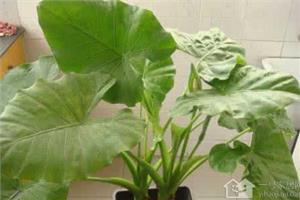
Is the Drip Guanyin (Alocasia macrorrhizos, giant taro) poisonous? Understanding its flower meaning in one article
Is the Drip Guanyin flower poisonous? What is the flower meaning of the Drip Guanyin flower
-
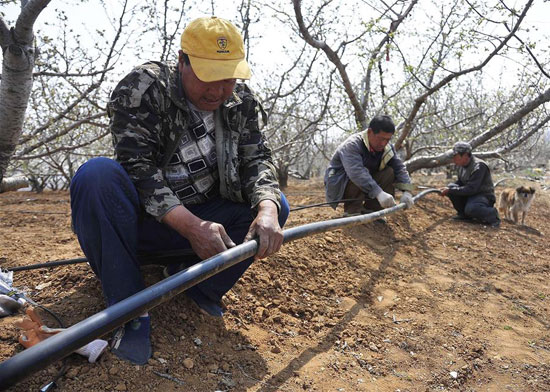
Shandong Hit by Spring Drought: Water-Saving Drip Irrigation in Orchards to Cope with the Drought
Shandong Hit by Spring Drought: Water-Saving Drip Irrigation in Orchards
-
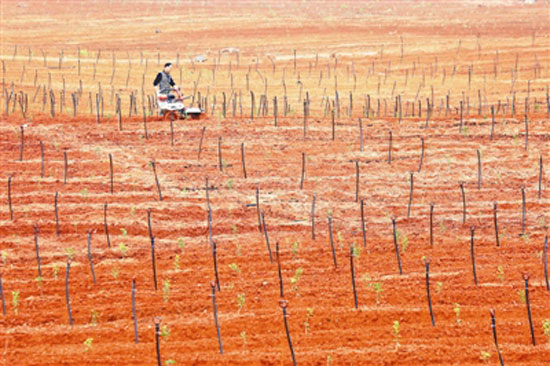
How to choose between drip irrigation, sprinkler irrigation and micro-irrigation? A detailed guide to water-saving irrigation methods for spring ploughing
Drip irrigation, sprinkler irrigation and micro-irrigation: water-saving methods for spring ploughing
-
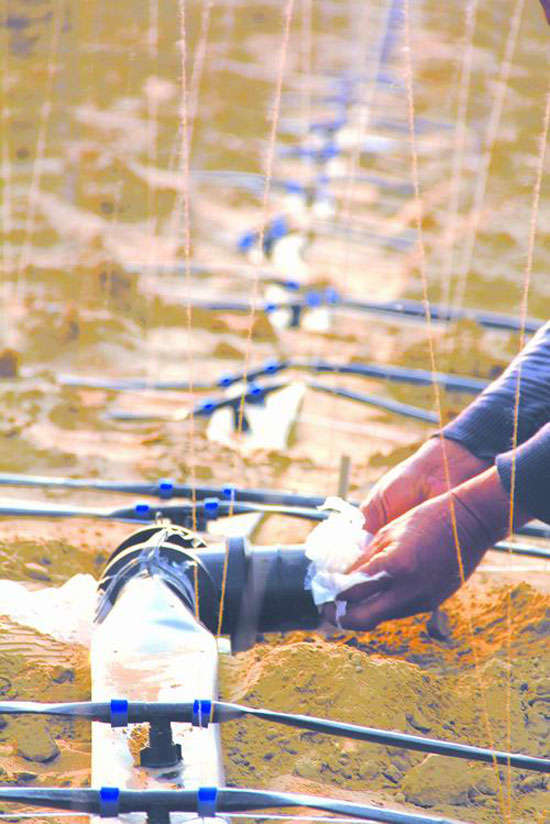
Drought-Prone Sandy Areas: Henan's Drip Irrigation Solves the Drought-Resistance Challenge
Drought-Prone Sandy Areas in Henan: Drip Irrigation
-

What to Do When Alocasia (Dripping Guanyin) Roots Rot? Cause Analysis and Treatment Methods
What to do when Alocasia (Dripping Guanyin) roots rot: causes of root rot in Alocasia. Alocasia can be grown in soil or in water. Root rot in soil-grown Alocasia is mainly caused by the potting soil being too wet. When the potting soil is too wet, rot of the rhizome is very likely to occur. The cause of overly wet potting soil may be that you watered too much
-

The 10th Regiment of the First Agricultural Division pioneers a new water-saving technique for dryland rice cultivation with drip irrigation under plastic film
In 2010, the 10th Regiment of the First Agricultural Division of the **Production and Construction Corps used new science and new technology to transform traditional agriculture. Faced with a severe shortage of water resources and its disadvantaged position as a unit downstream of the First Division's water supply, it independently developed new machinery for sowing rice on dryland with drip irrigation under plastic film, which was put into rice production and vigorously promoted by Aral City of the First Division. According to Kong Jun, the First Division's deputy division commander in charge of agriculture, this cultivation model not only saves labor in rice planting but also conserves water resources and farmland costs, helping to increase rice yields and efficiency, and it has opened a new chapter for the Corps' agriculture and livestock farms.
-
Cotton drip irrigation automation project boosts yields
The Shihezi "Cotton Drip Irrigation Automatic Control Science and Technology Demonstration Project", which has been included in the national plan, will add another 15,000 mu to its experimental demonstration area this year on top of last year's. In recent years, after the Shihezi reclamation area vigorously promoted and applied cotton under-mulch drip irrigation technology, total cotton output and per-unit yield have increased substantially. **Tianye Group Corporation, as the largest domestic producer of agricultural water-saving drip irrigation equipment, has promoted water-saving drip irrigation over more than ten million mu. In order to seize the scientific and technological high ground, the company independently innovated and developed the "Cotton Drip Irrigation Automation
-
Analysis of the Causes of Premature Senescence in Drip-Irrigated Cotton and Control Measures
Since 2002, Regiment 141 has widely promoted drip irrigation technology for cotton cultivation, with yields increasing year by year and remarkable economic benefits. However, in recent years, premature senescence has occurred to varying degrees in cotton fields, causing poor boll opening, shell clamping, and an increase in hardened and stiff boll segments and tips, reducing quality. I. Causes of Premature Senescence 1. Long continuous cropping years Newly reclaimed cotton fields and those with a short history of cotton planting mostly show green branches and leaves; old cotton fields with 10 or more years of continuous cropping grow well in the early stage, but once they encounter low temperatures and continuous rain in the middle and late stages, red leaf symptoms occur on a large scale.
-
What to do about premature senescence in high-density drip-irrigated cotton? Main causes and preventive measures
I. Main causes of premature senescence in high-density cotton planting 1. Variety factors Varieties are not resistant to premature senescence. In recent years there have been many cotton varieties; some have aged and degenerated, and some are inherently poor in disease resistance and premature senescence resistance, or are unsuitable for high-density planting, leading to premature senescence in cotton. 2. Environmental factors ① Temperature For mid-early maturing cotton, the suitable sowing period is when the 5 cm soil temperature stably passes 12°C. If sowing is too early or the seedling stage encounters low-temperature chilling injury, because the air temperature is relatively low, root growth is slow and diseases are severe, which easily damages the cotton root system function, thereby
条件筛选