-

What are the difficulties in cultivating Schisandra chinensis? A complete analysis of practical countermeasures
Cultivating Schisandra chinensis artificially to replace wild resources has already become an inevitable trend in the development of the Schisandra chinensis industry. Many difficulties have also emerged in the production process of artificially planting Schisandra chinensis, and these difficulties have seriously hindered the path of Schisandra chinensis production toward intensive, large-scale, and industrialized development, and are also the fundamental reason for the current lack of large-scale successful experience in artificially cultivating Schisandra chinensis. Regarding the harm caused by pests and diseases, pesticide residues, and drift. The overall countermeasure is: adhere to the three principles of prevention, mitigation, and treatment. Prevention: in the process of Schisandra chinensis cultivation, consistently implement the policy of placing greater emphasis on prevention than on treatment, act early to seize the initiative. Take preventive measures before trouble arises and avoid being passive. In recent years, due to consecutive warm winters, the development of Schisandra chinensis has advanced, so all agronomic measures must also be carried out earlier. Among the 24 solar terms, after Awakening of Insects, Schisandra chinensis should be protected according to local phenological conditions. To prevent certain fungi in the atmosphere from attaching to the stems and vines of Schisandra chinensis, the specific measure is to spray Bordeaux mixture, prepared with equal amounts of quicklime and copper sulfate, one part each, and 200 parts water. After Schisandra chinensis leafs out, promptly spray broad-spectrum fungicides and foliar fertilizers, Bihu + polyoxins + fulvic acid. Mitigation: if nearby farmland is sprayed with butyl ester pesticides, we must take targeted measures and spray mitigating agents, or spray foliar fertilizers to improve immunity. At this stage, prevention should focus mainly on leaf blight. Spray pesticides against Deuteromycota fungi. Treatment: if diseases still occur when protective and mitigating measures are ineffective, apply the right remedy for the condition. Carry out timely treatment. Strictly prevent the loss of the optimal prevention and treatment timing, which causes losses. For the treatment of several common diseases, please follow the methods in the Schisandra chinensis pest and disease section below. Keep firmly in mind the lesson of the large-scale damage to Schisandra chinensis in Heilongjiang in 2007, and never allow the tragic situation to repeat itself.
-
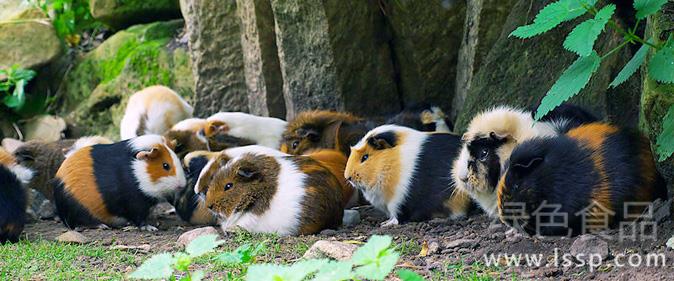
Detailed Guide to Guinea Pig Farming: Low Cost, Low Technical Difficulty
Introduction to Guinea Pig Farming Techniques: Low Cost, Low Technical Difficulty
-
Many difficulties in large-scale farming of yellow catfish, polyculture models work better
The yellow catfish is a benthic omnivorous fish, with tender flesh, rich nutrition and extremely high economic value, making it a farming species with great market potential. The yellow catfish has strong adaptability and grows slower than cyprinid fish, but grows relatively fast for the species itself; fry bred in the same year can reach marketable size within that year, and the population yield is relatively high. Because large-scale artificial farming currently faces certain difficulties, carrying out polyculture has become imperative. Polyculture of yellow catfish in fish ponds has the following advantages: first, it can feed on low-value small miscellaneous fish and shrimp in the pond,
-
Detailed Explanation of Traditional Chinese Medicine Therapies for Ten Major Difficult and Complicated Diseases of Chickens
In production practice, such situations are often encountered: when treating certain infectious diseases, all the "good drugs" have been used up, yet the effect is still not obvious. However, treatment with low-cost traditional Chinese medicine has instead achieved unexpectedly good results. These facts show that traditional Chinese medicine has its unique efficacy in treating difficult and complicated diseases of chickens. The following is introduced for reference. 1 Chicken pullorum disease: Pulsatilla root (Baitouweng), purslane (Machixian), Malianwei, and chebule fruit (Hezi) 15% each; Phellodendron bark (Huangbai), realgar (Xionghuang), talc (Huashi), and ageratum (Huoxiang) 10% each. Usage: mix into feed at a ratio of 3%
-
What is going on with geese pulling white droppings, shaking their heads, coughing and having difficulty breathing?
1. Clinical symptoms: Sick geese are listless, with ruffled feathers, unwilling to move, standing apart and dazed, with reduced appetite or even complete loss of appetite, pulling white or green watery droppings, showing respiratory symptoms such as head shaking and sneezing, and neurological symptoms such as twisted necks, circling and head tilting appearing in the flock. 2. Treatment: 1. Emergency injection of avian influenza-paramyxovirus bivalent yolk antibody, 2 ml per bird. 2. Zhongmu Hudu Kuaike (100 g), two bottles per day, once in the morning and once in the evening, concentrated in drinking water, for 3 consecutive days. 3. Changganqing (100 g
-
Golden lilies bloom easily, and both planting and care are not difficult
Golden lilies are mostly used as cut flowers and bloom easily. When planting, pay attention to the following points: 1. It is best to cultivate with plump bulbs - the purchased bulbs should be plump and elastic so they will bloom easily in the future; shriveled bulbs, damaged bulbs, or bulbs that have been stored too long will fail to bloom. 2. Do not expose to light in the early stage of planting the bulbs - it is best to plant the "bulbs" in autumn or spring, burying 2/3 in the soil with the tip pointing upward and about 1/3 exposed. Keep the planting soil moist, do not fertilize for the time being, and keep it cool and shaded, exposing it to as little light as possible. This will not only help it root faster, but also use the "dark period"
-
Summer oyster mushroom cultivation is not difficult; punching holes for ventilation and oxygen supply is the key
Summer temperatures are relatively high, and three-dimensional cultivation of oyster mushrooms in plastic bags often leads to severe contamination, and can even cause cultivation failure. Whether the spawn-running stage can be successfully passed is the key to summer oyster mushroom cultivation, and it is also the issue mushroom growers worry about most. Practice has proven that punching holes for ventilation and oxygen supply is an effective method for solving the problems of summer oyster mushroom cultivation. 1. Timing of hole punching Generally done 3-5 days after spawning, when the mycelium turns white, germinates, and begins to extend into the substrate. If holes are punched too early, the mycelium has not yet started to grow and contamination by foreign microorganisms is likely; if holes are punched too late, the mycelium lacks
-
What are the difficulties in processing sweet potato vermicelli?
I. Reasons for the dull gray color of vermicelli: Sweet potatoes are pulped, separated, and settled to obtain starch, commonly called crude starch. Crude starch contains impurities, phenolic substances, and many pigments, and is grayish-white. The phenolic substances in it oxidize and brown very easily, so the finished vermicelli is bound to turn black. Solution: refine the starch. Method: add 2 to 3 times the amount of water to the crude starch, stir, add an appropriate amount of sweet potato starch decolorizing agent, and after about 20 minutes, filter through a 120-mesh nylon screen. After the filtrate settles for 4 to 6 hours, remove the upper clear water, then add water and stir
-
Four major feed causes make chicken diarrhea difficult to prevent and control
1. Excessive salt content. To enhance appetite and prevent feather pecking, vent pecking and similar behaviors, too much salt is added to chicken feed, causing the chickens to drink excessively, which often leads to severe diarrhea. In addition, an excessive amount of fish meal or fish meal that itself contains a lot of salt can also easily lead to excessive salt content in the feed, causing diarrhea in laying hens. 2. Excessive limestone powder content. Adding too much limestone powder to the diet or increasing it too quickly will cause the blood calcium of laying hens to be too high, increase the burden on the kidneys, cause kidney swelling, and ultimately cause diarrhea. To meet
-
Porcine yin deficiency with liver hyperactivity is one of the difficult and complicated diseases of pigs.
[Etiology] This disease mostly occurs in spring and summer. In spring and summer, yang qi is released, and the main qi of livestock tends to the body surface. When feeding and management are improper, the climate is abnormal, or the pig's own regulatory and adaptive functions are disordered, some diseases closely related to the season appear, and pigs are prone to yin deficiency with liver hyperactivity. When the liver is hyperactive, it affects the heart (the mother organ affecting the child organ). The liver opens into the eyes, and the heart opens into the tongue, so diseased pigs show red eyes, red tongue, dry mouth, and fever. Because of persistent high fever, body fluids are consumed and damaged, so symptoms such as weakness and a preference for lying down appear. Liver hyperactivity overacts on the spleen, and the spleen fails in its transportation and transformation, so appetite decreases. The liver governs free coursing
条件筛选