-
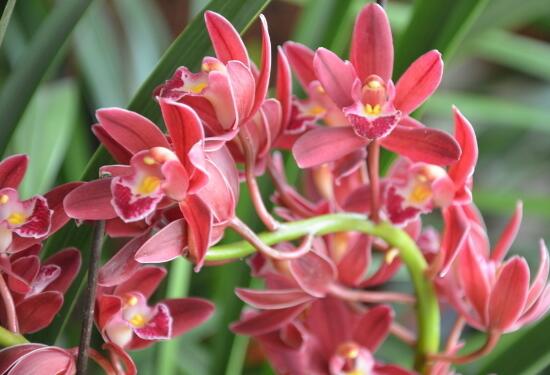
It is very difficult to get Cymbidium orchids to bloom a second time; a year-round care method teaches you how to rebloom them
Cymbidium orchids are world-famous new stars among orchids, and their huge flowers and vivid colors leave a deep impression; reblooming is probably familiar to flower lovers too, and it means getting a plant to bloom a second time, so how do you get a Cymbidium orchid to rebloom? In everyday life, very few people can successfully get it to rebloom
-
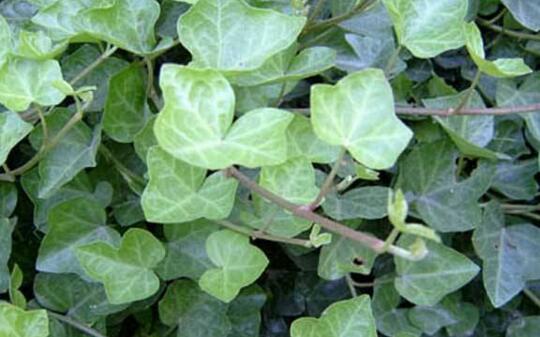
How do you prune and shape English ivy? Four shapes, each with a different level of difficulty
In terms of growth rate, English ivy is a relatively slow-growing plant, so many people think there is no need to prune it. This idea is actually wrong. Pruning not only makes English ivy more beautiful, but also benefits its growth. So how do you prune English ivy? How do you shape English ivy? Let the editor tell you the answers
-

What are the control measures for the difficulty of shiitake mushrooms fruiting in bag substrate
In recent years, the "Xixia model" of cultivating flower shiitake mushrooms on plastic racks with bag substrate as the main body has become a model for the south-to-north migration of mushrooms in China, blooming all over the country. However, due to regional climate temperature differences and the fact that mushroom farmers in newly developed areas have little understanding of shiitake mushroom variety types and fruiting characteristics, they used medium-temperature shiitake varieties such as 135, 241, 939, L26, etc., or similar strains, and when forcing fruiting in low-temperature seasons, the abnormal phenomenon of being unable to fruit normally after forcing occurs, resulting in reduced yield in mild cases and loss of capital in severe cases. Now we present our control measures for bag substrate
-
A Detailed Explanation of the Difficulties in Artificial Cultivation of Schisandra chinensis and the Solutions
Northern Schisandra (Liaoning Schisandra) is a genuine northern medicinal herb. Modern research has proven that Schisandra can regulate the cardiovascular system, improve blood circulation, excite the central nervous system, and also has a good effect on treating hepatitis. Schisandra is also used for brewing wine, seasoning, extracting essences and pigments, and making food preservatives. At present, with the continuous harvesting of Schisandra, wild resources are constantly decreasing, and the cost and difficulty of harvesting are gradually increasing. Moreover, the environmental damage caused by harvesting wild resources has attracted great attention. Therefore, artificially cultivated Schisandra will
-
Licorice is not difficult to grow; master the method and you can grow it well.
At present, there is great demand for licorice products in domestic and international markets. Experts believe that to resolve the contradiction between the demand for licorice products and environmental protection, the most critical thing is to develop the artificial cultivation industry of licorice. From the current actual situation of artificial licorice cultivation, promoting the coordinated progress of planting and fenced breeding, and rationally developing the path of base construction, is practical and feasible. In fact, licorice is not a difficult plant to grow; as long as the soil and moisture are suitable, it can be planted on a large scale. Some people believe that the key to solving the problem of artificially cultivating licorice is now mainly not funding.
-
Porcine yin deficiency with liver hyperactivity is one of the difficult and complicated diseases of pigs.
[Etiology] This disease mostly occurs in spring and summer. In spring and summer, yang qi is released, and the main qi of livestock tends to the body surface. When feeding and management are improper, the climate is abnormal, or the pig's own regulatory and adaptive functions are disordered, some diseases closely related to the season appear, and pigs are prone to yin deficiency with liver hyperactivity. When the liver is hyperactive, it affects the heart (the mother organ affecting the child organ). The liver opens into the eyes, and the heart opens into the tongue, so diseased pigs show red eyes, red tongue, dry mouth, and fever. Because of persistent high fever, body fluids are consumed and damaged, so symptoms such as weakness and a preference for lying down appear. Liver hyperactivity overacts on the spleen, and the spleen fails in its transportation and transformation, so appetite decreases. The liver governs free coursing
-
Four major feed causes make chicken diarrhea difficult to prevent and control
1. Excessive salt content. To enhance appetite and prevent feather pecking, vent pecking and similar behaviors, too much salt is added to chicken feed, causing the chickens to drink excessively, which often leads to severe diarrhea. In addition, an excessive amount of fish meal or fish meal that itself contains a lot of salt can also easily lead to excessive salt content in the feed, causing diarrhea in laying hens. 2. Excessive limestone powder content. Adding too much limestone powder to the diet or increasing it too quickly will cause the blood calcium of laying hens to be too high, increase the burden on the kidneys, cause kidney swelling, and ultimately cause diarrhea. To meet
-
What are the difficulties in processing sweet potato vermicelli?
I. Reasons for the dull gray color of vermicelli: Sweet potatoes are pulped, separated, and settled to obtain starch, commonly called crude starch. Crude starch contains impurities, phenolic substances, and many pigments, and is grayish-white. The phenolic substances in it oxidize and brown very easily, so the finished vermicelli is bound to turn black. Solution: refine the starch. Method: add 2 to 3 times the amount of water to the crude starch, stir, add an appropriate amount of sweet potato starch decolorizing agent, and after about 20 minutes, filter through a 120-mesh nylon screen. After the filtrate settles for 4 to 6 hours, remove the upper clear water, then add water and stir
-
Summer oyster mushroom cultivation is not difficult; punching holes for ventilation and oxygen supply is the key
Summer temperatures are relatively high, and three-dimensional cultivation of oyster mushrooms in plastic bags often leads to severe contamination, and can even cause cultivation failure. Whether the spawn-running stage can be successfully passed is the key to summer oyster mushroom cultivation, and it is also the issue mushroom growers worry about most. Practice has proven that punching holes for ventilation and oxygen supply is an effective method for solving the problems of summer oyster mushroom cultivation. 1. Timing of hole punching Generally done 3-5 days after spawning, when the mycelium turns white, germinates, and begins to extend into the substrate. If holes are punched too early, the mycelium has not yet started to grow and contamination by foreign microorganisms is likely; if holes are punched too late, the mycelium lacks
-
Golden lilies bloom easily, and both planting and care are not difficult
Golden lilies are mostly used as cut flowers and bloom easily. When planting, pay attention to the following points: 1. It is best to cultivate with plump bulbs - the purchased bulbs should be plump and elastic so they will bloom easily in the future; shriveled bulbs, damaged bulbs, or bulbs that have been stored too long will fail to bloom. 2. Do not expose to light in the early stage of planting the bulbs - it is best to plant the "bulbs" in autumn or spring, burying 2/3 in the soil with the tip pointing upward and about 1/3 exposed. Keep the planting soil moist, do not fertilize for the time being, and keep it cool and shaded, exposing it to as little light as possible. This will not only help it root faster, but also use the "dark period"
条件筛选