-

What are the similarities and differences between Chinese and American cotton grading standards?
The United States is a major cotton-producing and cotton-consuming country, with half of its annual cotton production used for domestic consumption and half for export. As a result, American cotton standards have an important influence worldwide and are used by 24 countries and regions; they are also known as the universal cotton standards. Below is a brief introduction to the similarities and differences between Chinese and American cotton grading standards: Cotton grade is a reflection of the overall quality performance of cotton, and the cotton standards of most cotton-producing countries in the world include a cotton grade inspection item. In the U.S. cotton standard
-
How large are the DNA differences between different breeds of dogs?
In an issue of the journal Science, researchers wrote that the genetic differences between different breeds of dogs are unusually pronounced, so much so that they can determine a dog's breed based solely on its DNA. This phenomenon is related to humans controlling inbreeding in dogs over the past 300 years to obtain different dog characteristics. This shows that humans can indeed play an important role in the field of species evolution. When researchers analyzed the DNA genetic code of dogs in an attempt to further understand the genetic factors of human diseases, they were surprised to find that, in just the past few hundred years, not
-
Differences Between the Brown Marmorated Stink Bug and the Yellow-Spotted Stink Bug and Their Identification
The brown marmorated stink bug and the yellow-spotted stink bug both belong to the order Hemiptera, superfamily Pentatomoidea, family Pentatomidae, and both are pests that cause relatively serious damage to ornamental garden plants. The brown marmorated stink bug, scientific name Halyomorpha picus, is also known as the stinkwood stink bug, the stink bug, and the tea-colored stink bug. Host: this species has a wide diet and harms many garden plants such as black locust, elm, fig, lilac, pomegranate, paulownia, peach, and crabapple. Damage symptoms: adults and nymphs suck the sap of tender leaves, tender stems, and fruits, and in severe cases cause leaves to turn yellow and dry, and to fall
-
Differences Between Pleione and Aspidistra and How to Identify Them
Scientific name: Pleione bulbocodioides. Alternative name: Yiyelan (one-leaf orchid). Family and genus: Orchidaceae, perennial herb. Morphological features: When Pleione blooms, a single leaf grows beside the flower, which is why it is also called Yiyelan (one-leaf orchid), while the name Pleione comes from its garlic-like pseudobulb. It is terrestrial or epiphytic; the pseudobulb is ovoid or conical, 2 cm to 3 cm long; the flowering period is April to June; the upright inflorescence is 15 cm tall to
-
What is the difference between Yulan magnolia and purple-flowered Yulan magnolia
Yulan magnolia, also known as white Yulan magnolia, is a deciduous tree of the Magnolia genus, with an oval or flattened-spherical crown and grayish-brown bark. Its single leaves are alternate, obovate-rounded, with a abruptly pointed tip. The flowers are terminal, with flower buds formed in the previous autumn, blooming before the leaves. The flowers are white, fragrant, 10-16 cm in diameter, upright bell-shaped, with 9 tepals, obovate, white, arranged in whorls of three, and numerous stamens and pistils. Its main variety is the purple-flowered Yulan magnolia (var. FurFurascens), whose tepals are purplish-red outside and clear white inside. Both magnolias are highly favored by people. Yu
-

What is the difference between mini monstera and monstera
Mini monstera is also known as window-leaf monstera and oblique-leaf monstera. It belongs to the same genus as monstera. The mini monstera plant is short and small, and its perforations do not run through between the pinnate lobes like those of monstera; instead, they run through the long oval leaves along the midrib, and the leaves are not divided
-
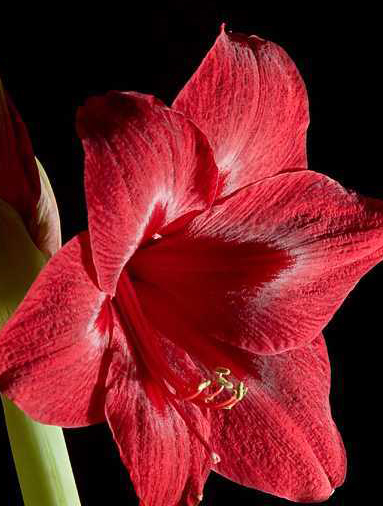
What is the difference between amaryllis and belladonna lily? A quick guide to tell them apart
Amaryllis (scientific name: hippeastrum rutilum) is a perennial herbaceous plant of the genus Hippeastrum in the Amaryllidaceae family. Its bulb is plump and nearly spherical, 5-10 cm in diameter, with a pale green or yellowish-brown outer skin. The leaves grow opposite on both sides, are strap-shaped with tapering tips, and number 2-8.
-

What is the difference between grape hyacinth and hyacinth?
Comparison of grape hyacinth and hyacinth. Hyacinth and grape hyacinth are both perennial bulbous flowers of the Hyacinthaceae family, and are different varieties of the same type of plant. Botanically, the two are not of the same genus, and each has its own series of varieties. As ornamental flowers, they both have low-growing plants, brightly colored and rich inflorescences
-
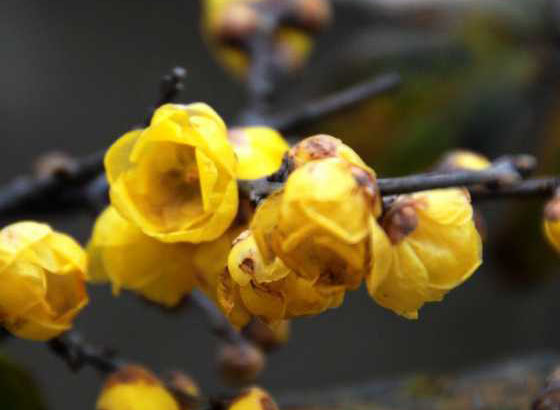
What are the differences and connections between wintersweet and plum blossom?
Wintersweet is a deciduous or semi-evergreen shrub. The flowers are borne singly in the leaf axils of one-year-old branches; the sepals and petals are not clearly differentiated, the outer whorl is yellow, the inner whorl often has purplish-brown stripes, with a waxy texture, and the fragrance is strong. Wintersweet and plum blossom share similarities: both bloom before leafing out, both flower in winter and spring, and both are fragrant.
-
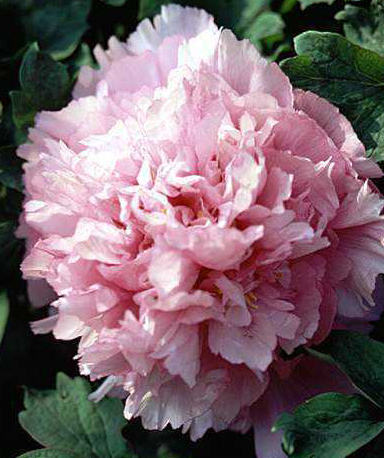
What is the difference between tree peony and herbaceous peony? A quick guide to telling them apart
The biggest differences between tree peony and herbaceous peony are: 1. The tree peony is a shrub, with woody stems; apart from the current year's green growth, the other stems are brown; the herbaceous peony is a perennial herb, with herbaceous green stems, and all above-ground parts wither in winter. 2. The tree peony has bipinnately compound leaves.
条件筛选