-

How to Grow Cilantro (Coriander) in Summer at 35°C High Temperatures
In summer, it is advisable to choose heat-tolerant varieties that bolt late and grow quickly. Choose soil that is fairly fertile, with good water and nutrient retention, can be watered in drought and drained in waterlogging, is well aerated, and has not grown cilantro for more than five years; never plant continuously on the same plot. In summer, cilantro is mainly broadcast sown; irrigate
-
How many degrees below zero can eggplant seedlings withstand? A detailed explanation of cold tolerance temperatures
Eggplant seedlings are plants that love high temperatures and cannot survive at several degrees below zero. Generally, the suitable temperature for seed germination is 25-30 degrees, and during the seedling development period it is 25-30 during the day and 15-20 degrees at night. If it is below 15 degrees, eggplant seedlings grow slowly, and below 0 degrees they basically cannot survive
-
How to Grow Termite Mushrooms? A Detailed Guide to the Key Cultivation Techniques
When the temperature is stable at 12-24 degrees, prepare some ingredients such as sawdust, gypsum and bran, mix them into a culture medium, then bag, sterilize and inoculate them, and finally place them in a culture room for cultivation; after 40-60 days the mycelium will grow out. Next, prepare a cultivation plot and plant the grown mycelium
-
Key Points of Sow Breeding Technology and Feeding Management Methods
Abstract Environment: around 16-22 degrees, with humidity of about 70% to 80% being more suitable. Feeding: about 20 days before mating and about 10 days after mating, the feed amount needs to be increased; one week before farrowing, the feeding amount should be reduced by 10~20%. Farrowing: try to let sows farrow during the day, so as to carry out effective assistance. Keeping warm: in winter, warm materials such as straw need to be placed in the pigpen. Prevention and control: during the breeding period, they are prone to blue ear disease, which can cause sow infertility and miscarriage, so special attention is needed.
-
Jabuticaba Growing Conditions and Suitable Regions, with 22 to 25 degrees being ideal
Summary Growing conditions: It is best grown in areas with a relatively humid and warm climate, with sufficient sunlight; the soil should be fertile with good drainage and irrigation, a moderate pH, and good permeability. Growing regions: Jabuticaba can be grown in the open air in regions such as Zhejiang, Guangdong, Guangxi, Fujian, Chongqing, Sichuan and Yun
-
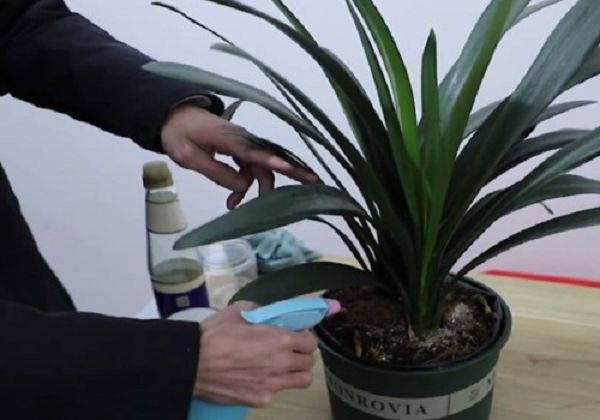
How do you care for lucky bamboo in winter so it survives the cold safely?
It needs to be moved indoors where the temperature is above 10 degrees, and given plenty of light. If it is grown in water, the lucky bamboo also needs its water changed once every 7-10 days, and the replacement water must be kept at the same temperature as the original water; if it is grown in soil, reduce both the frequency and the amount of watering, and mist water around it when the air is dry.
-
-
Couple with Master's Degrees Fails to Outdo Elementary-School-Educated Farming Friend, Carves Out a Path with Scientific Research
The husband-and-wife team Huang Chun-chi and Li Hui-ya from Fangliao Township, Pingtung County, are among the few highly educated farmers bearing the halo of master's degrees from national universities. Originally working at an agricultural technology company and a securities firm respectively, they could not bear to see their farming parents grow old, so 14 years ago they returned to their hometown to take over the wax apple and
-
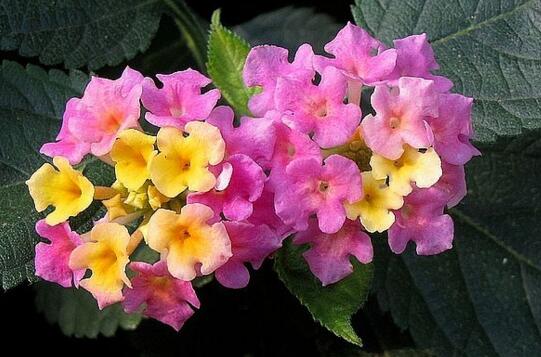
How to care for Lantana (five-color plum) in winter? Control fertilizer and water, increase light, and keep the temperature above 8 degrees
Lantana is a shrub native to the tropics. Because of its strong adaptability, it is also very common in the wild in many places. However, it is not without weaknesses. For example, its intolerance to cold is one of its shortcomings, so caring for it in winter requires certain techniques. So how do you care for lantana in winter? Let me tell you the answer.
-
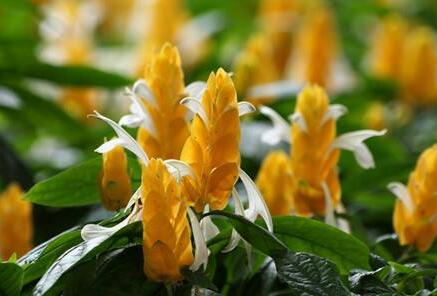
How to care for Pachystachys lutea in winter? Keep the temperature above 10 degrees and stop fertilizing
Pachystachys lutea originates from the tropical rainforests of South America, so in its growth habits, its environmental requirements are high temperature and high humidity, while winter temperatures in most parts of China are relatively low, so how to care for Pachystachys lutea in winter becomes a very important question. Below, the editor will tell you the winter care tips for Pachystachys lutea
条件筛选