-

Rural e-commerce ploughs deep into the fields of hope
Farmers are both producers and consumers, yet they have long faced the dilemma of "difficulty buying and difficulty selling". Ploughing deep into rural e-commerce and unblocking the buying and selling joints will help farmers increase their incomes and help unleash the enormous production, consumption and innovation potential of rural areas - Recently, rural e-commerce
-
The Poverty Alleviation Paradox: The Government Pours in Money, but Farmers Sink Deeper into Losses
In a certain area in western China, a rabbit-breeding craze once sprang up to help people escape poverty. The government pooled funds of various kinds to support it, and at its peak the rabbit population approached 400,000. But market conditions changed drastically, and in just 5 years the industry scale shrank to fewer than 70,000 rabbits. Many farming
-
Manure and livestock waste as fertilizer pose high risks: antibiotic contamination reaches deep into the soil
Antibiotics, as veterinary drugs and feed additives, are widely used in the livestock and poultry farming industries of countries around the world. According to statistics, China's annual use of veterinary antibiotics had already exceeded 6000 tons by 2000. However, about 60% to 90% of the antibiotics administered to farmed animals are excreted in their original form
-
An In-Depth Analysis of the Underlying Problems Behind Farmland Transfer
After the Third Plenary Session of the 18th Central Committee of the CPC, the issue of farmland transfer was elevated to an unprecedented height. All parts of the country sprang into action one after another, and the intensity of the publicity, the prominence of the trend, and the ferocity of the push were enough to overwhelm all other rural work. It is estimated that by the end of 2014, the area of farmland transferred nationwide will approach or exceed 400 million mu, accounting for about 30% of the country's contracted arable land area. In terms of the scale of China's contracted arable land, this is a fairly large proportion; following this, a number of large farmers, large farms and other operating entities have emerged that occupy several thousand mu, more than ten thousand mu, or more than tens of thousands of mu of arable land through transfer, and in terms of China's per capita arable land, this is also a fairly "astonishing" concentration of scale. In November 2014, after the General Offices of the CPC Central Committee and the State Council issued the "Opinions on Guiding the Orderly Transfer of Rural Land Operating Rights and Developing Moderate-Scale Agricultural Operations," it will undoubtedly play a regulatory role in land transfer, and the momentum of relying on administrative means to push land transfer will cool down accordingly. But based on past experience and the complexity of China's land issues, its role cannot be overestimated. The undercurrents surging beneath China's farmland transfer deeply interrogate the author's conscience, and this serves as an opportunity to explore the related issues.
-
Drought relief to protect autumn crops and livestock: Ministry of Agriculture sends 3 more work teams to drought-stricken areas for guidance
According to this website: Since June, most areas north of the Yangtze River have experienced sustained high temperatures and little rain, and the drought has continued to worsen in some areas. This is a critical period for the growth and development of crops such as corn and rice, and the drought has brought adverse effects on the growth and development of autumn grain crops as well as livestock production.
-
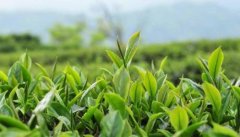
A tea-making board game takes you deep into Taiwan's tea industry, distilling a century of tea culture
Taiwan was once a major tea exporter, but affected by rising labor and production costs and lacking international competitiveness, the commercial tea export market gradually shrank after the 60th year of the Republic of China, and the domestic tea development policy also shifted from export to domestic sales. Looking back at the development of the tea industry, most people remember
-
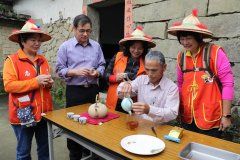
Gender equality reaches deep into the mountains of Shenkeng as veteran tea masters guide the fun of tea-making
Traditionally, tea picking is mostly done by women, while tea masters are mainly men. To break the gender stereotypes of the industry, the Social Affairs Bureau of the New Taipei City Government, together with the Shenkeng District Office, held "Tea Mountain Daughters' Tea-Making Fun" at the Paozilun Farmers' Market, where men can go into the mountains to pick tea, and women
-
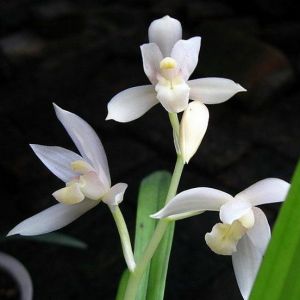
What are the Suxin varieties of Jianlan (Cymbidium ensifolium)? A deep dive into Suxin Jianlan
The Rongxian Snow-white variety with a touch of pale red on the peach cheeks is even more charming. This variety generally does not exceed 30 cm under natural cultivation; the ones I grow are basically around 25 cm, with leaf width just under about 1.3 cm, the leaves tending yellow-green, the flowers easily rising above the foliage, and the flowers large, fully 4 cm - a typical small-plant-big-flower type, with very broad petals; even weak seedlings when they bloom...
-

Succulents: Radiation Protection, Formaldehyde Absorption, Poisonous? A Deep Dive into Three Major Misconceptions
It is widely rumored online that succulents can protect against radiation, absorb formaldehyde, and purify the air, and some say succulents are poisonous and harmful to your health when placed in the bedroom... In response to these major misconceptions, today we will take a deep dive into analyzing and interpreting them, and lead everyone...
-

How to grow asparagus fern? Master 4 tips for lush, deep green growth into a mini forest
The elegant refinement of asparagus fern is something many flower lovers appreciate. To grow asparagus fern well, you need to master some tips. Below are 4 tips for growing asparagus fern well, making it lush and deep green! 1. Soil preparation. The soil for preparing asparagus fern needs not only sufficient nutrients, but also...
条件筛选