-

How to Grow the Crane-neck Gourd? A Detailed Guide to Planting Methods
Summary Planting time: mid to late January in spring, and mid to late July in autumn. Sowing and seedling raising: before sowing, the seeds should be soaked to promote germination; for spring sowing, a small arched shed can be built to keep warm and raise seedlings, and for autumn sowing, a shade net can be set up to cool down and raise seedlings. Land preparation and fertilization: after preparing the land, apply sufficient base fertilizer,
-
How to grow the succulent Qianyuhe (Echeveria 'Chicken Claw'), and does it bloom?
Many people love succulents precisely because of their plump, chubby, adorable look. But often only a few can actually keep a pot of succulents alive properly; some people's succulents have no plumpness at all, with leaves drooping, showing no sign of vitality whatsoever. In this season when all things revive
-
What Month Does the Bird of Paradise Bloom? A Detailed Guide to Its Blooming Period
The bird of paradise flower is also called: crane orchid, or crane flower, or bird of paradise. The bird of paradise flower is a flowering plant of the monocotyledonous plants, native to South Africa. The bird of paradise flower is a very popular ornamental plant. So below we will introduce what month the bird of paradise blooms? 1. Bird of
-
A Detailed Guide to Propagating Geraniums from Seed, the Latest Sowing and Seedling Techniques
Geranium is a perennial herbaceous plant of the genus Pelargonium in the family Geraniaceae, also known as zonal geranium, fish geranium, horseshoe geranium, and pelargonium. Young plants are succulent herbs, while older plants become semi-woody. In the West it is an excellent flower for decorating windowsills, and on the European continent, such as in Ger
-
The Story and Legend of Agrimony: Latest Roundup
Agrimony (Agrimonia pilosa) is a perennial herbaceous plant of the genus Agrimonia in the Rosaceae family, often growing by streams, roadsides, grasslands, thickets, forest edges and open woodlands, and is a traditional excellent hemostatic medicine, while Yellow Crane Tower is a famous scenic spot in Jiangnan known at home and abroad; the two seem unrelated, but one story and legend reveals the close relationship between them.
-
Where Do Cranes Live? Body Size and Symbolic Meaning Explained
The crane is the collective name for birds in the family Gruidae, a group of beautiful and elegant large wading birds distributed across every continent except South America, with the greatest variety found in East Asia. So, where do cranes, birds of the animal kingdom, live? How big can they grow? What do they represent? 1.
-
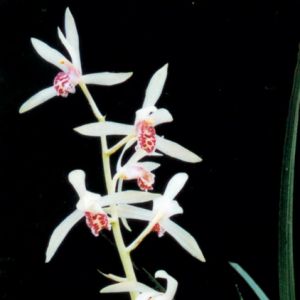
Variety Characteristics and Care Essentials of the Lingnan White Crane Cymbidium
"Lingnan White Crane" Cymbidium white flower
-
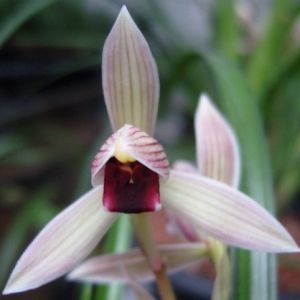
Cymbidium lianpan 'Red-crowned Crane' (Yunlong Red Plain) Variety Introduction
The precious Cymbidium lianpan cultivar Red-crowned Crane (a newly named variety from Baoshan, Yunnan): Cymbidium lianpan red-tongue Red-crowned Crane, one of the higher-grade red-tongue varieties among Baoshan red tongues. When it blooms well, the tongue markings are unbroken; when it blooms poorly, they are slightly broken. After opening, the petals do not curl back. The leaves are about 0.8CM wide, and the flower form is very stable.
-

Thousand Cranes
The name "Thousand Cranes" differs from "paper crane" by only one word, but Thousand Cranes is actually a type of succulent, a variant of Echeveria peacockii. Its leaves are similar to those of other rosette-shaped succulents, but the top of Thousand Cranes is flattened, which is why it is also known as Cockscomb.
-
Is the red on the top of a red-crowned crane's head poisonous? Actually, it has nothing to do with poison
In the summer when I was in middle school, on the way to Huairou for an outing, my family once pointed at two large gray birds flying overhead and told me: "Look, cranes." Looking back now, I realize those so-called "cranes" were just common grey...
条件筛选