Thousand Cranes
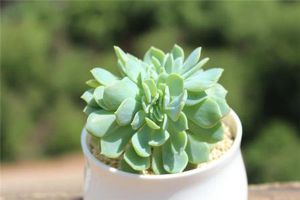
The name "Thousand Cranes" differs from "paper crane" by only one word, but Thousand Cranes is actually a type of succulent, a variant of Echeveria peacockii. Its leaves are similar to those of other rosette-shaped succulents, but the top of Thousand Cranes is flattened, which is why it is also known as Cockscomb.
Other names for Thousand Cranes
Cockscomb
Growing habits of Thousand Cranes
Native to Puebla, Mexico, and now widely cultivated around the world.
It loves full sunlight, and once sunlight is insufficient it quickly reverts to its original form.
Plant it in plain sandy soil without too much fertilizer and there is no need to apply additional fertilizer, but it grows vigorously when potassium fertilizer is present in the soil.
Plant morphology of Thousand Cranes
The original species has no stem or a short stem, with leaves tightly arranged into a rosette, leaves spoon-shaped, blue-gray-white, covered with a thick white powder, leaf base narrow, leaf texture thin, leaf tip with a small point.
Thousand Cranes consists of countless overlapping leaves that are significantly smaller than those of the original species, forming a cockscomb-shaped plant.