-

Control Methods for Anthracnose Disease in Japanese Euonymus
[Symptoms] Japanese euonymus anthracnose is distributed throughout the country. In the early stage of the disease, water-soaked yellowish-brown small spots appear on the leaves, with an indistinct boundary between diseased and healthy tissue, and the lesions later expand. In the late stage, the affected areas turn yellow, and small black dots (conidial acervuli) appear on the lesions, arranged in distinct or indistinct concentric rings. It often causes leaf blight and premature leaf fall. [Pathogen and disease pattern] Caused by the fungi Colletotrichum griseam Heaidet Waif and Gloeosporium frigidium Sate. of the Deuteromycetes
-
Control Methods for Bacterial Diseases in Orchids (Part Two)
Bacteria are also single-celled organisms and can only be seen under a microscope. The harm bacteria cause to plants is mainly through the production of toxins, which cause plant rot or tissue death, or block and destroy vascular bundles, forming tumors. Since bacterial control is relatively difficult, the best control method is to prevent the occurrence of the pathogens. 1. Orchid brown rot is one of the common bacterial diseases worldwide. Its pathogenic bacteria are Erwinia cypripedii, Pseudomonas gladioli, etc., and it mostly occurs in humid, warm environments. It generally damages the
-
Causes and Control Methods of Ginger Bacterial Wilt
1. Symptoms The pathogen attacks the roots and the underground and aboveground stems. The affected underground fleshy stem initially becomes water-soaked and yellowish-brown, loses its luster, and then the internal tissues gradually soften and rot, leaving only the outer skin. Squeezing the diseased part exudes a dirty white turbid juice with a foul odor; the affected roots also turn pale yellowish-brown and eventually rot completely. The affected aboveground stem turns dark purple, and the internal tissues turn brown and rot, leaving fibers behind. The affected leaves appear wilted, turn pale yellow, with curled edges, and eventually the whole plant dies. 2. Pathogen This disease is caused by the bacterium Pseudomonas solanacearum (P
-
Identification and control methods for Apophylia thalassina
Scientific name Apophylia thalassina (Faldermann), order Coleoptera, family Chrysomelidae. Also known as wheat stem leaf beetle, wheat golden flower beetle. Its distribution runs from Heilongjiang and Inner Mongolia in the north, its southern limit does not cross the Huai River, and it reaches Gansu and Qinghai in the west. It is becoming increasingly serious in Shanxi, Gansu and Hebei. Hosts include wheat crops, corn, goji berry, thistle, willow, etc. Damage characteristics: the larvae bore into the wheat stem from 1.5cm below the soil surface to cause damage, resulting in dead hearts, dead seedlings, white heads and ineffective tillers, causing large areas of wheat fields to have missing plants and broken rows
-
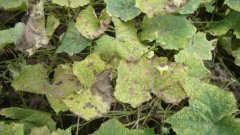
How to Treat Cowpea Fusarium Wilt? A Complete Guide to Prevention and Control Methods
Cowpea is a common vegetable on the market, and many people enjoy eating it, so how do you treat cowpea that has caught wilt disease? Let's take a look together. Cowpea (commonly known as "cai dou" in Taiwanese) has a growing season from April to September, and is an important edible pod vegetable in Taiwan, China, during the summer,
-
Causes and Control Methods of Yellow Mushroom Disease in Pleurotus pulmonarius
In recent years, because Pleurotus pulmonarius has good economic returns and can fill the gap in summer edible mushroom products, its production in Jiangshan City has developed rapidly, and by 2004 the total had exceeded 8 million bags. However, in the recent period, some mushroom farms in Jiangshan have experienced mushroom death. Through observation, it was clearly determined that the dead mushrooms were caused by yellow mushroom disease. 1. Symptoms of yellow mushroom disease. Yellow mushroom disease is a bacterial disease caused by infection with Pseudomonas bacteria, which causes the fruiting bodies to discolour, rot and stink, and the incidence rate is generally higher in the first flush. When the disease occurs, a slime-like pathogen appears on the surface of the mushroom bags, part of the mycelium shows yellowing symptoms, and in severe cases the pathogen directly attacks the mushroom bodies, causing the affected mushrooms to develop lesions, turn yellow, and even die. It takes only a few hours from infection of the mushroom body by the pathogen to the appearance of symptoms (dead mushrooms). ① Dry rot type: it can occur from the young mushroom stage to the mature stage; after onset, the cap or stipe shows localized scorched yellow, causing light-coloured mushrooms to become yellow mushrooms, and the mushroom bodies grow slowly, gradually becoming rigid until the whole mushroom body shrinks and dries up, like being dried by lack of water. ② Wet rot type: the affected site or the entire cluster of mushrooms has a sticky, moist feeling; in severe cases, all diseased mushrooms show pale yellow water-soaked rot, with sticky secretions and a foul odour.
-
How to control boxwood pests? These methods are very practical
The larvae damage host plants such as boxwood, small-leaved boxwood (Buxus sinica), big-leaved boxwood (Buxus megistophylla), little-leaved boxwood, Japanese boxwood (Buxus microphylla), spoon-leaved boxwood, Korean boxwood, and holly by spinning silk to tie leaves together into nests. The damaged leaves first show yellow blighted spots, and later the entire leaf falls off. By spinning silk, they bind the leaves and the damaged fallen leaves together, preventing the leaves from spreading out, so growth and development are severely affected, and in severe cases the whole plant dies. In Shanghai, 3 to 4 generations occur per year, with severe overlapping of generations; they become active in March of the following year, begin pupating in mid-April, and begin emerging in late April
-
How to grow a Boxwood (Buxus sinica) bonsai? Care management and pest and disease control methods
Boxwood (Buxus sinica), also known as littleleaf boxwood, thousand-year dwarf, etc., is an evergreen shrub or small tree of the genus Buxus in the family Buxaceae, native to the middle Yangtze River basin of China and the regions to its south. It likes warm, semi-shaded, humid climates, is drought-tolerant, cold-tolerant and tolerant of pruning, is a shallow-rooted tree species, grows slowly and lives long, and is an excellent tree material for making bonsai. Care management: Boxwood likes moisture and needs frequent watering to prevent leaf drop caused by water loss. From May to August is the vigorous growth period of boxwood, and several applications of thin, fully decomposed cake fertilizer can be made along with watering. Always pay attention to pruning
-
Control Methods for Boxwood (Buxus sinica var. parvifolia) Wilt Disease
Boxwood wilt disease has been a common disease of boxwood in recent years. It is characterized by rapid onset, fast spread, and a major impact on landscaping effects. Although this disease is stubborn, if correct measures are taken, targeting the pathogen and applying multiple approaches simultaneously, satisfactory control results can still be achieved. Symptoms: Initially, only the upper three leaves of a single branch of an affected boxwood turn green and dry out from water loss, and then the entire branch and three branches of the whole plant show green wilt and water-loss symptoms. In the late stage of the disease, the three leaves turn yellow-white, and severe infection can lead to plant death. Disease occurrence pattern
-
How to control onion flies? A detailed guide to practical control methods
The onion fly, also called the onion maggot, is an oligophagous pest that only harms vegetables of the Liliaceae family, especially onions and garlic. Controlling the onion fly should adopt a method combining agricultural control and chemical control. When garlic bulbs are rotting, a topdressing of ammonia water can be applied along with watering, which can significantly reduce the damage. When root maggots are found in the field, watering should be done frequently, and flood irrigation can be used when necessary. Chemical control should combine aboveground and underground control, with adult flies controlled mainly aboveground. In the early stage of adult occurrence, you can use 80% dichlorvos emulsifiable concentrate at 800 times dilution,
条件筛选