-

What are the control methods for azalea leaf spot disease?
Leaf spot is a major disease of azaleas. When it first appears, small brown spots form on the leaves; the spots merge with one another and gradually develop into large blotches, and the lesions become irregular in shape, darker on the upper surface and lighter on the underside. In the later stage, the center of the lesion turns grayish brown, and many black or grayish-brown spots form on the lesion. In severe cases, the branches are completely bare and the plant becomes weak. Control plan: at the early stage of the disease, spray 1:1:120 Bordeaux mixture, or 0.4 degree Baume lime sulfur mixture, or 65% zineb wettable powder at 500 times dilution, or 25% car
-
Detailed Explanation of the Occurrence and Control Methods of Peach Tree Gummosis
Peach tree gummosis is a disease commonly occurring on peach trees today, and its incidence is severe. Especially in peach orchards with extensive management and weakened tree vigor, the rate of affected plants can reach over 90%. This disease severely weakens tree vigor, affects yield and quality, and in severe cases leads to dead branches and dead trees, threatening the production and development of peach trees. It is also one of the most troublesome diseases for fruit growers. I. Causes of the disease. There are two causes of peach gummosis: one is non-infectious pathogens, such as gummosis caused by wounds from mechanical injury, insect and disease damage, frost injury, freezing injury, etc., or gummosis caused by physiological disorders of the tree body due to extensive management, excessive pruning, excessive fruiting, improper fertilization, heavy clay soil, etc. The other is infectious pathogens caused by fungi; the sexual stage belongs to Ascomycota, and the asexual stage belongs to Deuteromycota.
-
A Detailed Explanation of the Occurrence Patterns and Control Methods of the Jujube Leafroller
The jujube leafroller, also known as the jujube sickle-winged tortrix moth, commonly called the leaf-sticking worm, is one of the important pests of jujube trees. The larvae spin silk to roll leaves for feeding, rolling leaves longitudinally into a dumpling shape, or using silk to bind several leaves together. The larvae also bore into and feed on fruit attached to leaves, greatly affecting yield. 1. Occurrence patterns This pest has 3 generations per year, overwintering as pupae in rough bark crevices on branches and trunks. Adults hide by day and emerge at night, are strongly phototactic, and lay eggs 1 to 2 days after emergence; eggs are mostly scattered on smooth small branches and jujube spurs. The egg stage lasts 10 to 25 days, and the first-generation larvae occur
-
Symptom Identification and Control Methods of Ginger Anthracnose
Ginger anthracnose. On infected leaves, nearly circular or irregular water-soaked chlorotic lesions first appear mostly from the leaf tip or leaf margin, later joining together into irregular large patches; in severe cases the leaves may dry up. When humid, small blackish, slightly rough granular dots grow on the lesions, namely the pathogen's acervuli. The disease can also attack stems and leaf tips, forming short stripe-shaped lesions on stems and leaf tips that likewise bear small black dots; in severe cases the leaves may droop but remain green.
-
Occurrence Patterns and Control Methods of Viral Diseases in Solanaceous Crops
In the southern Guangxi region, the winter climate is warm with no obvious frost, making it a great place for growing winter vegetables to be shipped from the south to the north. Therefore, after harvesting the late rice, farmers grow winter vegetables to supply the market after the Spring Festival, achieving relatively high economic returns and writing a new chapter of "the plan for the year lies in autumn and winter." This has become another way for local farmers to get rich and move toward a moderately prosperous life. Among the many vegetable varieties grown, solanaceous vegetables (tomato, pepper, eggplant) are favored by local farmers for their unique planting advantages. According to statistics, the perennial planting area is around 80,000 mu, and the planting area is predicted to keep rising year by year.
-
How to Trap and Kill Japanese Beetles? A Full Guide to Practical Control Methods
Hang 1 light-colored glass bottle every 3 to 4 trees, such as a beer bottle or a wide-mouthed medicine bottle. Wash the inside of the bottle clean, catch 2 to 3 live Japanese beetles and put them into the bottle, tie a rope around the neck of the bottle, and fasten it to a fruit tree branch, with the bottle mouth 2 cm from the branch. Japanese beetles have a gregarious habit and will crawl into the bottle one after another. Once the bottle is full of beetles, take it down and scald them to death with hot water.
-
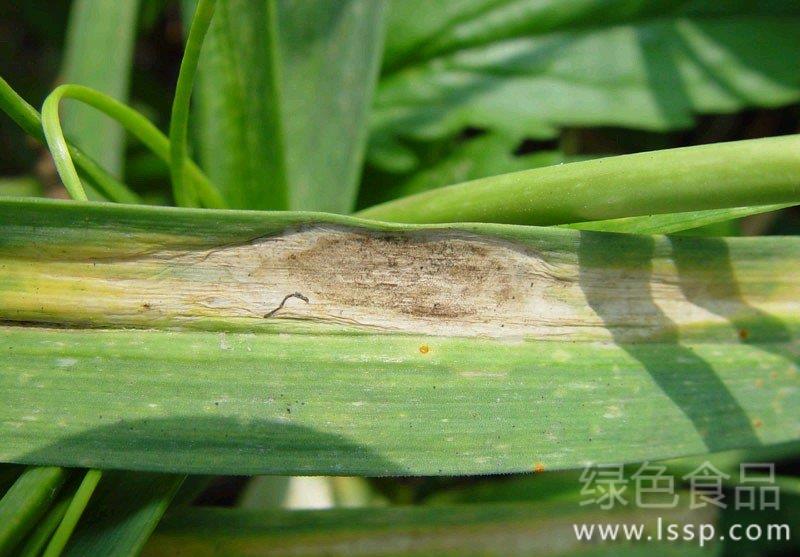
Garlic leaves turning from green to brown and yellow: master the control methods for garlic leaf blight
Garlic leaves turning from green to brown and yellow: control methods for garlic leaf blight
-
How to control cotton mirid bugs? These methods must be mastered
The occurrence of mirid bugs is very sensitive to the ecological environment. Mirid bugs prefer temperatures of 25°C~30°C and a relative humidity of 80%~90%. The recent humid weather with little sunshine is very favorable for the occurrence of mirid bugs. Intercropping in cotton fields is also conducive to the parasitism and transfer damage of mirid bugs. Now, soybeans, broad beans and other vegetables are intercropped in cotton fields everywhere, which is conducive to their reproduction. Therefore, some cotton farmers in cotton areas of counties and cities such as Hanchuan and Yunmeng in Hubei Province have recently reported that the occurrence and damage of mirid bugs have already emerged
-
Identification and Control Methods of Cotton Stem Blight
Symptoms The disease occurs more severely in the Northeast cotton region, the Yellow River basin and the Yangtze River basin, and the cotton regions along the rivers and coast. Cotton can be affected throughout the entire growth period, with the seedling stage and bud stage suffering the most severe damage. When cotyledons and true leaves are infected, small round spots initially appear with purplish-red edges and grayish-white centers, after which the lesions expand or merge into irregular-shaped lesions. Some lesions develop concentric rings in the center, scattered with small black granules, which are the pathogen's pycnidia. The diseased parts often break apart and fall off. Under high humidity, water-soaked lesions appear on young tender leaves, then spread rapidly as if scalded by boiling water,
-
Symptoms and Control Methods of Cotton Boll Red Rot
Symptoms After a cotton boll is infected, an irregularly shaped lesion initially appears. In wet weather or during continuous overcast and rainy days, the disease spreads rapidly, covering the entire boll, and in some cases reaching the cotton fibers, producing an even pink or light red mold layer. After rain, it easily sticks together, forming pink masses, causing the diseased boll to fail to crack open, and the cotton fibers to rot into stiff, matted locks. After seeds are infected, the germination rate declines. The pathogen is the same as that of cotton seedling red rot. Transmission route and disease conditions This fungus is a weak parasite and cannot directly infect cotton bolls; it mainly enters through wounds to cause disease. Cotton boll angular leaf spot
条件筛选